

A new report by the Moving Minds Alliance (MMA) has observed that millions of Nigerian children affected by conflict, displacement, climate shocks and economic hardship remain “fiscally invisible”.
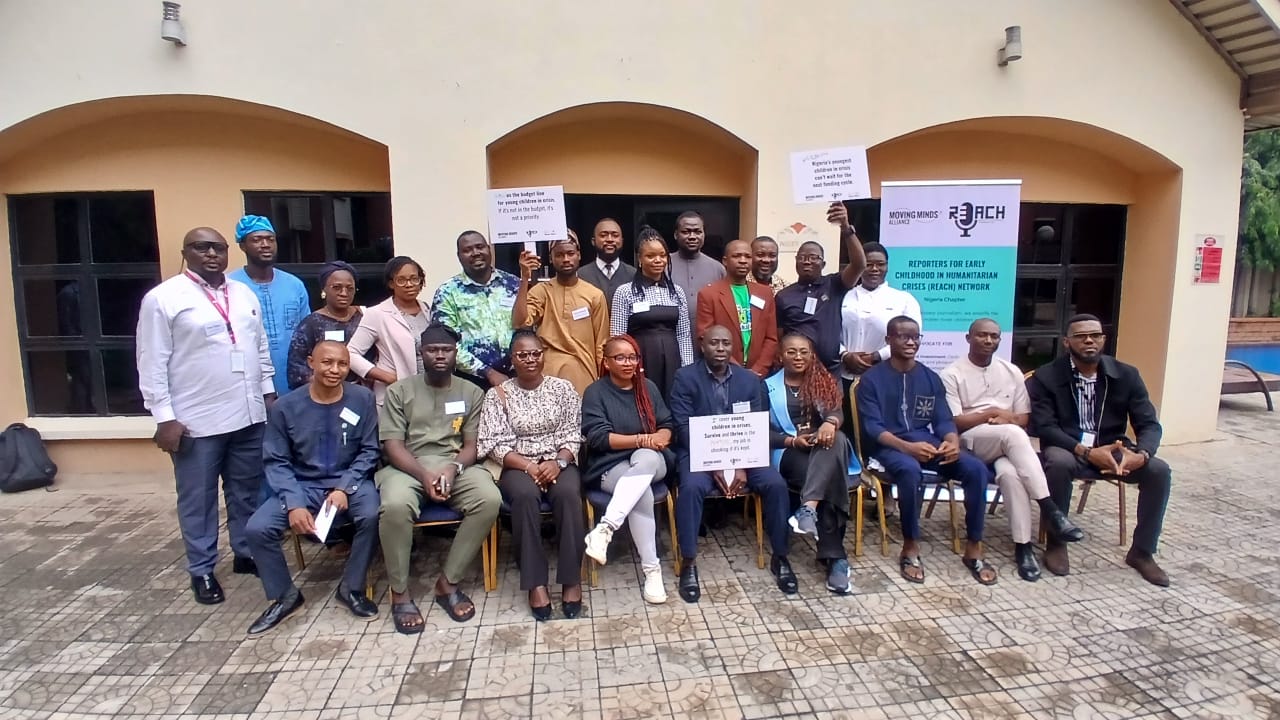
The report, “Financing Early Childhood Development in Crisis (ECDiC) in Nigeria: From Fiscal Invisibility to Child-Level Results”, was launched on Wednesday in Abuja alongside the inauguration of the Nigeria chapter of the Reporters for Early Childhood in Humanitarian Crisis (REACH) Network, a coalition of journalists committed to sustained reporting on early childhood issues in emergencies.
According to the report, Nigeria’s Human Capital Index stands at 0.36, indicating that a child born in the country today is expected to achieve only 36 per cent of their potential productivity due to poor health, nutrition and education outcomes.
The analysis, conducted by Moving Minds Alliance in partnership with Whole Child Advisors, examined government and humanitarian financing for early childhood development between 2020 and 2025.
It found that despite 4.9 million children requiring humanitarian assistance, 31 million children under the age of five, and an estimated 1.8 million cases of severe acute malnutrition in 2025, there is no dedicated budget line for children aged zero to eight living in crisis situations.
The report also highlighted widespread funding challenges, including weak budget implementation, fragmented financing systems, and limited investment in early childhood education.
It noted that less than five per cent of education spending supports early childhood or emergency learning, while more than 85 per cent of humanitarian funding is concentrated in Borno, Adamawa and Yobe states, leaving crisis-affected communities in the North-West and North-Central regions underserved.
“The system is built to fund structures, not children,” the report stated,
The report warned that Nigeria’s human capital ambitions would remain unattainable without a financing system that delivers predictable resources directly to children and frontline service providers.
To address the gaps, the report proposed seven reforms, including the creation of a dedicated federal policy framework for early childhood development in crises, the introduction of budget tags for ECD programmes at federal and state levels, improved budget releases, simplified funding mechanisms, results-based financing, and increased investment in underserved regions.
It also recommended establishing a joint financing architecture that combines government, humanitarian and philanthropic funding to improve services for vulnerable children.
Speaking at the launch, Interim Director and Co-Chair of Moving Minds Alliance, Dr. Katie Murphy, said that the report as the first comprehensive assessment of financing gaps affecting early childhood development in humanitarian settings in Nigeria.
“This report gives us something we haven’t had before a clear picture of where Nigeria’s investment in its youngest children in crisis is falling short and exactly what it will take to close that gap,” she said.
Also, Coordinator of the Nigeria Early Childhood Development in Crisis Coalition, Arome Agenyi, said the future of millions of Nigerian children depends on decisions made during their earliest years.
He said behind every successful adult is an early childhood story, adding that the question is not whether children are developing; they are. The question is whether they are developing to their full potential.
Agenyi said that journalists have a critical role in shaping public policy by highlighting the realities facing young children in crisis-affected communities.
Also, Global Co-Chair of the REACH Network, Mojeed Alabi, said children living through conflict, displacement and economic hardship often become invisible in public policy because they are invisible in public finance.
“When children become fiscally invisible, they also risk becoming politically invisible. The launch of the REACH Network in Nigeria is a commitment by journalists to change that narrative through sustained, evidence-based reporting,” he said.
Mojeed expressed optimism that discussions at the planned Act for Early Years Financing Summit in 2027 would help translate the report’s recommendations into practical reforms.
The launch also marked the formal inauguration of the Nigerian chapter of the REACH Network, which organisers said would strengthen media coverage of early childhood development and hold governments and development partners accountable for commitments to vulnerable children.