

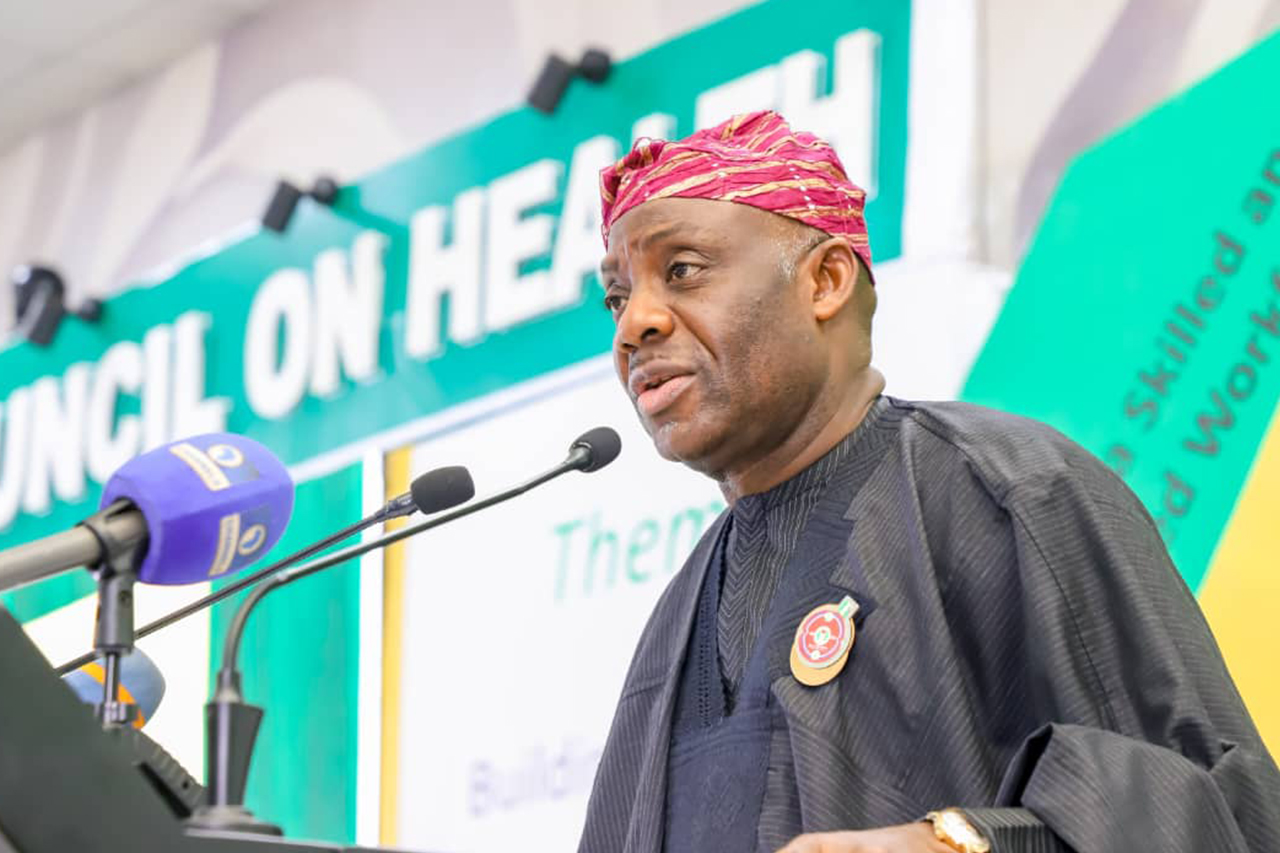
The federal government Wednesday launched the Digitalised Nigeria Education Management Information System and urged all states, local government education authorities and private school proprietors to submit their data.
Education Minister, Dr. Tunji Alausa, said the platform is now Nigeria’s central repository for education records and described reliable data as the backbone of every successful education reform.
The minister said DNEMIS will provide real-time information on schools, classrooms, teachers, learners, computer laboratories, water, sanitation and hygiene facilities, electricity and other infrastructure.
He said the system will help governments identify gaps, deploy teachers, track enrolment and target funding to communities in need.
According to data released by the Federal Ministry of Education, Nigeria has 213,235 schools. Of that number, 124,548 schools have submitted data, representing a 58.4 per cent reporting rate.
The platform has so far captured 40,130,454 learners, 1,193,877 teachers, 730,447 classrooms and 607,508 toilets.
Alausa said about 90 per cent of public school data had been captured, while private schools were at roughly 50 per cent. He urged private school owners to register and upload their records, adding that the exercise was not for taxation purposes.
“You have to get the data right. Data allows us to monitor, design interventions, evaluate outcomes and plan proactively for the future. Without accurate data, meaningful development is impossible.
“Do not worry, the government is not collecting this information to tax you. We recognise the critical role private schools play in Nigeria’s education sector,” Alausa said.
He noted that nearly three-quarters of junior secondary schools are privately owned and their inclusion is necessary for accurate national statistics.
“We need every school to be part of this system because education planning must reflect the realities on the ground,” he said.
The push for complete data comes as UNICEF estimates that Nigeria has about 18.3 million out-of-school children. The World Bank reports that about 70 per cent of Nigerian children cannot read and understand a simple age-appropriate text by age 10.
Alausa said implementation delays were resolved with support from development partners, including the World Bank, the European Union, the Norwegian Government and UNICEF. He said the platform will support reforms in foundational literacy, digital learning and technical education.
Alausa called on state governments to intensify sensitisation campaigns to ensure schools participate. “Every stakeholder has a responsibility to ensure the information is complete and accurate,” he said.
Officials said the digital platform would become Nigeria’s authoritative source of education data and strengthen evidence-based policymaking for more than 50 million learners nationwide.
National Bureau of Statistics Director-General Semiu Adeniran said the agency will link its platform with DNEMIS to create one reliable source of education data.
He said NBS will map out-of-school children through household surveys and use Small Area Estimation data to validate information on the education database.
“The data that comes from our Small Area Estimation will help validate and cross-check what is on the education platform,” Adeniran said.
Kuni Tyessi
Follow us on: