

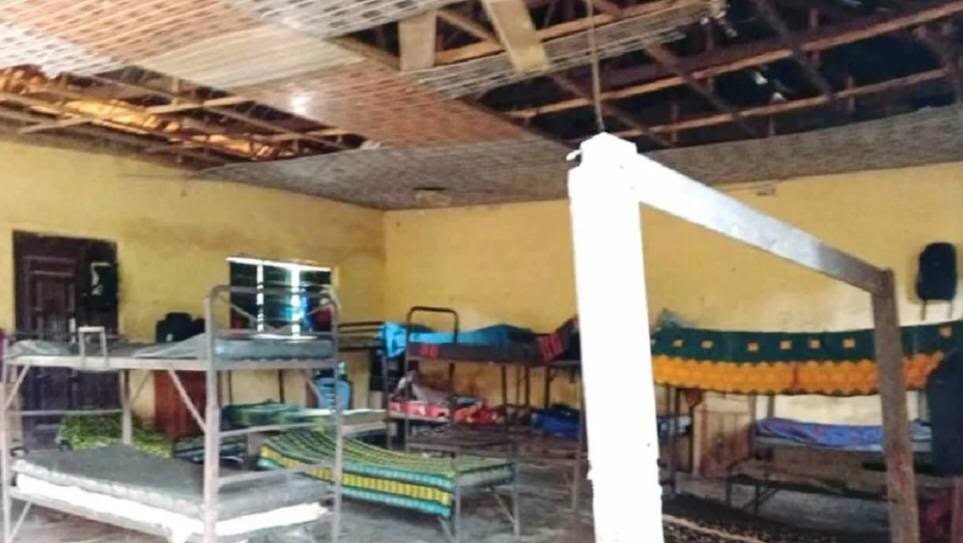
The Imo State Secondary School for the Deaf in Ofekata-Orodo, Mbaitoli Local Government Area, has become a symbol of institutional neglect, with students facing deteriorating facilities, weak security measures, and growing concerns over their safety.
An investigative report by journalist Uche Okere revealed that the school, once regarded as a centre of inclusion and hope for children with hearing impairments in South-East Nigeria, is now struggling with severe infrastructural decay and inadequate protection for its students.
The mixed-gender boarding school, which serves students from Imo State, Abia and neighbouring communities, reportedly operates without essential security structures, leaving dormitories and school facilities vulnerable to external threats.
Advocacy groups, including the Save the Deaf and Endangered Languages Initiative (S-DELI), have raised concerns over the absence of perimeter fencing, security personnel, night wardens and adequate supervision around the campus.
According to the group, the lack of proper security has allegedly allowed criminals to gain access to the school premises after learning hours, exposing students to theft, vandalism and other dangers.
Several donated projects, including solar-powered security lighting and water supply facilities provided by non-governmental organisations, have reportedly been damaged or stolen, further worsening conditions for the students.
The report also highlighted concerns over the safety of female students, citing alleged cases of exploitation and abuse linked to the absence of secure accommodation and adequate adult supervision.
Medical screenings carried out within the school community reportedly raised concerns over health challenges, including increased cases of sexually transmitted infections, which advocates say require urgent attention and investigation.Despite the challenges, classrooms at the school remain active, with many students continuing their education under difficult circumstances.
Parents and advocates say the school remains one of the few specialised secondary education facilities available to children with hearing impairments in the region, making its survival critical for students who rely on it as a pathway to independence and inclusion.
Disability rights advocates and civil society organisations have called on the Imo State Government, particularly the Ministry of Education and Governor Hope Uzodinma, to urgently intervene.
They are demanding comprehensive rehabilitation of the school, including the construction of a perimeter fence, deployment of permanent security personnel, renovation of dilapidated facilities and stronger welfare measures for students.
Activists warned that without immediate government action, the institution risks becoming an unsafe environment for some of the state’s most vulnerable children.