

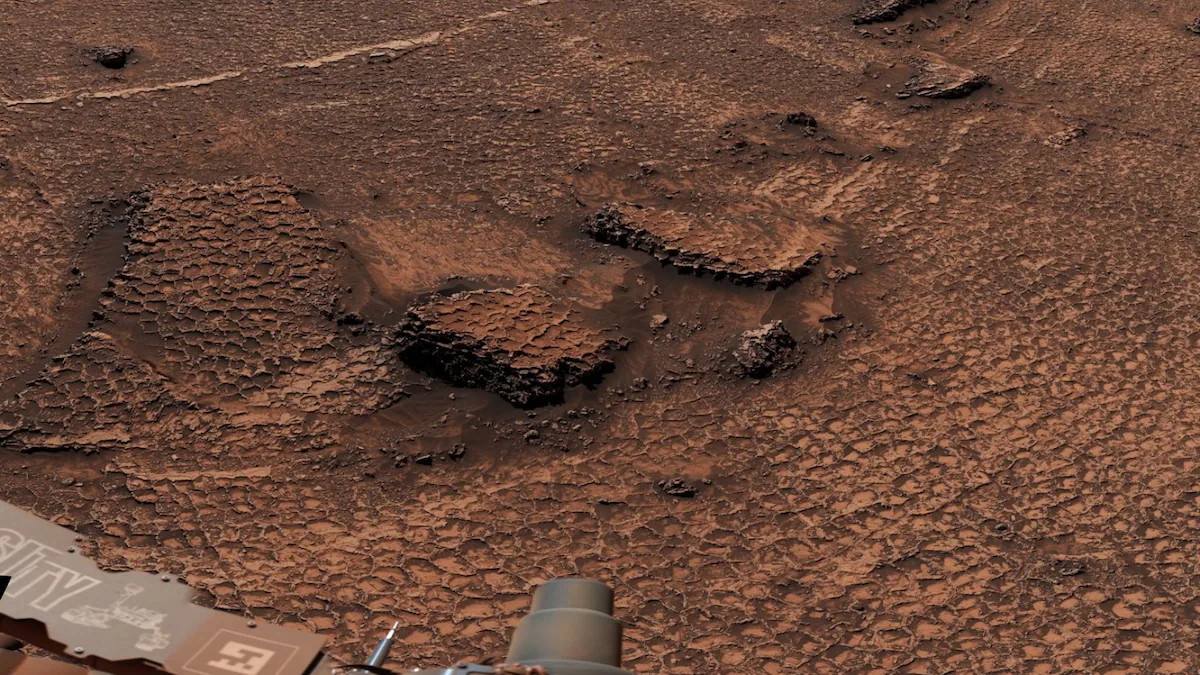
The discovery could help scientists better understand Mars’ geological history and the processes that formed these unusual rock patterns.
Curiosity has delivered a new 360-degree panorama from Mars. “We’ve seen a lot of fascinating landscapes through Curiosity’s eyes, but this sea of polygons took our breath away,” said the mission’s project scientist. 1/2 pic.twitter.com/G7sV6Xafkq
— NASA Mars (@NASAMars) July 29, 2026
Sea of polygon patterns discovered
The discovery was made after Curiosity climbed into the Valle Grande region and captured a 360-degree panorama on June 19 and 20. The images show polygonal fractures stretching across the landscape and wrapping around a nearby 20-foot-tall butte nicknamed “Miraflores”.
Mission scientists said the newly discovered field is far larger than anything previously observed by the rover.
“We’ve seen a lot of fascinating landscapes through Curiosity’s eyes, but this sea of polygons took our breath away. We measured their shapes and chemistry carefully and are hopeful there are clues in the data as to how these features formed,” said Ashwin Vasavada, Curiosity project scientist.
How the patterns formed
Scientists believe the polygonal fractures may have formed through different natural processes. According to NASA, some similar polygon patterns discovered by Curiosity in the past were created as mud cracks, while others may have formed through repeated cycles of warming and cooling or when compression forced water out of buried sediment.
Discovery adds to evidence of ancient Mars
Since landing on Mars in August 2012, Curiosity has uncovered several major clues about the Red Planet’s past. The rover has discovered sulphur crystals, meteorites and other geological features, while also confirming that the ancient Martian environment once had lakes, streams, water and nutrients capable of supporting microbial life.
Scientists believe the lower slopes of Mount Sharp were once covered by lakes and streams billions of years ago. Since beginning its ascent of the mountain in 2014, Curiosity has identified chemical traces of Mars’ watery past, including carbon-based molecules that are considered the building blocks of RNA and DNA.Although researchers do not know whether these molecules were produced through biological or geological processes, the discovery suggests that ancient Mars had the chemical conditions necessary to support life.