

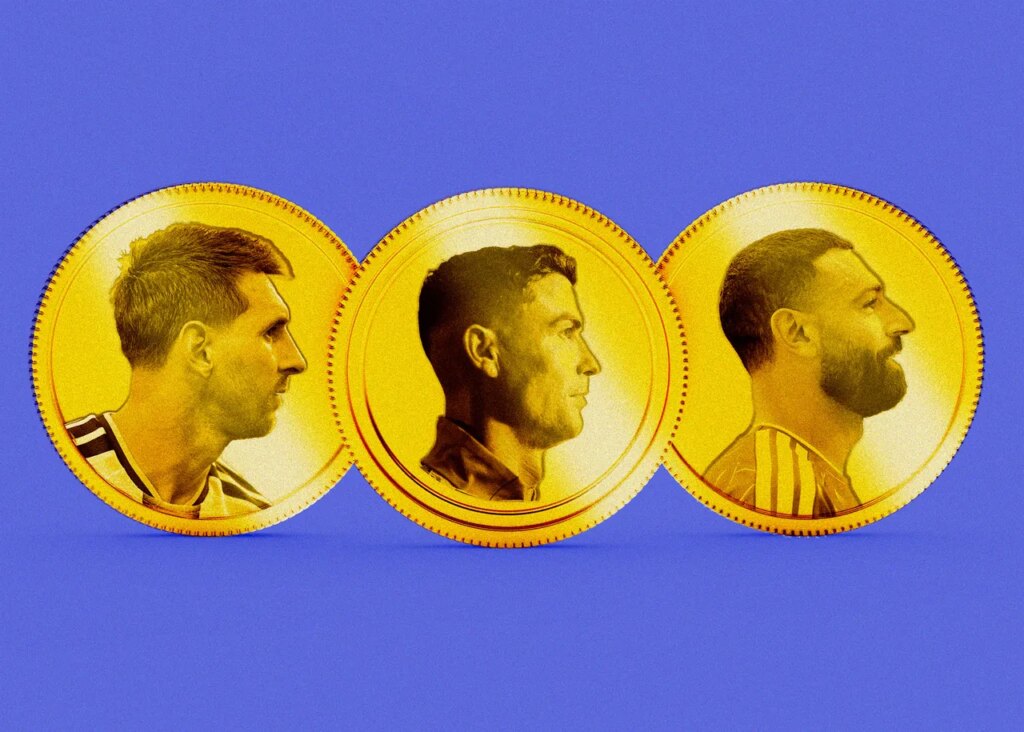
Lionel Messi, Cristiano Ronaldo, and Mohamed Salah have spent the past two decades defining one of soccer’s greatest eras. Now, as the 2026 FIFA World Cup marks Ronaldo’s final appearance at the tournament and another defining moment in the careers of Messi and Salah, they’re also preparing for life beyond the pitch.
Before Messi’s Argentina beat Salah’s Egypt in one of the tournament’s best matches on Tuesday, Salah was asked which player he would choose for one final “last dance” from a generation that included both Messi and Ronaldo. He chose Messi without hesitation. The answer carried extra weight given that Ronaldo had already confirmed this would be his final FIFA World Cup before Portugal’s Round of 16 defeat to Spain, bringing an end to his six-tournament World Cup career.
Away from football, however, the players’ futures are beginning to diverge. Messi and Ronaldo have increasingly embraced equity stakes in AI, health tech, and startup companies, while Salah has largely stuck to a more traditional mix of commercial partnerships, property, and philanthropy.
That shift has accelerated over the past decade as venture capital firms and startups increasingly seek celebrity investors who bring more than money. A footballer with hundreds of millions of followers can offer global reach, credibility, and distribution that few traditional investors can match.
“The shift from traditional sponsorship agreements towards equity stakes and startup investments reflects a broader focus on long-term wealth creation and financial security beyond an athlete’s playing career,” says Kamraan Khan, a partner at Dubai-based firm Archers Valuation and Advisory.
2026 FIFA World Cup
Here’s WIRED’s complete guide to the 2026 FIFA World Cup.
Over the past decade, elite athletes have increasingly traded one-off endorsement fees for ownership stakes in companies, joining a broader trend that has seen sports stars become investors rather than just brand ambassadors. In October 2022, Messi launched Play Time HoldCo, a San Francisco–based investment firm alongside entrepreneur Razmig Hovaghimian, founder of video-streaming platform Viki, which had earlier been acquired by Rakuten. The firm’s goal is simple: invest in companies operating across sports, media, and technology.
“While sponsorships typically generate income during an athlete’s peak earning years, equity investments can provide the potential for capital appreciation and, where applicable, future dividend income, helping to build more sustainable wealth after retirement,” notes Khan.
Initially reported to be targeting roughly $200 million, Play Time has since assembled a portfolio that increasingly resembles a Silicon Valley venture fund.
Per Play Time’s website, its bets include FieldAI, Fish Audio, World Labs, Perceptron, Intangible, and SuperAnnotate, alongside sports-specific investments in the FIFA-licensed mobile game Matchday and the memorabilia marketplace AC Momento.
Outside Play Time, Messi also holds an equity stake in fantasy football platform Sorare, which lets users buy and trade officially licensed digital player cards, and joined the ownership group of KRÜ Esports, the Valorant and Rocket League organization founded by his former Argentina teammate Sergio Agüero. His three-year, reportedly $20 million deal to serve as global ambassador for the blockchain fan-token platform Socios.com is a paid promotional contract, not an undisclosed equity stake.
As part of his landmark 2023 move to Inter Miami, Messi received an ownership component alongside his salary and signing bonus—an unprecedented arrangement in Major League Soccer. While reports have speculated about the size of that stake, neither the club nor MLS has publicly confirmed the details.
Sportico valued Inter Miami at $1.45 billion in February 2026, up 22 percent year-on-year and the highest valuation in MLS history.
If Messi’s investments reflect Silicon Valley’s AI boom, Ronaldo’s are centered almost entirely on health technology—an area that aligns closely with the personal brand he has spent decades cultivating around fitness and longevity.
Ronaldo became an investor in Whoop—the wearable fitness tracker and health analytics company—in May 2024, a deal that Whoop itself called “one of Ronaldo’s most significant investments to date,” after he had already been a paying member for years. “Whoop has become one of the most important tools I use to support my long-term health,” he said at the time. Whoop’s foray into the UAE is backed by both the Qatar Investment Authority and Mubadala Investment Company.
Ronaldo’s most concrete move came in February 2026, when he paid $7.5 million for a 10 percent stake in HBL Pro2col Software, the Herbalife subsidiary behind Pro2col, a “digital, personalized health and wellness operating system,” deepening the footballer’s partnership with Herbalife, which dates back to 2013.
A month later, Herbalife agreed to acquire London-based Bioniq in a deal worth up to $150 million. Ronaldo was already an early investor in the AI-powered personalized supplements company, whose technology will now be integrated into Pro2col. “By combining Bioniq’s personalized supplement technology with Pro2col and the power of our global distributor network, we are expanding our ability to deliver personalized wellness at a global scale,” Ronaldo said in a joint statement with the company.
Ronaldo has also reportedly received a 5 percent ownership stake in Saudi Pro League club Al-Nassr, a deal said to have been finalized in June 2025 and valued at roughly £50 million ($66.7 million).
Salah, meanwhile, has taken a more traditional approach. Public UK corporate filings show his business interests are concentrated in commercial holding companies and real estate rather than publicly disclosed investments in technology startups. His highest-profile commercial relationships also remain conventional endorsement deals with brands including Adidas, Pepsi, and Vodafone Egypt, alongside philanthropic work through the Mohamed Salah Charitable Foundation.
“Whether investing in startups, real estate, or private businesses, independent valuation and robust due diligence remain fundamental to understanding both opportunity and risk before committing capital,” explains Khan.
Whether through venture capital, wearable technology, health platforms, or property investments, football’s biggest stars are increasingly thinking beyond their playing careers. As athletes gain more influence over how their wealth is managed, equity—not sponsorship—is becoming one of sport’s smartest plays.
This article originally appeared on WIRED Middle East.