

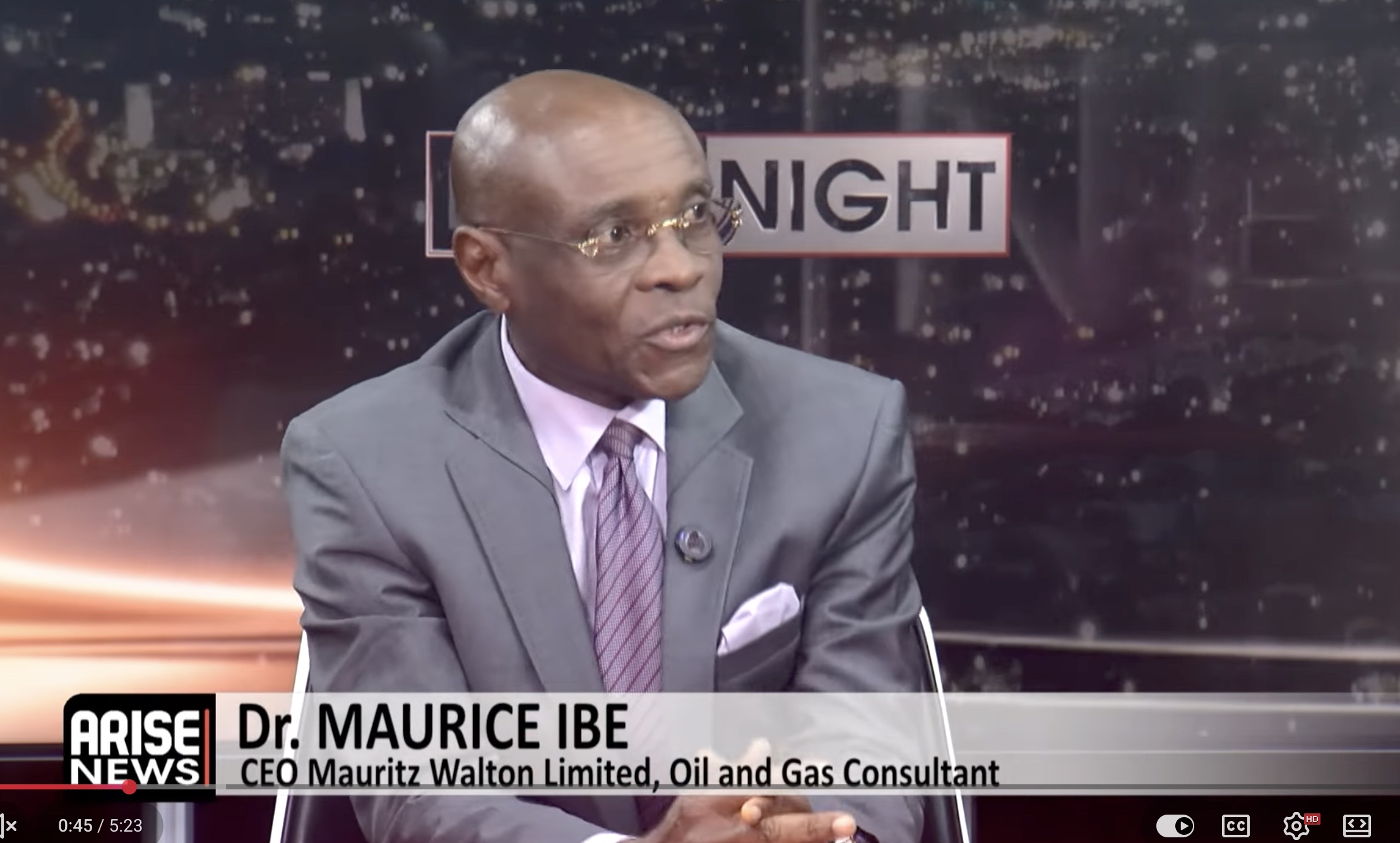
The Chief Executive Officer, (CEO), Mauritz Walton Limited, who is also an oil and gas consultant, Dr Maurice Ibe, has said pump prices of petrol will not change unless there is a movement in global oil prices, explaining that Dangote Refinery’s decision to sell petroleum products in dollars was inevitable because it now sources a significant portion of its crude oil in dollars.
He said this in an interview with ARISE NEWS on Wednesday.
“The biggest problem was that the Nigerian National Petroleum Company wasn’t giving him the agreed amount of cargoes for him to be able to refine and continue to sell in Naira. Right now, he’s sourcing about 70% of his crude all over the world, you know, mostly from the US and they’re paying in dollars. He’s sourcing his feedstock in dollars.
“So he can’t be sourcing his feedstock in dollars and selling in Naira. If there are cyclical changes within the global market, he loses a lot of money. So it only makes sense for him to transit from the currency to the currency of purchasing.
“So the pump prices is not going to change except when the global oil market moves up or moves down. So everything is going to be dependent on what the market does,” he said.
He, however, cautioned that a further escalation of tensions in the Middle East, particularly involving the United States, Iran and Israel, could drive up global crude oil prices, leading to higher petroleum product prices in Nigeria as refiners pass on the increased cost of crude to the domestic market.
“The only thing we have to be worried about is that there’s, again, the escalation in the Middle East. The conflict between the US, Iran and Israel. It’s coming back up again. So if that continues, we should expect some rise in petroleum products because the pricing is gradually inching up again. And if the conflict escalates, naturally, he’ll be buying at much higher prices and it’s going to be reflected in the domestic market.”
Speaking further, Dr Ibe said Dangote Refinery’s decision to sell petroleum products in dollars would mainly affect petroleum marketers, who would now have to source dollars to make purchases.
“We put a lot of pressure on the dollars. That’s number one. And then the only other time that we will have a major impact on domestic oil prices is if the dollars, rather the products, go up in the international market. If it doesn’t go up and it stays stable, we don’t need to worry about anything. The most worries will be for the marketers who will now be sourcing dollars to purchase,” he explained.
Speaking on the exchange rate, Dr Ibe said a weaker naira would push up fuel prices as marketers would need more naira to source dollars. He added that NNPCL’s inability to supply the agreed crude volumes had forced Dangote Refinery to source about 70 per cent of its crude from the international market.
“If the Naira weakens, of course. We expect to be paid more at the point.
“NNPCL is not giving Dangote the agreed feedstock. If they were, we wouldn’t be where we are. He’s sourcing about 70% of his feedstock from the international market. And NNPCL is only about 15%? NNPCL is giving him maybe two, three cargos a month,” he disclosed.
Speaking on the naira-for-crude policy, the oil and gas consultant described it as “completely dead on arrival,” arguing that the government should not have introduced the arrangement knowing it could not meet its crude supply obligations.
“Completely dead on arrival. Actually, I don’t know why they went into that transaction. Because they knew they couldn’t meet that transaction. It’s not possible,” he stressed.
He also called on the government to fix the country’s state-owned refineries, saying Nigeria could not continue relying heavily on the Dangote Refinery despite its 650,000-barrel-per-day capacity.
“So petrol outlet owners are saying to the government, fix the refineries now. We cannot continue to rely on one refinery. Are they just waking up? Are they just waking up? We can’t have three, four refineries or kubatos for years and years with all the monies dumped in them. And the government, after spending four, five billion dollars on the refineries, they’re not working. Nobody’s accounting for the monies that have been spent. And each time you raise it, they shut it down. So the greatest problem we have is that the refineries are not working. In spite of the 650,000 capacity Dangote refinery with the prospects of expanding? We should really be self-sufficient with the addition of Dangote refineries. But unfortunately, Nigeria happens to have refineries. God help us,” he said.
Favour Odima
Follow us on: