

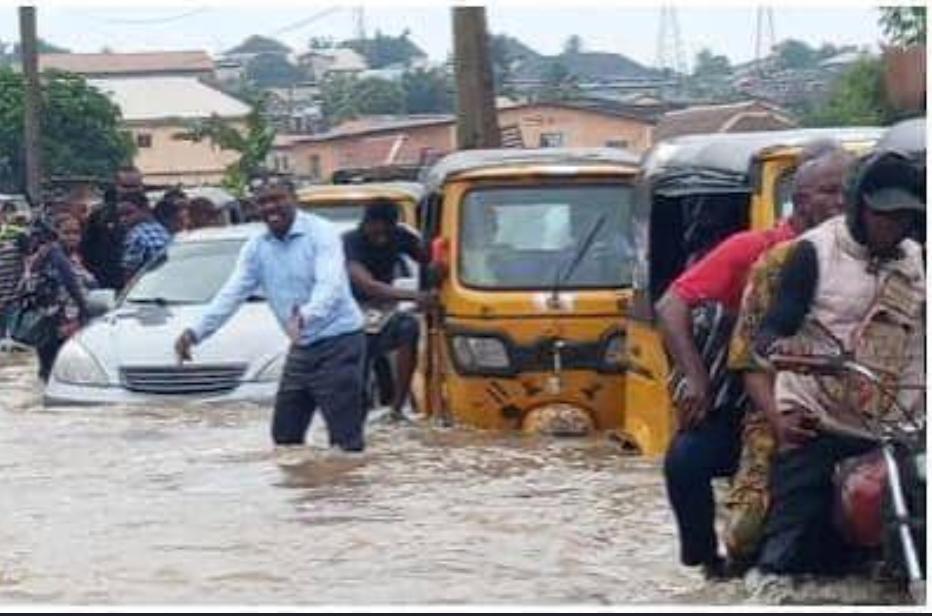

The Initiative for Research, Innovation and Advocacy in Development (IRIAD) has called for urgent action by government, the private sector, civil society, and citizens to address the recurring flooding crisis in Lagos state.
IRIAD in a statement signed by the Director of IRIAD–The Electoral Hub, Princess Hamman-Obels, was reacting to a recent flooding which affected communities, including FESTAC, Gbagada, Ikeja, Ajah, Lekki, Victoria Island, Mushin, Mafoluku, Ikorodu, Oshodi, Ikotun, Maryland, Ogudu, Alakija, Agungi, Ajiran, and parts of Lagos Island, including Adeniji Adele, Olushi, Evans, and Anikantamo.
According to her, many homes and businesses were submerged, roads became impassable, electricity infrastructure was damaged, commuters were stranded, and economic activities were significantly disrupted.
She said while heavy rainfall triggered the flooding, its severity was worsened by blocked drainage systems, indiscriminate waste disposal, inadequate drainage infrastructure, illegal construction on drainage channels and wetlands, poor urban planning, rapid urbanisation, and the increasing impacts of climate change.
The Director said the flooding caused widespread displacement, destruction of property, disruption of transportation and businesses, electricity outages, and heightened health and environmental risks.
“These recurring incidents demonstrate that flooding is no longer merely a seasonal event but a major environmental, governance, and development challenge.
IRIAD expressed sympathy to individuals, families, businesses, and communities affected by the recent flooding triggered by prolonged and intense rainfall across Lagos.
While acknowledging that heavy rainfall triggered the flooding, she said flooding was no longer merely a seasonal occurrence but a recurring urban development and climate emergency requiring coordinated action and sustained investment in resilience.
She urged the Federal Government at all levels to shift from reactive disaster response to proactive prevention through improved environmental governance, climate-resilient infrastructure, sustainable urban planning, and stronger disaster preparedness.
She also called on the Federal Government to implement the recommendations contained in the Nigeria Hydrological Services Agency’s Annual Flood Outlook 2026 by strengthening flood forecasting, early warning systems, river basin management, climate adaptation measures, and support for states to implement preventive interventions.
Princess urged the Lagos state Government to accelerate the rehabilitation and expansion of drainage infrastructure, enforce physical planning and environmental regulations, strengthen waste management systems, improve flood preparedness, and intensify public awareness campaigns on environmental sanitation.
IRIAD further appealed to estate developers and the private sector to comply with planning regulations, avoid construction on flood-prone areas, drainage channels, and wetlands, and invest in climate-resilient infrastructure.
The Director called on traditional rulers and community leaders to mobilise residents for environmental sanitation, encourage responsible waste disposal, support flood preparedness initiatives, and promote compliance with environmental laws.
She urged citizens to refrain from dumping refuse into drainage channels and waterways, report environmental violations, participate in community sanitation exercises, and adhere to weather advisories issued by relevant authorities.
According to her, building resilient communities requires collective responsibility and sustained collaboration among governments, development partners, civil society, traditional institutions, the private sector, and citizens.