

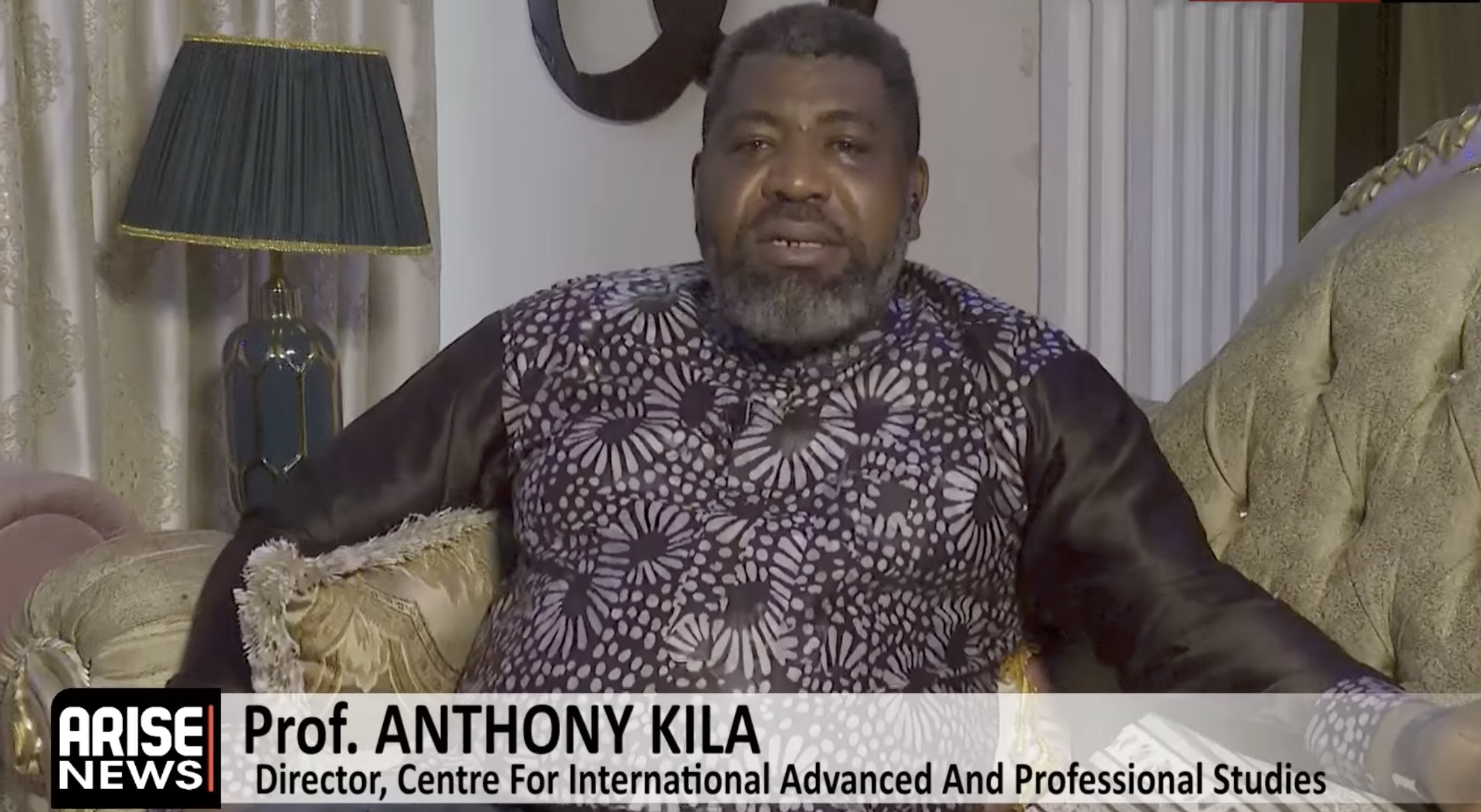
Director, Centre for International Advanced and Professional Studies, Anthony Kila, has warned that Nigeria’s proposed state police system could worsen the country’s security challenges if longstanding institutional weaknesses, political complicity and weak democratic oversight are not addressed before implementation.
Speaking during an interview on ARISE NEWS on Friday, while reviewing the station’s State Police Town Hall, Kila said although he strongly supports decentralisation and the establishment of state police, the reform could become counterproductive if policymakers fail to build effective safeguards against abuse and complicity. “State policing would not solve the problem. State policing is likely to exaggerate the question of complicity.”
Kila explained that while state policing remains the right direction for Nigeria’s security architecture, its success would depend on confronting the country’s structural governance problems rather than assuming the new system would automatically solve them. “One, I disclose I am fully for decentralisation of system, devolution of power. So, really, my bias is for state policing. But I understand the concern, and I think it’s a leadership test.”
According to Kila, Nigeria’s weak institutional checks and balances must be reflected in the design of any state police framework. “We need to understand that we have a system where checks and balances are not so real. We have a system where, in too many cases, the state of assembly appendages of the executive.”
He argued that the proposed legislation establishing state police should deliberately anticipate abuses rather than assume good governance, saying policymakers must ask difficult questions before implementation. “We have to use the if-and-then methods to say, what will happen in case a governor goes rogue, in case a governor decides to use it, in case the House of Assembly decides not to play their role?”
Kila maintained that identifying weaknesses should not discourage the reform but instead inspire stronger institutional design capable of preventing abuse. “I think that is the beauty and the joy of designers of new system, to examine the concept, to examine the operationality, to examine what possible hindrances.”
Responding to concerns raised about the timing of the proposal and the possibility of rushing the process before elections, Kila acknowledged such fears but insisted preparation, rather than delay, should be the focus. “ i fully understand the concerns of those saying that we’re rushing into this. We shouldn’t rush into it. We should get it right.”
He suggested that authorities could even pilot the initiative before nationwide implementation while ensuring that every operational concern is thoroughly examined. “ i think we can pilot it State policing is a solution to security as well. We just need to get it right. Because if we don’t get it right, it will mar the whole thing and destroy the good idea forever.”
Quoting from his recent book, he stressed that careful preparation, not political declarations, would ultimately determine whether the reform succeeds. “Leaders announce decisions, but history judges preparation.”
Addressing concerns about Nigeria’s growing population and whether state police would provide sufficient manpower, Kila said policymakers should adopt a problem-solving approach by listing every foreseeable challenge alongside practical solutions and weighing their costs and benefits. “What we need to do, in my mind, is to develop a spreadsheet mentality where on one column we identify all the issues and another column, we identify possible solutions to those problems, and we identify the cost and the benefit of those solutions.”
Kila suggested that expanding local government structures and deploying modern technology could help overcome population-related policing challenges. “The two solutions are you get more state police, sorry, more local authorities But also technology will make things a lot easier.”
He argued that state police reforms
should not be designed exclusively by politicians because elected officials naturally prioritise their own political interests. “If we leave things to politicians alone, they are likely to think in a way that would protect their interests, their partisan, personal, sectarian interests.”
Kila called for experts, academics, civil society and the media to play central roles in shaping the framework. “We need experts. The problem is that if we leave things to politicians alone they are likely to think in a way that would protect their interests.”
He also linked Nigeria’s weak legislative oversight to broader structural flaws within the country’s presidential system. “By its nature, the presidential system is more partisan. It is prone to be centralised, if the majority of an assembly and the governor belong to the same party they are naturally more inclined to share the same ideology and ideas So it is easy for them to become rubber-stamped.”
Despite these challenges, Kila insisted that Nigeria should not abandon reform because of existing institutional weaknesses. “We cannot because of reality not dream and innovate and renew ourselves. We need to, we just need to factor it in. It’s an intellectual challenge.”
He concluded that while state police alone cannot solve Nigeria’s security crisis.“You’re supporting ideal and desire with reality We need to factor it in. It’s an intellectual challenge.”
Erizia Rubyjeana
Follow us on: