

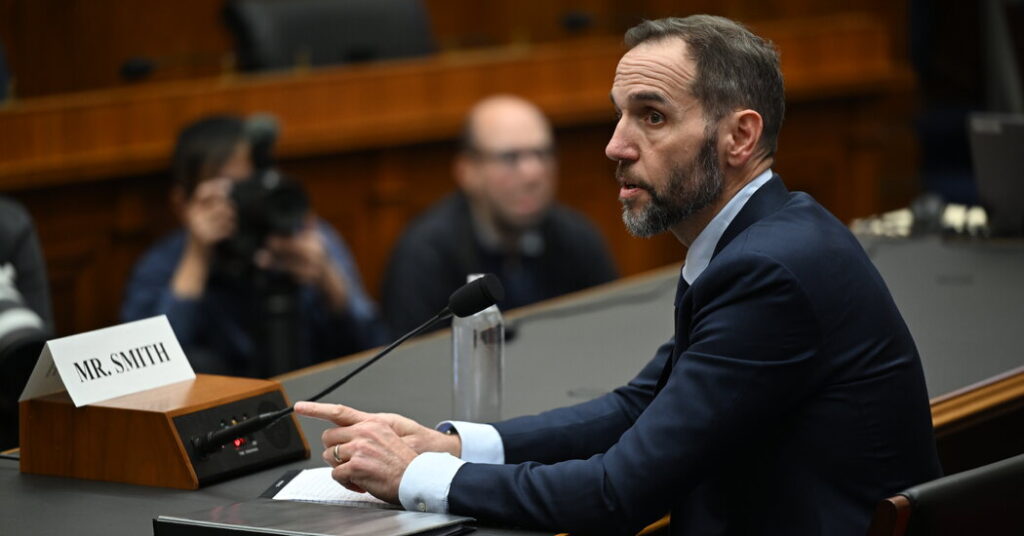
Over the objections of the Justice Department, a federal judge unsealed court filings on Thursday related to a subpoena that Jack Smith, the former special counsel, used to obtain call logs of lawmakers who interacted with the Trump White House around the Jan. 6, 2021, riot.
The filings confirmed that when Mr. Smith’s team asked a court to bar the phone companies from discussing the subpoenas, prosecutors did not tell the court that the accounts belonged to members of Congress. They were identified only by phone numbers.
That itself is not new. Mr. Smith’s use of subpoenas to secretly obtain lawmakers’ toll records — logs showing when calls were made but not their contents — has been known since October. That is when Senator Charles E. Grassley, Republican of Iowa, announced that he had been told about them. Mr. Smith later testified to Congress that department rules at the time did not require disclosing that the subjects were lawmakers.
But when The New York Times asked a court to unseal the files, citing a rule that lifts the secrecy of grand jury information once the government has disclosed its existence, the Justice Department balked. It said that the government had not formally acknowledged the subpoenas and that Mr. Smith’s testimony did not count.
The request thus raised a thornier question about the Trump administration’s dealings with Mr. Grassley. Since President Trump returned to office last year, the senator has released a flood of internal law enforcement files that normally would be off limits to disclosure, sometimes attributing them to “whistle-blowers” or not saying who gave them to him.
The Times pointed to a constellation of evidence that it argued showed Trump administration officials were behind Mr. Grassley’s receipt of the information and that the executive branch had otherwise since acknowledged the subpoenas. The department disagreed, including at a May hearing at which Judge James E. Boasberg, the chief judge of the U.S. District Court for the District of Columbia, voiced skepticism of the government’s position.
Judge Boasberg ordered the department last week to show him the disputed files privately. On Thursday, he ordered the release of one representative set with the phone number itself redacted, saying the others all looked the same. The material was released to The Times.
The judge, however, did not issue an opinion explaining what specifically the executive branch had done that amounted to public acknowledgment lifting the secrecy rule.