

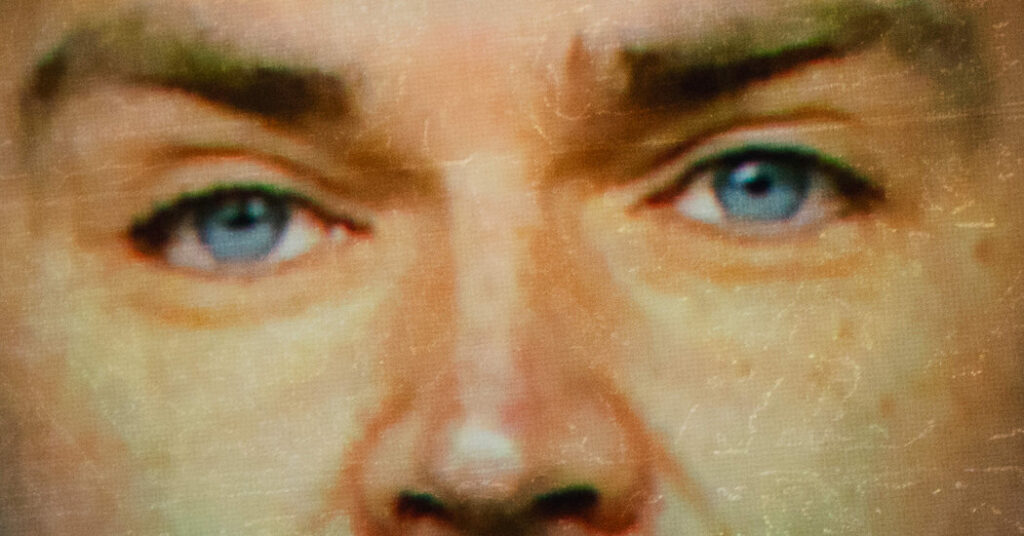
JD Vance seems stressed.
Not just because he must publicly support a war that he privately opposed, or because his political fortunes are tied to a president whose approval rating is circling the drain. Those conditions are bad enough for the vice president. But Vance appears most agitated because he believes America is engaged in a civilizational struggle — and it is losing.
Vance’s new memoir, “Communion,” centers on his own religious evolution, moving from evangelical Christianity to atheism to the intellectualism and hierarchy of the Catholic Church. From once finding Christianity “too wishy-washy,” Vance now realizes he’s been “touched by God’s grace.”
But deep in “Communion” is the story of another faith transition, one that America and the Western world are undergoing, and which Vance stridently decries. It is the move from “Western Christian civilization” to “secular global liberalism,” a transformation that the vice president blames for rising racial strife, erosions in marriage and declines in population growth.
“My big fear isn’t death but that we inherited a great civilization and are slowly letting it fall into disrepair,” he writes. Vance fears “civilizational death,” he explains, “a death, not of an individual, but of the civilization that gave an individual’s life meaning.”
Welcome to JD Vance’s clash of civilizations.
“The decline of Christianity has left us without a shared moral language,” Vance contends. In its place, the right has worshiped the marketplace, while the left has embarked on an endless quest of self-indulgent self-discovery. “Each of us, in our own weird ways, is guilty of casting aside the Christian inheritance of our civilization,” he writes.
Vance looks upon the men who won the Second World War as civilizational models. They weren’t just defending ideas — “not ‘liberalism,’ not ‘freedom,’ not even ‘democracy,’” he writes. “It was Western Christian civilization, and the values particular to it: the concept of natural rights, including freedom of speech; a sense of duty to one’s neighbors; an obligation of the strong to protect the weak; a belief in free will and individual conscience.”
But since then, and especially since the end of the Cold War, “we lost something sacred,” Vance writes. Faith retreated from North America and Europe; the West, he says, “forgot what it stood for.”
Not to worry — the vice president is here to remind us. “I’m not demanding that you become a Christian,” he writes in his epilogue, “though I’d welcome it.”
While the 250th anniversary of the Declaration of Independence might have reminded us that the American creed has something to do with political equality and self-government, Vance has frequently argued for an alternate view. When he addressed the 2024 Republican National Convention, Vance downplayed the notion of America as a set of secular ideals, instead emphasizing America as a geographic entity reserved for a certain people.
“America is not just an idea,” he said. “It is a group of people with a shared history.” He referred to a cemetery plot in eastern Kentucky, the resting place of many generations of his family. “That’s not just an idea, my friends,” he said. “That’s not just a set of principles. Even though the ideas and the principles are great, that is a homeland. That is our homeland. People will not fight for abstraction, but they will fight for their home.”
In remarks he made at the Claremont Institute in 2025, Vance again questioned the “logic of America as a purely creedal nation,” arguing that you can’t define America as just “agreeing with the principles.”
Now, in “Communion,” he specifies his vision of the creed. “Christianity is America’s creed, the shared moral language from the Revolution to the Civil War and beyond.” Here, Vance is citing himself, quoting at length from a speech he delivered late last year at a Turning Point USA conference. In another passage of the speech, which does not appear in “Communion,” Vance affirmed that “the only thing that has truly served as an anchor of the United States of America is that we have been, and by the grace of God we always will be, a Christian nation.”
According to Vance, it is our Christian character — more than any founding documents or principles or “abstractions” — that defines America, and we must keep it that way. One of his favorite prayers, the vice president says, urges the Archangel Michael to defend us in the battle “against the wickedness and snares of the devil,” and asks that “all the evil spirits who prowl about the world seeking the ruin of souls” be cast into hell.
“I really liked that one,” Vance writes. “It felt medieval despite being written in the 19th century. And it felt mystical. You could almost see the angels and demons doing battle.”
In “Communion,” Vance recalls a moment when he prepared to wage battle himself. In early 2020, as news emerged of a deadly virus spreading across China, “I drove to a sporting goods store and bought 1,000 rounds of ammunition,” Vance writes. “Then I went to Walmart and bought enormous bags of rice and flour, 20 pounds of ground beef, and excessive amounts of ketchup.” The cashier asked him if he owned a restaurant. “No. But the China virus is coming,” Vance replied.
In “Regime Change,” their new book about Trump’s second term, Maggie Haberman and Jonathan Swan of The New York Times write that Vance was something of a “doomer,” as Vance himself joked in private, that he was “always latching onto the most negative possibilities.” He worried, early and presciently, that divides over Israel and the Epstein files would threaten the MAGA coalition, and his fears lurched toward the conspiratorial. After the assassination last year of Charlie Kirk, the conservative activist and the vice president’s close friend, Vance’s “instincts told him that there was a larger plot behind the murder,” Haberman and Swan write. “He went down countless online rabbit holes, becoming so consumed by the videos and the theories that his wife, Usha, told him she was worried about him.”
Vance’s fears are not just for the MAGA base, or for the nation, or for the West; they are deeply personal, too. Throughout “Communion,” Vance confesses the “mortal sin of despair” and a constant “sense of fatalism” that the pain and struggles of his youth will be passed on to his own family. He worries that he will be a bad father or bad husband, that no one will take the trouble to visit his own gravesite in Kentucky. Vance’s religious conversion is partly an effort to assuage those fears.
“Therapy didn’t work for you,” his wife tells him. “But church does.”
When Samuel Huntington wrote of a clash of civilizations in the 1990s, he was depicting a cultural battle among the West, China, the Islamic world and other groups, divides that seemed to come alive with the Sept. 11 attacks. In contrast, Vance’s civilizational struggle, between Christianity and secularism, is found within the West.
“The threat that I worry the most about vis-à-vis Europe is not Russia, it’s not China, it’s not any other external actor,” Vance said last year at the annual Munich Security Conference. “And what I worry about is the threat from within, the retreat of Europe from some of its most fundamental values — values shared with the United States of America.”
The most pressing challenge that Europe faces, Vance argued, is mass migration, caused by politicians who counter the will of voters and “open the floodgates to millions of unvetted immigrants.” Citing a fatal attack by an Afghan asylum seeker who rammed a car into a Munich crowd just one day before his speech, Vance asked, “How many times must we suffer these appalling setbacks before we change course and take our shared civilization in a new direction?”
In “Communion,” Vance pits immigration not just against security or employment, but faith as well. “As our leaders have ushered in an unprecedented increase in demographic diversity through immigration,” he writes, “they have simultaneously discarded the most powerful force for cultural cohesion: Christianity.”
This has become a recurring theme among top Trump administration officials. Speaking in February at this year’s Munich conference, Secretary of State Marco Rubio — and Vance’s possible competitor for the 2028 Republican nomination — emphasized Christianity as a “sacred inheritance, an unbreakable link between the Old World and the New.” And speaking at a meeting of Western Hemisphere defense ministers early this year, Pete Hegseth, the secretary of defense, said that the “essential test” they face is “whether our nations will be and remain Western nations with distinct characteristics, Christian nations under God, proud of our shared heritage with strong borders and prosperous people.”
Vance seems to acknowledge, however grudgingly, the imperative, shared across major religions, to welcome the stranger. “I can believe (as I do) that I owe a given immigrant — even an illegal one — duties of charity and grace,” he writes. And he admits that “immigration is a particularly thorny version of a challenge I encounter every day in my job: how to take an accepted moral principle and apply it in the real world as a Christian leader.”
Vance neglects his duties of charity and grace when he does not acknowledge, let alone apologize for, spreading unfounded rumors in 2024 that Haitian immigrants were eating pets in Springfield, Ohio. He writes that critics say the administration is “too tough” on immigration, but he waves it all away. “The point is not to litigate this issue on these pages,” Vance writes, “but to highlight that any application of moral principles in the real world requires a constant evaluation of trade-offs.”
It’s just as the hymn says: They’ll know we are Christians by our constant evaluation of trade-offs.
Political trade-offs are evident when Vance recounts his history lessons on America’s own civilizational greatness, particularly those surrounding the Civil War. While Confederate generals fought for the “wrong cause” and Union generals for the “right cause,” he notes, the Confederates were “strategically brilliant” and “tragic in their heroism.” And, really, both sides helped build the nation: “Whether our great-great-great-grandfathers fought for Grant’s or Lee’s army, we learned that their actions that day had made it possible for us to be part of a United States of America.”
Vance acknowledges America’s peculiar institution, though with a generous helping of passive voice. “We learned of the slaves who were brought over and how they helped build the country with their bare hands,” he writes. “How they were mistreated and struggled but came to prevail at the end of the long road to freedom.” Also, Vance posits that regionally divergent interpretations of the Civil War are simply “part of the complicated diversity of the United States.”
That’s one kind of diversity even the Trump administration can get behind.
I feel for Vance. It’s hard to go through life unsure of who you are or what you believe. In childhood, the future vice president endured a “revolving door of father figures,” as he wrote in “Hillbilly Elegy.” In schooling and work, he embraced elite education and a “striver” ethos, only to conclude that both pursuits were “intellectually and spiritually broken.” And in politics, he became the subservient No. 2 for a man he previously condemned as “cultural heroin” and “America’s Hitler.”
Now, with “Communion,” Vance has morphed from hillbilly to heavenly. Will it be enough to distinguish himself from Trump as 2028 approaches, or will it prove as ineffective as it did for Mike Pence, another Trump V.P. who sought the religious conservative track to the White House?
At least Vance has a prayer.
Follow the New York Times Opinion section on Facebook, Instagram, TikTok, Bluesky, WhatsApp and Threads.