

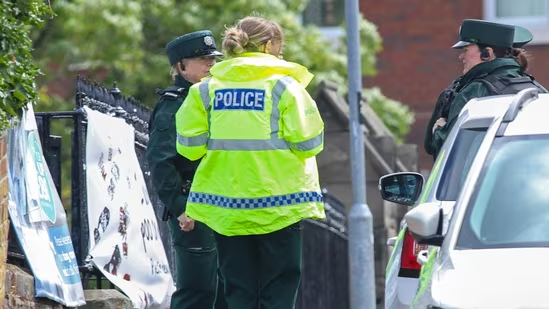
Irish police said on Friday they found an “extremely significant” explosive device in a vehicle near the border with Northern Ireland, during an operation targeting “dissident republican activity”.
Police said they stopped the car on Wednesday and arrested the driver, a woman in her 20s. They later also arrested a man in his 40s linked to the probe.
“To be clear, what we found was an extremely significant seizure,” Garda (Irish police) commissioner Justin Kelly told media on Friday, confirming it “was an explosive device”.
“Any seizure of this nature is really concerning,” said Kelly, suggesting that the case was linked to Irish republican dissidents.
The device “could have potentially caused significant damage”, he added.
Irish broadcaster RTE reported, citing police sources, that the bomb was being transported to Northern Ireland and was expected to be used as an under-car explosive for an attack.
The Garda told AFP they could not give any further details.
The police also declined to confirm reports that the device was being taken to the border city of Derry.
Northern Ireland was torn apart by civil conflict between the pro-Irish republicans and the pro-UK Unionists until the Good Friday Agreement in 1998.
The agreement required rival paramilitaries to decommission their weapons, but dissident factions persist on both sides.
Dissident republican groups are smaller than the Provisional Irish Republican Army, which ended its violent campaign in 2005, but have used improvised explosive devices and mortars in past attacks.
“There’s a small minority of these individuals, I would describe them as radicalised republicans, and this is a threat that we’re going to continue to face for some time,” said Kelly.
Earlier this year, Northern Irish police blamed dissident republicans for two separate attacks on police stations near Belfast, which caused no casualties.