

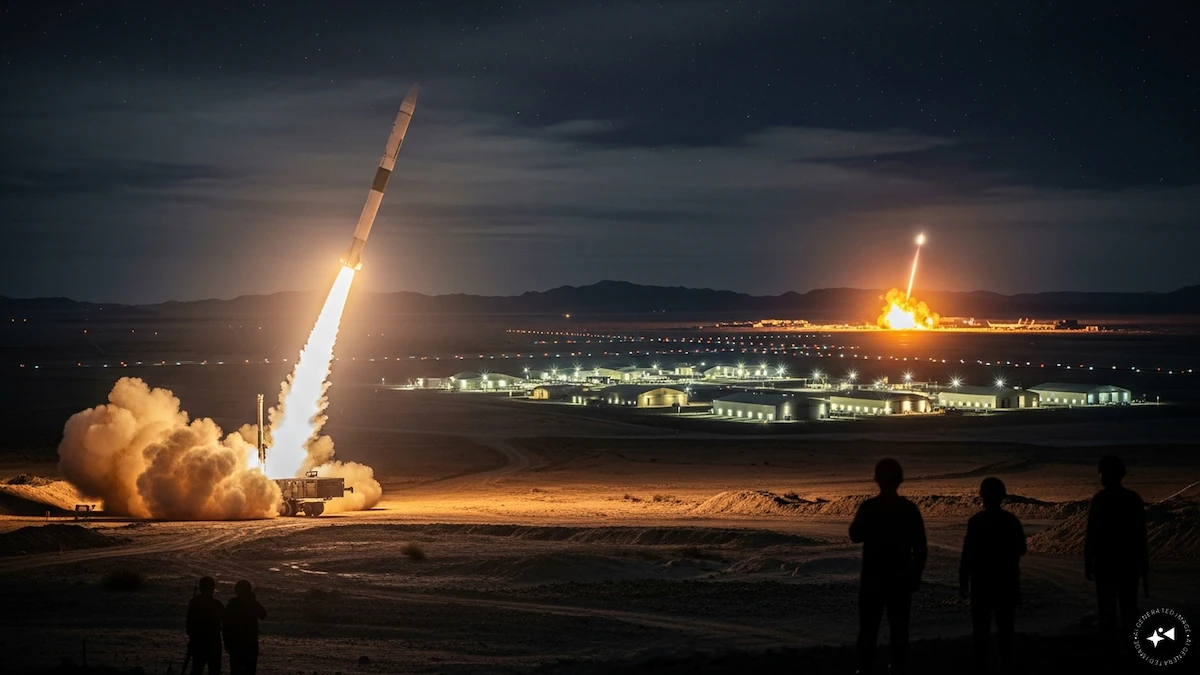
The IRGC framed the action as retaliation rather than hostility toward Jordan itself, describing solidarity with the Jordanian public over the Palestinian cause, according to Iran’s Fars News Agency.
Jordan’s armed forces said four missiles that crossed into Jordanian airspace from Iranian territory were intercepted and destroyed, with no casualties reported.
Also Read: Iran missile strike on UAE tankers kills Indian sailor as Hormuz toll climbs
The strike came as US Central Command wound down its latest round of attacks on Iran which it said lasted for a duration of five hours. This was third night of bombardment. Iranian state media reported strikes across several cities and said four people were injured.
The escalation traces back to Saturday July 11, when the IRGC declared the Strait of Hormuz closed “until further notice,” following a third round of US airstrikes on Iranian territory that pushed the fragile US-Iran ceasefire back towards open conflict. The IRGC said the strait would remain shut until US military involvement in the region ends, with all maritime traffic barred in the meantime said state broadcaster IRNA.
Also Read: Iran targets US-linked missile defence radars in Jordan and UAE, says report
US Central Command, however, said commercial vessels continued to transit the strait.
The current round of hostilities began when the IRGC struck three commercial vessels near Oman, saying the ships had passed through the strait without authorisation. The US responded with two consecutive nights of airstrikes on July 7 and 8, hitting a combined 170 targets it said were aimed at degrading Iran’s ability to attack civilian and commercial shipping, and Iran retaliated on both occasions with strikes on US assets in Kuwait and Bahrain, vowing a “crushing response.”
The conflict intensified further in the early hours of July 12, when the US carried out a third wave of strikes on roughly 140 Iranian sites in response to an IRGC attack on a Cyprus-flagged container ship in the strait following.
Iran launched an extensive counterstrike across the Middle East later that morning.
The dispute stems partly from conflicting interpretations of a memorandum of understanding (MoU) signed between the two countries. Iran has cited Point 5 of the agreement to assert sole authority over the passage of commercial vessels and has said it intends to charge fees for transit; a move Washington has rejected.
Also Read: West Asia crisis: India expands scope of export RELIEF to 12 nations, includes Egypt & Jordan
Under customary international law, states are generally barred from levying tolls on straits used for international navigation.
Washington’s renewed campaign has run alongside its reimposition of a naval blockade on Iranian shipping and a proposed 20% levy on cargo passing through the strait, terms Trump has framed around threats to “finish the job,” while Iran has warned it will make Washington “pay the price” for what it called continued violations.
The strait carried about a fifth of the world’s oil and gas exports before the war, and its closure has weighed heavily on global energy supplies, pushing oil prices up almost 3% to a four-week high.
The UAE Ministry of Defense said Iranian cruise missiles had hit two Emirati oil tankers in the strait’s southern shipping lane, inside Omani waters. The UK’s Maritime Trade Operations agency separately reported a tanker struck by an unidentified projectile near Oman’s Limah, the agency said it would investigate the matter.
The IRGC claimed, without naming vessels, that it had disabled two tankers that ignored warnings, and cautioned that continued cooperation with US forces would deepen the risk of a global energy crisis.