

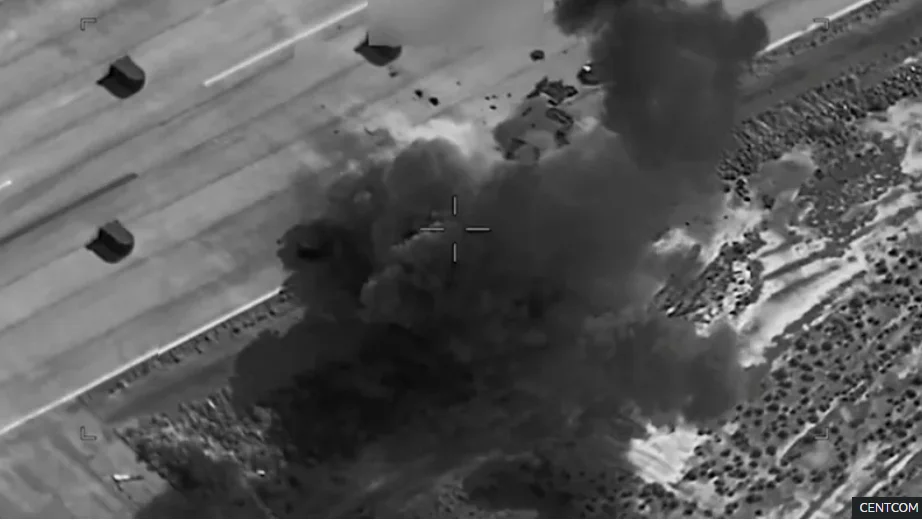
Iran launched retaliatory attacks on United States military assets in Kuwait, Qatar and Bahrain after the U.S carried out a new wave of airstrikes on Iranian military targets, further escalating tensions in the Gulf and dimming hopes of reviving a ceasefire.
According to Iran’s military, the retaliatory operation targeted U.S. Patriot missile systems in Kuwait, a satellite antenna in Qatar and a U.S. military fuel storage facility in Bahrain.
The U.S. military said it had launched fresh strikes on Iran aimed at protecting freedom of navigation through the Strait of Hormuz following Tuesday’s attack on three cargo ships transiting the strategic waterway.
“US Central Command forces have started conducting additional strikes against Iran to further degrade their ability to threaten freedom of navigation in the Strait of Hormuz,” CENTCOM, the U.S. military’s Middle East command, said in a post on X.
“The United States is holding Iran accountable for recent unjustified aggression against commercial shipping and civilian crews freely navigating a vital international waterway,” it added.
The latest exchange came hours after U.S. President Donald Trump declared that he considered the interim ceasefire with Iran to be “over” following renewed hostilities in the Gulf.
The U.S. strikes reportedly hit about 90 military targets, including air defence systems and logistics infrastructure along Iran’s southern coastline, with explosions reported in several coastal cities and power outages in some areas.
Iran’s Health Ministry said the latest U.S. attacks killed 14 people and injured 78 others, with 47 of the wounded remaining in hospital.
In response, Gulf countries reported Iranian attacks targeting U.S. military installations. Kuwait said it intercepted missiles and drones, Bahrain reported explosions in the capital, Manama, while Qatar briefly issued an elevated security alert before later giving the all-clear.
The Islamic Revolutionary Guard Corps (IRGC) described the attacks as the “first phase of the punitive response against the American treaty-breakers.”
Iran’s parliamentary speaker and chief negotiator, Mohammad Bagher Ghalibaf, warned that Washington would continue to face retaliation if it carried out further strikes.
“The US has yet to learn that bullying and breaking its commitments no longer come without a cost. Let me be clear: If you strike, you will be struck back,” he wrote on X.
He also insisted that the Strait of Hormuz “will be reopened only under Iranian arrangements, not through US threats.”
The renewed fighting has also disrupted shipping through the Strait of Hormuz, one of the world’s busiest oil transit routes. Industry officials said vessel movements have fallen sharply as shipping companies seek safer routes amid fears of further attacks.
The latest escalation has cast doubt on the future of the memorandum of understanding signed by Washington and Tehran on June 17, which was intended to pave the way for a permanent end to hostilities. Trump, however, said he no longer believed further negotiations with Iran would succeed.