

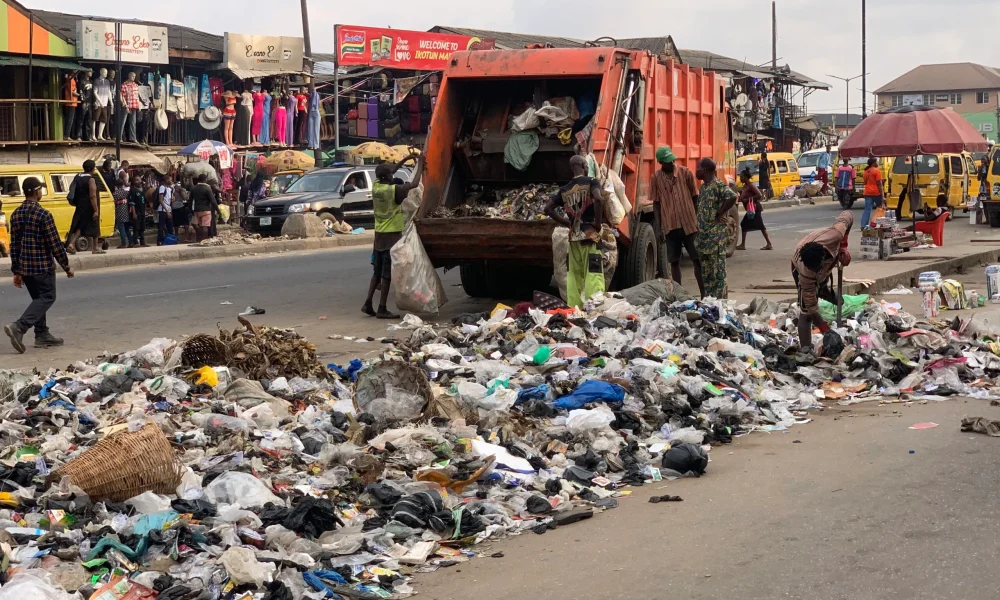
Once celebrated as Nigeria’s commercial nerve centre and proudly branded the “Centre of Excellence,” Lagos is increasingly battling a growing environmental challenge as heaps of uncollected refuse now dominate several major roads across the metropolis, raising fresh concerns over public health, sanitation and the effectiveness of the state’s waste management system.
An investigation across key corridors in Agege, Oshodi, Mushin and Ojuelegba revealed overflowing waste dumps encroaching on roadsides, medians and bus stops, leaving residents and commuters to contend with foul odours, blocked drainage channels and the constant presence of flies and rodents.
The refuse accumulation, which appears to have worsened in recent weeks in some locations, has become a familiar sight for thousands of motorists and pedestrians navigating some of Lagos’ busiest transport corridors.
At several points visited, piles of mixed household and commercial waste were seen spilling onto road shoulders, forcing pedestrians onto traffic lanes and creating an unsightly environment in one of Africa’s largest cities.
READ ALSO; Poor waste management raises flood concerns as Nigeria faces heavy rainfall threat
Growing Environmental Concern
Environmental experts warn that prolonged accumulation of refuse could pose significant public health risks, especially during the rainy season when blocked drainage systems increase the likelihood of flooding.
Residents also expressed fears that decomposing waste could contaminate nearby water channels, attract disease-carrying pests and contribute to respiratory problems due to persistent foul smells.
The situation has renewed questions about waste collection efficiency and whether existing disposal infrastructure is keeping pace with Lagos’ rapidly expanding population and commercial activities.
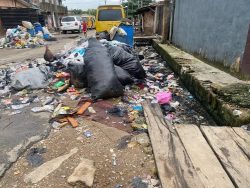
Although Lagos has invested significantly in environmental sanitation over the years, residents say the growing volume of refuse on major roads is undermining the city’s image and quality of life.
Residents Express Frustration
Many residents who spoke during the investigation described the situation as both embarrassing and dangerous.
A trader in Oshodi, who identified herself as Mrs. Adebayo, said the overflowing refuse had become a daily source of discomfort.
“Every morning the smell is overwhelming. Customers complain before they even get to our shops. This is not what anyone expects in Lagos.”
A commercial bus driver operating the Mushin-Ojuelegba route said commuters frequently cover their noses while passing some refuse points.
READ ALSO; Lagos embarks on landmark transition to circular waste management
“You can’t drive through some of these places without noticing the smell. When it rains, the refuse spreads onto the road and blocks the gutters.”
In Agege, a resident, Mr. Oladipo, said the situation had persisted for weeks despite repeated complaints.
“We pay taxes and environmental levies. We expect regular waste evacuation. Instead, the heaps keep getting bigger.”
Another resident in Ojuelegba expressed concern over possible health implications.
“Children walk past these refuse dumps every day. Flies are everywhere, and when the rains come, everything washes into the drainage.”
Public Health Risks
Public health specialists note that poorly managed solid waste can increase exposure to disease vectors, contribute to environmental pollution and worsen urban flooding by obstructing drainage channels.
They also warn that decomposing refuse releases gases and creates breeding grounds for mosquitoes, flies and rodents capable of spreading infectious diseases.
Environmental advocates argue that while residents have a responsibility to dispose of waste properly, authorities must ensure timely evacuation and adequate waste collection infrastructure.
Calls for Urgent Intervention
Residents are urging the relevant environmental agencies to intensify waste evacuation across affected communities and strengthen monitoring to prevent illegal dumping.
They also called for stricter enforcement against indiscriminate refuse disposal, expansion of waste collection points and more frequent collection schedules in densely populated areas.
Urban planning analysts say Lagos’ growing population and rising commercial activities require continuous investment in waste management infrastructure to prevent recurring sanitation challenges.
For many residents, restoring cleanliness to major roads is not only about aesthetics but also about protecting public health and preserving the reputation of Nigeria’s commercial capital.
As refuse continues to pile up along some of the city’s busiest roads, many believe swift intervention by the relevant authorities will be critical to restoring environmental standards and reinforcing Lagos’ image as the Centre of Excellence.