

Defence
…urges strict human rights compliance in internal security operations
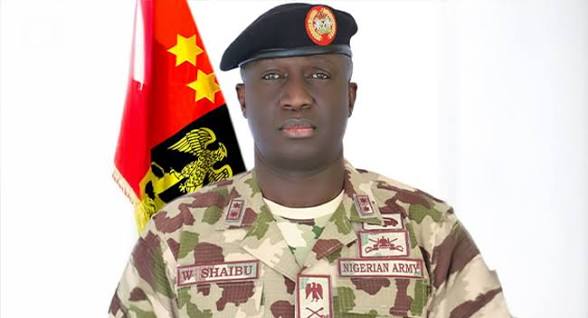
THE Human Rights Writers Association of Nigeria (HURIWA) has commended the Chief of Army Staff, Lieutenant General Waidi Shaibu, and the Nigerian Army as an institution for unveiling a reinvigorated operational doctrine that places professionalism, discipline, troop welfare, public trust and respect for human dignity at the centre of military operations.
HURIWA, in a statement at the weekend by
Emmanuel Onwubiko, it’s national coordinator
considers the renewed emphasis on professionalism and ethical conduct particularly significant at a time when the Nigerian Army is increasingly deployed in complex internal security operations involving terrorism, insurgency, banditry, kidnapping, communal violence, oil theft and other threats to national security.
The human rights organisation notes that the contemporary security environment requires a military that is not only operationally effective and combat-ready, but also deeply conscious of the constitutional boundaries within which its enormous powers must be exercised.
HURIWA therefore commends Lt. Gen. Shaibu for identifying professionalism, discipline, operational effectiveness and personnel welfare as critical pillars of the Army’s transformation agenda.
“We equally welcome the Army’s emphasis on the “Soldier First” initiative, because a well-trained, properly equipped, adequately housed and fairly treated soldier is better positioned to perform his constitutional responsibilities with confidence, restraint and professionalism,” the human rights body said in a release at the weekend.
HURIWA believes, however, that the ultimate measure of this new doctrine must be its practical application in the field — particularly during internal security operations where soldiers operate among civilian populations and where the distinction between combatants, suspects, victims and innocent civilians can sometimes be difficult to establish.
It is precisely in such circumstances that professionalism must become more than a slogan and discipline must extend beyond obedience to superior orders to include disciplined respect for the Constitution, the rule of law and internationally recognised human rights standards.
Chapter IV must remain the operational compass
HURIWA reminds the Nigerian Army and all other security agencies that Chapter IV of the 1999 Constitution, as amended, remains the principal constitutional safeguard for the fundamental rights of citizens.
Section 33 protects the right to life, while Section 34 guarantees the dignity of the human person. Section 35 protects personal liberty and Section 36 guarantees fair hearing. Other provisions of Chapter IV protect citizens’ privacy, freedom of thought, conscience and religion, freedom of expression, peaceful assembly and association, freedom of movement and freedom from discrimination.
These rights are not suspended merely because soldiers have been deployed for internal security duties.
Indeed, Section 33 recognises only narrowly defined circumstances in which the use of force resulting in death will not amount to a violation of the constitutional right to life, including circumstances where force is reasonably necessary and permitted by law.
Consequently, HURIWA urges the Army leadership to ensure that the new doctrine expressly translates these constitutional guarantees into practical rules, training standards, command directives and measurable operational responsibilities for every officer and soldier deployed on internal security assignments.
The constitutional responsibility of the Armed Forces to defend Nigeria and maintain national security cannot be separated from the obligation to respect the constitutional rights of the very citizens the military is deployed to protect.
HURIWA’s recommendations for strengthening the new doctrine
HURIWA believes that the following measures would substantially strengthen the implementation of the Army’s new professional doctrine:
1. Make human-rights compliance a compulsory component of military training and operational certification.
Every soldier deployed for internal security operations should undergo regular, scenario-based training on the Constitution, applicable Nigerian laws, civilian protection, lawful arrest and detention, treatment of suspects, proportionality, necessity and the responsible use of force.
Human-rights education should not be treated as an academic subject that ends at military school. It must become a continuing operational requirement.
2. Develop clear and publicly accountable rules of engagement for internal security operations.
The Army should continuously review its rules of engagement to ensure that they clearly define the circumstances in which force may be used, the principle of necessity and proportionality, the treatment of civilians and suspects, and the procedures for escalating or de-escalating potentially dangerous situations.
Orders must be clear enough to prevent both unlawful excesses and uncertainty among troops operating in rapidly changing circumstances.
3. Strengthen command responsibility and accountability.
Professionalism must include accountability at every level of command.
Where credible allegations of unlawful killings, torture, cruel or degrading treatment, arbitrary detention, extortion, destruction of civilian property or other abuses arise, they should be promptly and independently investigated.
HURIWA strongly believes that accountability should not be selectively applied to junior personnel while commanders escape scrutiny where evidence establishes failures of supervision, command or operational control.
4. Establish stronger civilian-military engagement mechanisms.
The Army should institutionalise structured engagement with traditional rulers, community leaders, civil society organisations, human-rights groups and other relevant stakeholders in areas where troops conduct prolonged internal security operations.
Such engagement can help reduce mistrust, improve intelligence gathering, prevent avoidable confrontations and enable communities to understand the Army’s mission while giving the military a better understanding of civilian concerns.
5. Strengthen mechanisms for receiving and investigating complaints from civilians.
Citizens who allege abuse by military personnel should have accessible channels through which complaints can be made without intimidation or retaliation.
The Army should establish stronger liaison arrangements with appropriate civilian oversight and human-rights institutions so that complaints can be documented, investigated and resolved transparently.
6. Make civilian protection a measurable operational objective.
Military success should not be measured exclusively by the number of arrests made, weapons recovered or criminal elements neutralised.
The Army should also measure the protection of civilians, prevention of avoidable casualties, successful evacuation of endangered persons, respect for detainees and restoration of normal community life.
The protection of civilian life should be regarded as an operational success in its own right.
7. Improve documentation and after-action reviews.
Every major internal security operation should be subjected to professional after-action review, including assessment of civilian casualties, arrests, detention practices, complaints received, use-of-force incidents and lessons learned.
Such reviews should feed directly into future training and operational planning.
8. Strengthen military legal services and human-rights advisory capacity.
Legal officers and human-rights specialists should be sufficiently integrated into operational planning and post-operation reviews, particularly in complex internal security theatres.
The objective should be preventive: helping commanders and troops understand the legal boundaries of their powers before violations occur.
9. Ensure that troop welfare remains inseparable from professional discipline.
HURIWA strongly supports the COAS’s emphasis on the welfare of personnel.
Poor accommodation, inadequate medical care, exhaustion, insufficient equipment, delayed benefits and prolonged deployment without adequate support can undermine morale and operational judgment.
The “Soldier First” initiative should therefore be sustained and expanded because protecting the rights and welfare of soldiers is complementary to protecting the rights of civilians.
10. Build public trust through transparency without compromising operational security.
The Army should continue improving timely communication with the public about major operations, arrests, civilian casualties and allegations of misconduct, subject always to legitimate national-security considerations.
The recent case in which Operation Hadin Kai cleared a Nigerien national previously arrested over alleged terrorist links demonstrates why due process and proper investigation are indispensable to professional military operations.
Where an individual is wrongly suspected, the public deserves to know that the security system is capable of correcting itself. Such transparency strengthens rather than weakens the institution.
Professionalism must include the courage to obey the law
HURIWA stresses that professionalism in a modern military is not simply about tactical competence, discipline or victory over armed adversaries.
True professionalism includes the capacity to exercise restraint, protect civilians, respect detainees, obey lawful orders, reject unlawful instructions and recognise that military power is ultimately exercised under the Constitution and the law.
The Army’s constitutional mandate is vital to Nigeria’s survival, particularly at a period when terrorists, bandits, kidnappers and other criminal elements continue to threaten communities and national stability.
But the fight against insecurity must not become a contest in which the State defeats criminality by weakening the constitutional protections that distinguish a constitutional democracy from the lawlessness it seeks to defeat.
HURIWA therefore urges the COAS to make the new doctrine a living operational culture across every formation, brigade, battalion and unit, particularly those deployed for internal security operations.
We also call on the Federal Government to provide the Army with the resources, equipment, training, legal support, welfare packages and institutional backing required to implement the doctrine effectively.
The National Assembly, the National Human Rights Commission, civil society organisations and the media must equally play their constitutional and civic roles in ensuring that the evolution of Nigeria’s security architecture is accompanied by stronger accountability and respect for fundamental rights.
HURIWA believes that national security and human rights are not competing objectives. They are mutually reinforcing pillars of constitutional governance.
A military that defeats terrorists while protecting innocent civilians, respects the rule of law, maintains discipline and earns the confidence of the people will command not merely fear, but enduring legitimacy and public trust.
HURIWA therefore commends Lieutenant General Waidi Shaibu for placing professionalism, discipline, troop welfare and public confidence prominently in the Army’s renewed operational direction.
We urge him to go further by making constitutionalism, civilian protection, accountability and respect for human dignity measurable and enforceable components of the doctrine.
The Nigerian Army must be strong enough to defeat those who threaten the Republic and disciplined enough to remain within the law while doing so.
That, in HURIWA’s considered view, is the highest expression of military professionalism.
A.I
July 25, 2026
Tags: HURIWA Lieutenant General Waidi Shaibu