

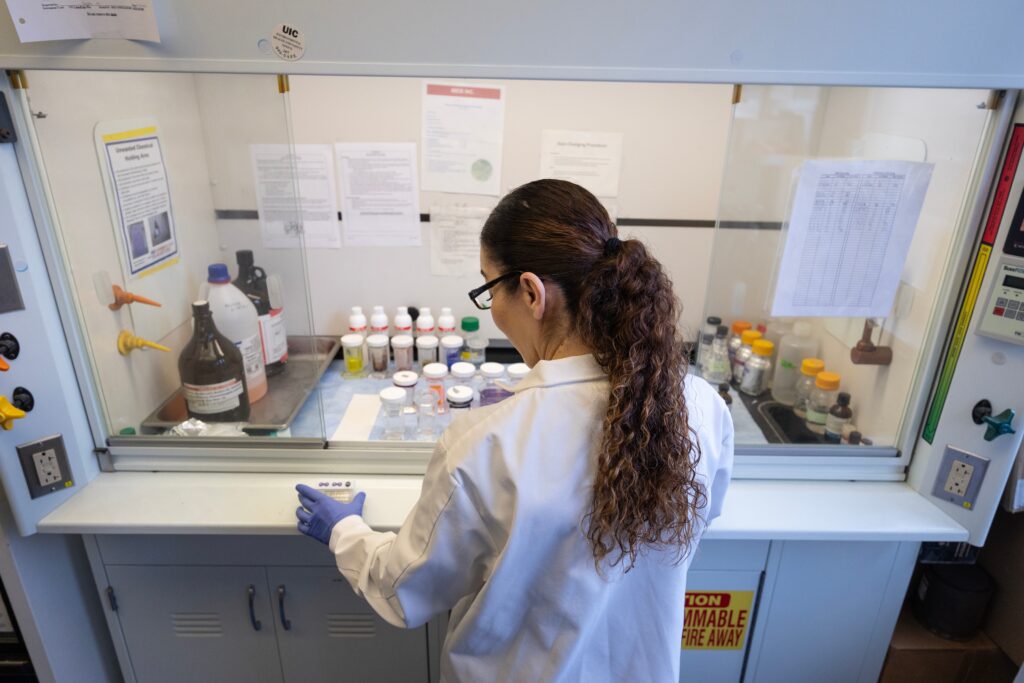
Scott Atlas’s July 2 online op-ed “Abolish the NIH” made valid points about bureaucracy, indirect costs and the need for greater transparency at the National Institutes of Health. The answer to those challenges, however, is not to scrap the United States’ premier medical research institution. The answer is to make it better.
As someone living with ALS, which affects an estimated 35,000 Americans, I don’t perceive the NIH as a political battlefield. I experience it as hope.
The argument that private companies and venture capital can replace government-funded research ignores the obvious: Investors generally pursue products with the greatest likelihood of financial return. The NIH funds science that may take decades to bear fruit, may fail entirely or may benefit relatively small patient populations. That research often becomes the knowledge upon which private companies later build lifesaving therapies. Put simply, the NIH demonstrates how public science and private innovation are partners, not competitors.
Medical research is a crucial part of our national infrastructure. In fact, the July 4 editorial “25 reasons to be optimistic about America’s future” named U.S. science as No. 1.
The NIH is far from perfect. But abolishing it would weaken American science. It would abandon millions of patients whose diseases are too rare, too difficult or too unprofitable for the marketplace alone.
Kevin J. Morrison, San Francisco
Scott Atlas stated that “Private capital, not NIH direction, produced many of the most celebrated medical advances of the past two decades.” One of his examples was immune checkpoint inhibitors for cancer treatment. Drugs blocking the major cancer immune checkpoint, PD-1 (Programmed Death Receptor 1), are widely prescribed treatments for cancer patients today. Atlas’s assertion that “these drugs reached patients through industry investment” ignores the seminal foundational discoveries that were funded by the NIH.
I co-discovered one of the molecules that triggers the PD-1 checkpoint, and I was a senior member of the team that partnered with a biotechnology company, Medarex, to test PD-1 inhibitors in the laboratory and in the very first clinical trial. That research was significantly funded by the NIH via peer-reviewed grants, and it built upon that of pioneering colleagues who were also supported by NIH funding.
As with most established senior investigators, NIH funding was particularly essential to my early career. Without it, I would not have had the support needed to eventually be able to contribute to immune checkpoint blockade discoveries. And my story is not unique. NIH, foundation and philanthropic funding support academic discovery of molecules and disease biology, which informs the pharmaceutical industry of the best targets for drug development. A rigorous 2018 analysis by Ekaterina Galkina Cleary and four co-authors found that, among the 210 new FDA drug approvals between 2010 and 2016, all were supported at least in part by NIH-funded research grants that preceded development of the approved drug.
Abolishing the NIH would snuff out the American engine driving the development of new therapies and disease prevention strategies that are transforming health care on a global scale.
Drew M. Pardoll, Baltimore
The writer is director of the Bloomberg-Kimmel Institute for Cancer Immunotherapy at Johns Hopkins University School of Medicine.
Court decision threatens staffing
As the CEO of a network of disability service providers on Long Island, I know the threat to the continued support of people with intellectual and developmental disabilities and the sustainability of our service system is severe. The agencies I oversee will shortly lose 19 staff to the Supreme Court’s Haiti temporary protected status decision.
These are people who bathe, feed and care for people with intellectual and developmental disabilities. The staffers are embedded within their communities for years. I don’t yet know what to say to the men and women in the group homes and day service sites who rely on this trusted and knowledgeable workforce.
It’s an abrupt and heartless hit. Our network, like about 90 percent of disability service providers nationwide, faces staffing challenges to ensure people with intellectual and developmental disabilities are healthy, independent and included in their communities.
Every staff member counts when hands-on support can be the difference between life and death, especially in a field where recruitment and retention rates also remain challenging.
Stanfort J. Perry, Glen Cove, New York
The writer is the CEO of AHRC Nassau, Brookville Center for Children’s Services and Citizens Options Unlimited.
The Declaration’s cruel words
Regarding the July 1 front-page article “Three words in Declaration paint cruel picture of Natives”:
The reference in the Declaration of Independence to “merciless Indian Savages” brought to mind the conspicuously clarifying canard that the “savage is not the one who lives in the forest, but the one who destroys it.”
Rocky Semmes, Alexandria
Letter submissions
Send letters to [email protected].
Submissions must be exclusive to The Post and should include the writer’s address and day and evening telephone numbers. Letters are subject to editing and abridgment. Please do not send letters as attachments. Because of the volume of material we receive, we are unable to acknowledge submissions; writers whose letters are under consideration for publication will be contacted.
Post Opinions wants to know: What do you wish you had known earlier? What nuggets of wisdom, gleaned from years of experience, would you share with your younger self? Send us your response, and it might be published as a letter to the editor.
wapo.st/wise_words