

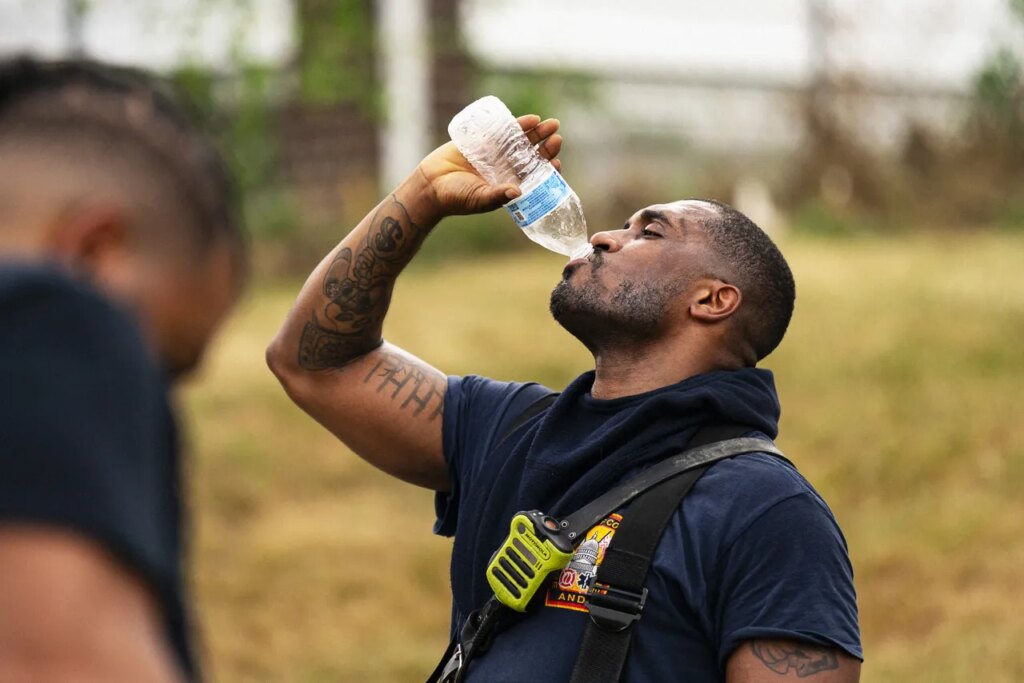
As New York City braces for an extreme heat wave amid the July 4th weekend and World Cup festivities, government officials and local hospitals are ramping up efforts to prevent heat-related illness.
Temperatures are expected to reach 100 degrees Fahrenheit (38 Celsius) by Thursday, with a heat index between 105 and 110 degrees—unusually hot for New York. Friday is expected to be just as sweltering.
“These are extremely dangerous conditions, and they will affect every part of our city,” New York City mayor Zohran Mamdani said in a press conference on Tuesday.
Many major cities have heat emergency plans that involve setting up cooling centers, conducting outreach to vulnerable populations, and sending out emergency alerts. With heat waves becoming more intense and common as the planet warms, more cities are writing and implementing these types of plans to keep residents safe.
This year, New York City first activated its heat emergency plan on May 19—the earliest it’s ever done so—due to a severe spring heat wave that pushed temperatures past the 90-degree mark across the Northeast. It activated that plan again in preparation for this latest heat wave.
As part of that emergency plan, the city will have more than 650 cooling stations up and running, including at libraries, recreation centers, and Petco stores, as well as some extra “nontraditional” cooling stations, which include government buildings, says Christinia Farrell, commissioner of the New York City Emergency Management Department. She says excessive heat warnings are becoming more common in New York.
The Mamdani administration is deploying cooling vans across the city to provide wellness checks, medical care, water, electrolytes, sunscreen, as well as transportation to cooling centers or health care facilities. LinkNYC kiosks, which have replaced old pay phones throughout the city, will also be programmed to display walking directions to the nearest cooling center, another new initiative under Mamdani.
To help the grid cope with more residential cooling demand, business owners are being asked to set their thermostats to 78 degrees, which the Department of Energy recommends during peak summer months.
Workers with the city’s Department of Social Services will be conducting in-person outreach to unhoused people. Individuals who need short-term housing will not be required to go through the typical intake procedure at shelters under the heat plan.
Philadelphia is also bracing for high heat. The city—which is hosting a World Cup match on July 4—has activated its heat emergency plan and has moved the hours for its FIFA Fan Festival to the evening. The city will have cooling and tents, free water refill stations, shaded areas, and multiple medical stations for fans. Still, the match between Paraguay and France will kick off at 5 pm ET, when it’s forecast to still feel well above 100 degrees with the heat and humidity.
The risk of heat-related death and illness is expected to grow as extreme heat events become more frequent and intense. A recent study from Yale University found that deaths associated with high temperatures nearly doubled in the US over the past two decades, from an annual average of 2,670 between 2000 and 2009, to more than 4,000 between 2010 and 2020. Most heat-related deaths occur indoors after prolonged exposure to heat without air-conditioning.
New York emergency departments say they’re preparing to handle an increase in patients with acute heat illnesses in the coming days.
Erik Blutinger, an emergency medicine physician at Mount Sinai Queens, says the hospital is stocking up on towels, fans, and other supplies to make sure patients with heat sickness can be adequately treated. He says it’s important for people to be able to recognize the symptoms of heat-related illness so they can seek treatment as soon as possible.
Heat exhaustion can cause excessive sweating, nausea and vomiting, muscle cramps, and weakness. While it can often be managed outside the hospital with hydration and cooling down the body, heat exhaustion sometimes turns into heat stroke, which is more severe and can be life-threatening. People with heat stroke have dry, hot skin and a rapid pulse. They may feel confused, have slurred speech, or become unconscious.
“Anybody who has an altered mental status who is hot, that is an indicator that they may be critically ill,” says Reed Caldwell, chief of service at Tisch Hospital’s emergency department, part of NYU Langone Health.
When a person’s body temperature gets dangerously high, clinicians mimic sweating using a technique called evaporative cooling that involves stripping away clothing, misting the patient’s skin with water, and fanning them continuously. Cold water immersion and even ice-filled body bags can be used for the same purpose.
Excessive heat also worsens heart conditions, lung disease, and kidney problems, and people with chronic diseases are more vulnerable to severe heat sickness. Babies and older adults are also at higher risk because their bodies are less efficient at regulating temperature.
Prevention is key. “It’s important that we all drink water before we are thirsty,” Caldwell says. Sunscreen is also important, he says, since sunburns make the skin feel hotter and pulls fluid from other areas of the body, which can lead to dehydration. Limiting alcohol before going out in the heat is also a good idea, since alcohol causes dehydration—advice that’s particularly salient on a holiday and during World Cup matches, both of which feature plenty of day drinking. “There’s great value in pre-hydration and even greater value in not being dehydrated before you go somewhere.”