


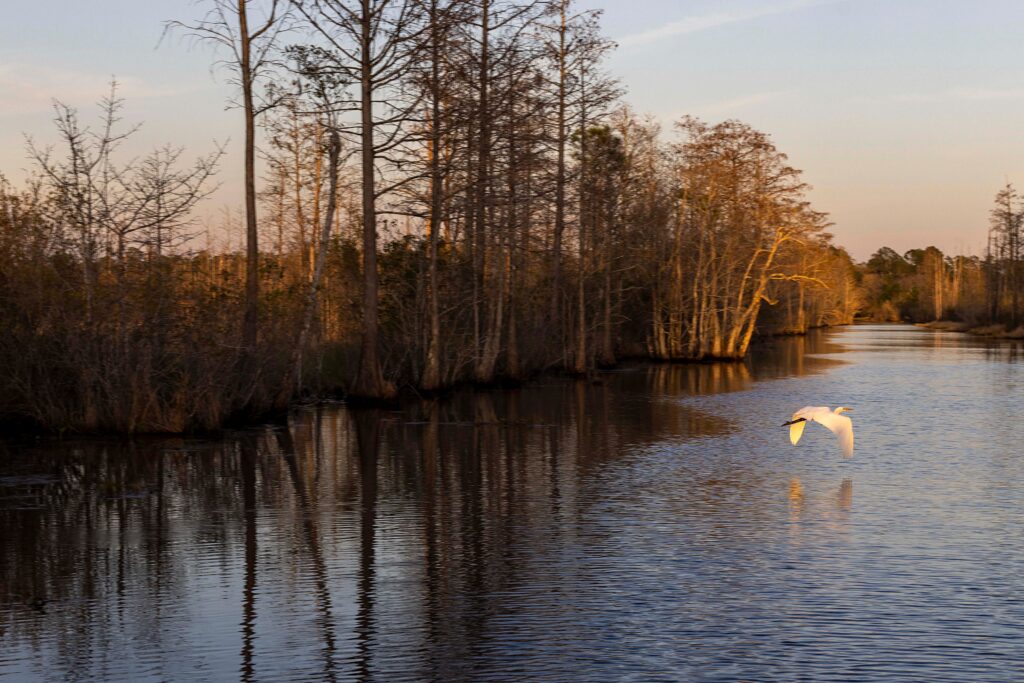
A sprawling swamp in Georgia on Saturday joined Yellowstone National Park, the Great Barrier Reef, the Taj Mahal and other iconic places around the globe as the latest UNESCO World Heritage site.
Members of a United Nations committee in South Korea voted to bestow the prestigious designation on the roughly 407,000-acre Okefenokee National Wildlife Refuge, one of the world’s largest intact freshwater ecosystems.
“Today, the world is recognizing what we’ve always known — that this area is irreplaceable and worth protecting at every turn,” Stacy Funderburke, vice president of the central Southeast region at the Conservation Fund, said in a statement about the decision.
One of the South’s last truly wild places, the Okefenokee is home to an astonishing array of wildlife, including black bears, red-cockaded woodpeckers and thousands of alligators. Its flora includes black gum trees and carnivorous plants with names such as hooded pitcher and golden trumpet. It also serves as the headwaters for two rivers, the Suwannee and the St. Marys, and its vast peat deposits store enormous amounts of carbon.
But the refuge, which was created by President Franklin D. Roosevelt in 1937 and first identified as a possible World Heritage site in 1982, also has been the site of repeated battles over proposed mining at its doorstep.
The most recent was a protracted fight over a proposed titanium mine that activists and scientists argued could disrupt the swamp’s pristine and fragile ecosystem.
The Conservation Fund purchased thousands of acres — and the underlying mineral rights — from the Alabama-based company that had fought for years to win approval to operate a titanium mine near the southeastern corner of the swamp.
Georgia’s Department of Natural Resources has since said it would acquire roughly 4,000 of those acres along a mineral-rich area known as Trail Ridge and turn it into a wildlife management area.
Support for the UNESCO designation is not universal. Some residents in the area have expressed concerns about the potential impacts of an influx of tourists, while other critics have said they fear the United Nations might try to infringe on local property rights and impose other restrictions. (The federal government has said the refuge “would continue to be wholly owned and managed” by the U.S. Fish and Wildlife Service.)
Saturday’s vote makes the Okefenokee the only UNESCO World Heritage site in Georgia and the 27th in the United States. That list includes other natural landscapes such as the Grand Canyon and Everglades national parks, as well as revered cultural places such as the Statue of Liberty and Independence Hall.
Other new properties inscribed on the World Heritage list include Garamba National Park in the Democratic Republic of Congo and a 13th-century Buddhist temple in Thailand. Other properties remain under consideration as the UNESCO meeting continues, including Mount Olympus in Greece and the D-Day landing beaches of Normandy in France.
Back in Georgia, the designation likely will mean more than just a notable recognition for the refuge and the rural counties near it, where poverty runs deep.
A 2024 economic impact study found that while roughly 800,000 people visit the Okefenokee each year, UNESCO recognition could boost tourism to double that number by 2035, creating as many as 700 new jobs in the region.
Josh Marks, an environmental attorney and president of Georgians for the Okefenokee, which works to protect the swamp from threats posed by mining, called Saturday’s designation appropriate for a landscape so culturally significant, rich in biodiversity and important for sequestering carbon.
It is, he said, “a testament to how far we have come in recognizing that swamps are not mosquito-infested places to be feared or drained but are pound for pound some of our most important natural ecosystems deserving to be celebrated and protected.”
Still, he warned, the recognition alone does not alter state or federal law, and by itself won’t prevent future attempts at mining along the swamp’s edge.
“This is why it’s more important than ever that the Georgia legislature pass, and our new governor sign, the Okefenokee Protection Act, which would prohibit mining of these private lands and protect this globally recognized resource forever,” Marks said.
“Our country’s newest World Heritage site deserves nothing less.”