

Opinion
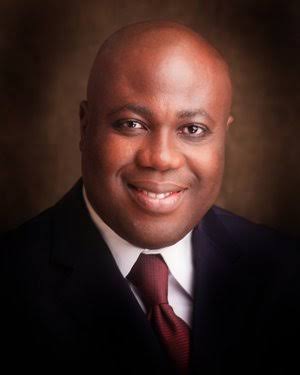
By Ifeanyi Igwebike Mbanefo
_Reimagining Igbo Diaspora Leadership Through Civic Partnership, Service, and Shared Purpose_
“A tree is known not by the height of its branches, but by the shade it offers to those who gather beneath it.”
With this ancient wisdom as our lantern, we enter one of the most important conversations now unfolding in the Igbo diaspora.
For many years, the title _Eze Ndigbo_ has stirred the hearts of our people, both at home and across the waters.
Our revered traditional rulers speak with reverence, guarding an institution rooted in ancestry, custom, and sacred trust.
Our diaspora leaders speak with equal sincerity, yearning for unity, for visibility, and for a voice that represents us with dignity in the lands where we now live.
Ohanaeze Ndigbo has worked tirelessly to protect the cultural soul of our nation.
And our host communities, with good reason, seek clarity about the roles and responsibilities of leadership within their own societies.
Too often, this dialogue has been framed as a contest — crown against crown, claim against claim.
But what if we asked a different question?
Not, “Who should lead?” but, “What kind of leadership best serves our people and honours our ancestors?”
That single question turns the conversation.
The quarrel over titles gives way to a calling toward purpose.
We move from prestige to service, from symbol to substance, from rivalry to partnership.
It is in this spirit — of invitation, not argument — that these thoughts are offered.
*Beyond Titles: The Greater Calling*
History teaches us gently but firmly: institutions do not endure because of the grandeur of their names.
They endure because of the goodness of their works.
A crown may catch the light for a season. A bridge, well built, carries generations across the river long after the builder has gone home.
Our diaspora need not copy the traditional structures that belong, rightly, to their home soil.
Neither must we set aside the customs that have shaped us for centuries.
We can build something equally noble: a civic family that keeps our language alive, celebrates our festivals, and lives our values — while also becoming trusted partners to local governments, schools, businesses, faith communities, and neighbors.
In this vision, authority grows not from proclamation, but from trust.
Influence is measured not by protocol, but by public confidence.
Legitimacy is earned through transparency, accountability, and visible service.
This is civic partnership.
And it is an eminently Igbo idea, older than its new name.
*Understanding with Compassion*
No public conversation is sustained by law alone. Behind every debate are human hearts.
The emergence of _Eze Ndigbo_ institutions abroad did not happen by accident.
It answered real needs.
– The need for someone to welcome a visiting elder with dignity.
– To settle a dispute when the village elders are an ocean away.
– To speak for us before a foreign government.
– To coordinate help in a moment of crisis.
– To keep our children tethered to who we are, on unfamiliar soil.
– To offer one visible point of unity in a scattered family.
These are not unreasonable desires. They are human.
They are the same longing that has moved Igbo people for generations to build town unions and age grades wherever we have planted our feet.
At the same time, we must listen with reverence to our traditional rulers.
In Igboland, the title _Eze_ carries spiritual weight, ancestral memory, and communal meaning.
To many custodians of that heritage, extending the title beyond its customary home risks dimming its light — turning a sacred inheritance into a convenient label.
Our host communities, too, may wonder in good faith about the nature of these structures within their borders.
When we see it this way, every voice is speaking from a place of care. Our work, then, is not to declare a winner.
It is to build a home large enough for all.
*Rediscovering the Igbo Genius*
Ironically, the path forward may already be written in our own story.
Long before passports and airplanes, Igbo communities governed themselves with remarkable wisdom — through town unions, age grades, women’s assemblies, and councils of elders. _
Igbo enwe eze_ — we had no king over all — and yet our villages thrived through consensus, through duty, and through service.
With kobo gathered from market women and clerks abroad, our people built schools.
They paved roads.
They supported widows.
They educated children who would later lead nations.
They settled disputes without a gavel.
They cared for the vulnerable.
Their authority did not flow from a crown. It flowed from contribution.
This republican genius — this gift for organizing ourselves without a single sovereign — remains one of our greatest strengths.
Perhaps the diaspora’s future should be inspired by this same heritage, rather than by borrowed regalia.
*A Vision of Partnership*
Imagine an institution where Ohanaeze serves as a broad, constitutional canopy — gathering town unions, professional bodies, women’s groups, youth, businesses, scholars, and cultural custodians under one roof.
Within that home, respected elders and distinguished leaders continue to hold places of honor — not as rival sovereigns, but as ambassadors of culture, mediators of peace, advisers to the young, and keepers of our wisdom.
Leadership becomes collaborative, not competitive. The focus shifts — quietly, but decisively — from hierarchy to responsibility, from personality to institution, from titles to outcomes.
Such an institution would pursue four sacred purposes:
1. *Preserve our heritage* with dignity, while honoring the laws and customs of our host lands — not as a shadow government, but as proud cultural custodians.
2. *Build true partnerships* with host communities, founded on mutual respect and shared work.
3. *Improve lives* through service you can touch — a scholarship, an apprenticeship, a loan for a young entrepreneur, a hand to a family in crisis. Every host would appreciate such gestures. We can teach their youths how to make money!
4. *Cultivate leaders* of character, accountability, and contribution, rather than prestige alone.
Success will be measured not by the length of a procession, but by different questions: How many children went to school this year? Our children and those of our hosts
How many jobs were created?
How many friendships were built across cultures that once seemed far apart?
*Building Bridges*
Picture meetings where local government chairmen, clergy, educators, and business leaders sit not as guests, but as partners.
Picture scholarships co-funded with local institutions.
Picture youth programs, health outreaches, business forums, and cultural festivals where Igbo heritage is celebrated side by side with the traditions of our hosts — so that both are richer for the meeting.
When we build together, suspicion gives way to confidence.
Transparency becomes diplomacy.
Partnership becomes friendship. And friendship becomes trust — the only currency that buys lasting influence anywhere in the world.
The Future We Can Build Together
The Igbo have long been known for enterprise, resilience, learning, craftsmanship, and community.
These — not titles — have earned us respect from Lagos to London, from Aba to Atlanta, from Onitsha to Houston.
Let the image that guides us now be not a solitary throne on a hill, but a bridge.
A bridge connects what would otherwise remain apart.
A bridge carries ideas in both directions.
A bridge allows two cultures to meet without either losing itself.
And a bridge, unlike a throne, serves not the one who stands on it, but the generations who will cross it after us.
If we turn our identity into service, service will give us trust.
Trust will deepen partnership.
Partnership will strengthen friendship. And friendship will leave a legacy far more enduring than any title.
In the end, history does not remember those who claimed the highest seat.
History remembers those who built the strongest communities.
And perhaps — when all the titles have returned to dust — that has always been the truest expression of the Igbo spirit.
_– Olu bụ nsọ. (Service is sacred.)_
***Ifeanyi Igwebike Mbanefo CEO Museums and Monuments Academy lives in Montreal Canada.
A.I
July 25, 2026
Tags: Ifeanyi Igwebike Mbanefo