

When Jennifer Siebel Newsom rejected the term “first lady” and decided to go by “first partner,’’ she became the first wife of a California governor to signal she wanted to break down traditional gender stereotypes.
No U.S. president’s wife had formally adopted such a title. But many women who have become first lady of California and the nation have expressed misgivings about taking on such a role. A few accepted the title but ultimately went on to challenge expectations of what it meant to be a first lady.
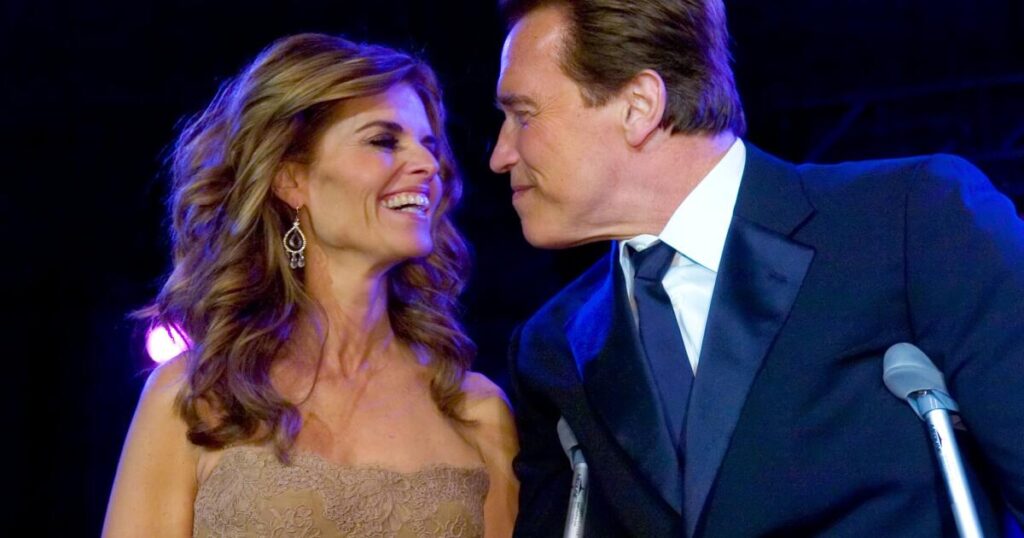
When Arnold Schwarzenegger was elected California governor in 2003, Maria Shriver took leave from her well-established career as a network news correspondent and anchor. She did not want the job of first lady at all, she later admitted, and came in “kicking and screaming.”
Shriver used her time in Sacramento to revamp the state history museum, build the world’s largest Women’s Conference and launch a program during the recession to provide low-income working families with financial resources. Last year, as she promoted her memoir, she said, “It turned out to be probably the best job I’d ever had.”
Anne Gust Brown, wife of Edmund G. “Jerry” Brown, tended to shy away from the public, preferring to work behind the scenes as an unpaid aide. A lawyer by training, she was deeply involved in her husband’s political life, helping him run his campaign for attorney general and write his inaugural gubernatorial address. But she said she never really thought of herself as first lady.
“It’s always been a title I find difficult,” she told Alta Journal in 2018. “Somehow, I don’t carry that title so well, or I don’t gravitate toward it.”
The spotlight is even more intense for America’s first ladies.
Martha Washington — America’s first first lady, although such a title had not yet been coined — was reluctant to move to the new presidential household in New York and struggled with her new role as a hostess of presidential drawing rooms. In a letter to her niece, she wrote that she felt “more like a state prisoner than anything else” and there were “certain bounds set for me which I must not depart from.”
Still, she took on her duties with stoicism. “The greater part of our happiness or misery depends upon our dispositions,” she later noted, “and not upon our circumstances.”
When Jacqueline Kennedy entered the White House in 1961, she instructed her staff to address her as Mrs. Kennedy.
“The one thing I do not want to be called is ‘first lady,’” she quipped. “It sounds like a saddle horse.”
Indeed, the role of first lady has long been traditional — so much so that historians note the exceptions, such as Eleanor Roosevelt and Hillary Clinton.
In the 1930s and ’40s, Eleanor Roosevelt famously became Franklin D. Roosevelt’s “eyes, ears and legs” because he was limited by polio, said Barbara A. Perry, a professor of governance at the University of Virginia. During World War II, she went to the theaters of war in the South Pacific and wrote a nationally syndicated newspaper column six days a week for decades.
“She was just hounded and just critiqued with terrible jokes,” Perry said, but she didn’t back down. “She just didn’t care. She wanted to do the right thing.”
When Bill Clinton ran for president in 1992, he liked to joke that a vote for him was a “twofer” — a nod to his wife Hillary Clinton’s career as a successful lawyer.
But the reality proved more complicated. After he won and he tasked his wife with coming up with a universal healthcare plan, Perry said, she generated controversy, in part because it was a major public policy role and she kept much of it secret. The Clintons’ finances were scrutinized during the Whitewater scandal and Hillary Clinton was also criticized for comments she made about not being a “little woman standin’ by my man like Tammy Wynette.”
“The reason Americans will have a backlash if the first lady gets out too far over her skis, as they say, is that they are unaccountable,” Perry said. “This is not an office, it’s nowhere defined.”
After Clinton, Laura Bush, a librarian, played a more traditional role, focused on literacy. Michelle Obama, an attorney who graduated from Princeton University and Harvard Law School, focused on the relatively uncontroversial topics of healthy eating and nutrition.
Debbie Walsh, director of the Center for American Women and Politics at Rutgers University, said Michelle Obama likely chose not to take on a heavy policy position because she was targeted just for being a Black woman.
“The racism and the sexism combined was brutal,“ she said.
In 2021, Jill Biden became the first first lady to continue her professional career outside the White House, working as a teacher at Northern Virginia Community College.
Walsh said the role will likely change over time — not just because women have their own careers separate from their husbands, but as more women and LGBTQ+ politicians take on leadership roles and their husbands and partners take on the role of first spouse.
“There will be less of an expectation of a person in that role being that kind of silent partner or supportive partner … whether it’s the president or governor,” Walsh said, noting the example of Doug Emhoff, who served as second gentleman to Vice President Kamala Harris while pursuing his own professional life.
Still, Walsh said, Siebel Newsom could be opening herself up to extra criticism right now by positioning herself as “partner.”
“We are at a point in our history where this more nontraditional role of a first lady or a first spouse will garner scrutiny and criticism from the other side,” Walsh said. “It will be yet another way of potentially attacking the candidate, and it’s unfortunate.”
Perry agreed that the “first partner” label might not play well in Middle America.
“They’ll see that as part of this trans business and gender fluidity,” she said. “She does have to be careful about that.”