

Education
THE Federal Government says it has invested more than N1 trillion in the tertiary educational sector within two years, while removing financial barriers preventing qualified students from accessing higher education.
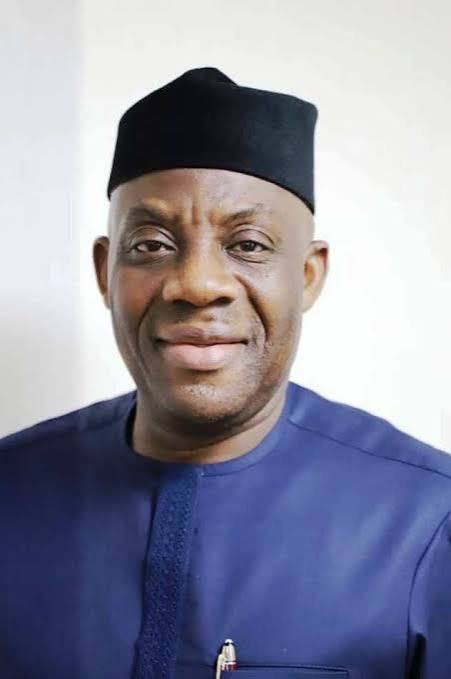
The Minister of Education, Dr Tunji Alausa, disclosed this on Tuesday in Abuja, during a meeting with members of the National Committee for the Advancement of Occupational Therapy, Audiology, Speech and Language Therapy Education.
Alausa highlighted President Bola Tinubu’s educational reforms and infrastructural investments targeted toward expanding educational opportunities and strengthening human capital development nationwide.
According to him, the reforms are designed to ensure that no qualified Nigerian is denied access to higher education because of financial hardship, irrespective of family background or economic status.
He said the administration had deliberately removed long-standing financial obstacles that prevented many brilliant students from pursuing tertiary education, describing education as a fundamental national investment.
”The President has opened up access to students so that not having money, or coming from an indigent family, will no longer stop anyone from achieving educational opportunities,” Alausa said.
The minister commended President Tinubu for prioritising education, saying that the reforms served as strategic investment in Nigeria’s youth and a deliberate effort to building a globally competitive and productive workforce.
He said students had emerged among the greatest beneficiaries of the Renewed Hope Agenda, with the government backing its promises through unprecedented investments in infrastructure, teaching facilities and improved learning environments.
Alausa disclosed that the federal government had committed N250 billion to construct new hostels across tertiary institutions, significantly expanding accommodation capacity and improving students’ welfare nationwide.
He added that more than N150 billion had also been invested in rehabilitating hostels, classrooms, engineering workshops and other academic facilities to improve teaching, research and learning across public tertiary institutions.
He added that the present administration had invested over N130 billion in rehabilitating medical schools nationwide to improve healthcare training and address shortages in critical medical and allied health professions.
He further revealed that another N52 billion had been approved for modern equipment in 18 medical schools, while almost N30 billion was committed to establishing 11 medical simulation laboratories.
The minister said the investments would enhance practical clinical training, improve research capacity and equip future healthcare professionals with globally acceptable skills required to strengthen Nigeria’s health sector.
Alausa also disclosed that almost N110 billion had been invested in engineering workshops and modern equipment for federal universities of technology, conventional universities offering engineering programmes and polytechnics.
He noted that the interventions would strengthen science, technology, engineering and innovation, while producing graduates equipped with practical competencies required to drive industrialisation and sustainable national economic development.
Describing the investments as historic, Alausa said the over N1 trillion committed within two years covered infrastructure development, rehabilitation projects, specialised laboratories, workshops, equipment procurement and institutional capacity building.
He maintained that beyond physical infrastructure, the investments were repositioning tertiary institutions to produce graduates capable of competing globally and contributing meaningfully to Nigeria’s socio-economic transformation.
Earlier, Dr Victoria Amu, the Chairman of the National Committee for the Advancement of Occupational Therapy, Audiology and Speech and Language Therapy Education, briefed the minister on the committee’s achievements.
Amu said the committee had developed a one-year implementation plan, established governance structures, inaugurated three specialised sub-committees and commenced consultations with critical stakeholders across the education and healthcare sectors.
While revealing the committee’s baseline assessment, she said six Nigerian universities offered Audiology programmes, five offered Occupational Therapy, and three universities offered Speech and Language Therapy.
Amu added that the committee had engaged the National Universities Commission (NUC), the Medical Rehabilitation Therapists Registration Board of Nigeria (MRTB) and tertiary institutions, while identifying delayed TETFund support as a major implementation challenge.
Alausa reaffirmed the Federal Ministry of Education’s commitment to supporting tertiary institutions and ensuring that no qualified Nigerian would be denied higher education because of financial hardship.
He also promised the strengthening of teaching, research and innovation nationwide. (NAN)
A.I
July 28, 2026
Tags: Dr Tunji Alausa Dr Victoria Amu NUC