

It was Christmas Eve last year when Tasheena Greaves told her mother, Jean Ann Nelson, that she had received the results from a DNA test.
Ms. Greaves, who is 41 and lives in Crosby, N.D., knew she had been conceived through artificial insemination. The test showed her biological father was a man named Dennis Lutz.
“I started crying,” Ms. Nelson said in an interview. “That was my doctor.”
Ms. Nelson had gone to Dr. Dennis Lutz, an obstetrician-gynecologist in Minot, N.D., for fertility care after long struggling to start a family with her husband, who has since died.
Over four decades later, Ms. Nelson and her two daughters are now suing Dr. Lutz, claiming he secretly used his own sperm to impregnate Ms. Nelson three times in the 1980s, with one of the pregnancies ending in a miscarriage, according to a complaint filed on Monday in North Dakota’s North Central Judicial District.
“He’s still not my father,” Ms. Greaves said in an interview. “He’s a fraud.”
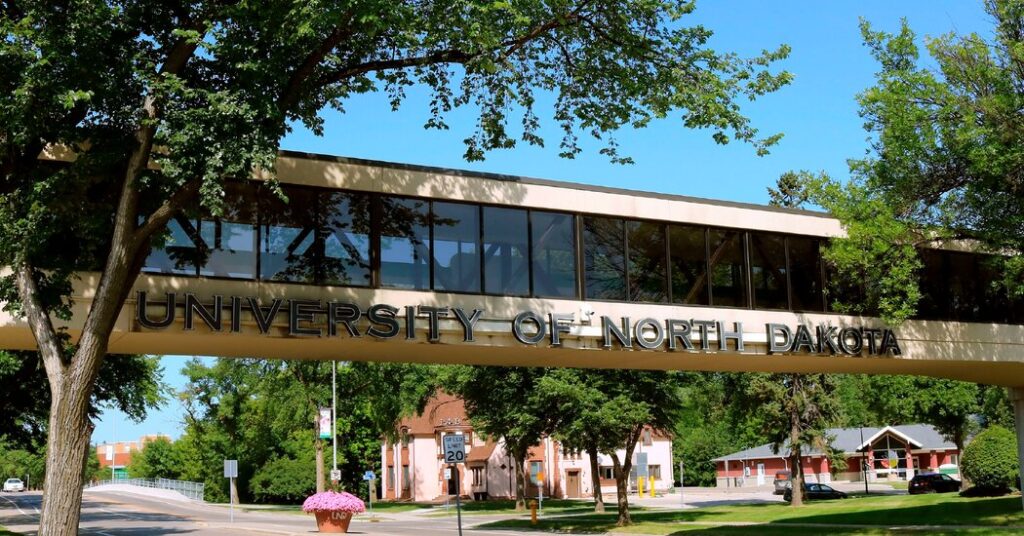
Dr. Lutz currently serves as chairman of the OB-GYN department at the University of North Dakota, the largest university in the state. However, David Dodds, a spokesman for the university, said in a statement on Wednesday that officials there were taking steps to fire him.
A lawyer for Dr. Lutz did not respond to a request for comment. In a court response to the complaint, Dr. Lutz acknowledged he had “provided genetic material” after Ms. Nelson consented to using an anonymous donor. He claimed that he “acted within accepted standards of care and the state of fertility medicine at the time of care.”
But Ms. Nelson, who is 81 and lives in Mandan, N.D., said she had no idea Dr. Lutz would be using his own sperm.
“I was dependent on him to help me,” she said. “It wasn’t right for him to do that.”
According to the complaint, Dr. Lutz promised her husband’s sperm would be mixed with an anonymous donor, making any child conceived “most likely” her husband’s biological child.
The controversial technique of “sperm mixing” does not make it more likely a patient’s partner will be the biological father, said Dr. Jody Madeira, a law professor at Indiana University, who has been following cases of so-called fertility fraud.
“The idea made things more palatable to a couple,” said Dr. Madeira, who called the practice deceptive and “icky.” “It gave plausible deniability to believe the child was your partner’s child.”
Kellen Bubach, a lawyer for Ms. Nelson and her daughters, said he believed that Dr. Lutz had used his own sperm with his patients over a six-year period, and that Ms. Greaves and her sister, Janae Nelson Raymond, 40, had at least seven “potential half-siblings.”
The widespread accessibility of DNA tests has unraveled cases across the world where fertility doctors have been found to be biological fathers. More than 50 fertility doctors in the United States have been accused of fraud for donating sperm. Dr. Madeira believed that number would be at least doubled when considering cases that ended in private settlements or nondisclosure agreements.
“It was convenient for doctors — it was a quiet way to help patients,” she said. “It was lucrative.”
Dr. Madeira said other fertility doctors might have had “darker reasons.”
“Call it ego, call it curiosity,” she said. “We can’t excuse that.”
North Dakota is one of 13 states that have now outlawed fertility fraud, Dr. Madeira said. She said efforts had been prompted in part by a 2022 Netflix documentary, “Our Father,” about Dr. Donald Cline, a former fertility specialist in Indianapolis who more than 60 people claim as their biological father.
A jury awarded $8.75 million in 2022 to plaintiffs who accused a Colorado fertility doctor, Paul B. Jones, of using his own sperm to impregnate at least a dozen women.
Ms. Nelson and her daughters are seeking more than $50,000 for damages that include “loss of reproductive autonomy” and “identity-related harm,” according to the complaint.