

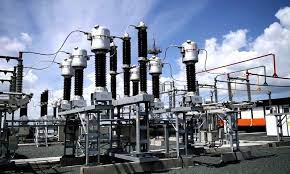

In order to tackle weak grids, gas shortages, and unreliable supply – which continue to affect businesses – DisCos and other users push for cost-reflective tariffs and independent power generation in order to boost investor confidence; BENJAMIN UMUTEME writes.
For a small business owner in Abuja, every blackout now comes with a price tag. When grid power fails, the generator takes over, diesel is bought, repairs follow, and the month’s profit begins to evaporate. As it is often said, “Every hour of darkness has become a business expense.”
That is the reality for thousands of Nigerian firms and households caught in a power system that is still struggling to balance affordability, reliability and investment.
As electricity distributors push for cost-reflective tariffs and improved investor confidence, weak grids, gas shortages and erratic supply continue to burden businesses and drive more users toward self-generation.
Production costs
Nigeria’s electricity problem is no longer just a household inconvenience; it is now a major business issue, shaping production costs, pricing, profitability and investment decisions across the economy. Manufacturers, traders, hospitals, schools, restaurants and digital firms, all depend on steady electricity; yet, the system remains fragile from generation to distribution.
The numbers bear this out. NERC’s January 2026 operational performance factsheet put the Plant Availability Factor for grid-connected power plants at 36 per cent. This meant that an average of only 4,901 megawatts was available for dispatch onto the grid at any point during the month, against an installed capacity of roughly 13,000 to 15,500 megawatts.
By April 2026, that availability figure had slipped further to about 31 per cent, with just 10 of the 28 plants connected to the grid, accounting for 81 per cent of total output, according to NERC data.
The commission has also flagged grid frequency swinging between 49.46Hz and 50.69Hz, outside the 49.75Hz to 50.25Hz band it prescribes for stable operation, underscoring how far the system sits from technical benchmarks.
Transmission losses
Transmission losses compound the shortfall. Figures from the Nigerian Independent System Operator (NISO) cited in a NERC order mandating regional loss reporting show the national average transmission loss factor stood at 8.71 per cent in 2024, easing to 7.24 per cent in 2025, and roughly 7.05 per cent more recently. This is still above the 7 per cent benchmark approved under the Multi-Year Tariff Order.
NISO also recorded a record peak transmission of 5,801.84 megawatts in March 2025, a figure that illustrates the ceiling the grid struggles to push past even at its best.
Collapses
Collapses remain frequent enough to be treated as a recurring feature of the market rather than an anomaly. NERC records show at least 222 partial or total grid collapses between 2010 and 2022, with a further 12 documented across 2024 and 2025.
Grid failed nine times in 2024 alone. The first collapse of 2026 came on January 23, when NISO’s real-time dashboard showed generation falling to zero megawatts and load allocation to all eleven distribution companies dropping to near nil, plunging cities from Lagos to Kaduna into darkness.
The central problem is simple: the country’s power sector is trapped between weak infrastructure and financial weakness. The national grid is overstretched.
Transmission failures still trigger large-scale blackouts, gas shortages constrain generation, and distribution companies struggle with liquidity. The result is a sector that consumes public attention but still fails to deliver the dependable supply the economy needs.
Tariffs and policy dilemma
At the heart of the debate is the push for cost-reflective tariffs. Regulators and operators argue that electricity prices must reflect the real cost of generating, transmitting and distributing power if the sector is to attract investment and improve liquidity. Without a pricing structure that recovers costs, they said, the market cannot finance the infrastructure needed for a stable power supply.
But the policies are difficult. Higher tariffs may strengthen the financial health of the sector; yet, they also raise operating costs for businesses and household bills for consumers already under pressure. That creates a tough policy balance: if tariffs remain too low, the industry keeps deteriorating; if they rise too quickly, the pain is pushed onto already struggling users.
NISO has argued for a gradual transition. The Managing Director, Engr. Abdu Bello Mohammed, said the shift to cost-reflective tariffs must be “carefully managed” and tied to improvements in service delivery, reflecting the view that price reform must be matched by visible results. That position mirrors a wider concern in the market: consumers are willing to pay more only if they can trust the lights will stay on.
“The shift to cost-reflective tariffs must be carefully managed to protect vulnerable consumers while ensuring the financial sustainability of the electricity industry,” Mohammed said.
Grid fragility, gas limits
The technical side of the crisis is just as important as the financial one. Nigeria’s grid remains vulnerable to collapse because key parts of the system are weak or outdated. When transmission lines fail or voltage becomes unstable, the effects are felt nationwide. Even when generating plants are available, they cannot deliver power consistently if the transmission backbone cannot carry it safely.
Gas supply is another major bottleneck. Since much of Nigeria’s power generation depends on gas, disruptions in supply quickly reduce electricity output. Thermal plants, which dominate the generation mix, require an estimated 1,629 million standard cubic feet of gas daily, but supply has routinely fallen below 700 million standard cubic feet, according to NERC-linked reporting.
Pipeline vandalism, debts in the value chain and weak infrastructure all combine to limit how much power can be produced and delivered. In other words, the country may have installed capacity on paper, but actual available electricity is often much lower.
NERC has repeatedly warned that the grid’s poor performance is a serious threat to the sector. NERC chairman, Musiliu Oseni, described recurring grid collapses as a “national embarrassment,” a blunt reminder that reliability remains one of the biggest weaknesses in the system.
The commission has also pointed to persistent instability in the market, reinforcing the argument that power reform must go beyond tariff changes alone.
Business cost
For small and medium-sized enterprises, the power crisis is a daily tax on growth. A bakery cannot rely on uncertain supply to keep ovens running; a clinic cannot wait for the next system recovery, and a factory cannot plan production around unstable electricity. In each case, the business absorbs the cost of self-generation through diesel, petrol, inverter batteries or solar equipment.
Those costs reduce competitiveness. When a business spends too much on energy, it has less to spend on wages, raw materials, expansion and innovation. Many firms respond by passing costs to consumers, which pushes prices higher across the economy. Others simply scale back operations or shut down entirely.
Solar and alternative power
As confidence in the grid weakens, more businesses and communities are embracing solar panels, inverters, batteries and hybrid power systems. What was once viewed mainly as a green choice is now increasingly a survival strategy. Mini-grids and rooftop solar are filling gaps where the public grid has failed to provide dependable power.
This shift reflects a deeper change in consumer behaviour. Many Nigerians no longer expect the national grid to meet all their needs, so they are investing in private solutions to gain some energy independence. For businesses, the attraction is not just lower emissions but certainty. A solar system may require upfront investment, but it can offer the stability that the grid has not delivered.
The Rural Electrification Agency is central to that distributed-energy future. Its work in off-grid electrification and mini-grids supports the argument that reliable electricity does not have to come only from the national grid.
That is especially important for rural communities and underserved business clusters where extending the main grid remains slow or uneconomic.
Reform
The current conversation around electricity reform also speaks to a broader question of trust. NERC’s recent posture also supports the case for deeper reform. Its criticism of repeated grid failures and its push for more reliable system management suggest that the regulator sees reliability as a core issue, not a side problem. For industry players, that is a reminder that tariff reform must be accompanied by technical and institutional reform.
In other words, a workable power reform agenda must begin with infrastructure. Transmission lines, substations, feeders and distribution assets need sustained investment if power is to move reliably from plants to consumers. At the same time, gas supply must be secured through better commercial arrangements and stronger protection for the pipelines and infrastructure that support generation.
Tariff policy also needs to be more transparent. If consumers are expected to pay more, they should be able to see how the money is being used, what service improvements are being made and how vulnerable users are being protected. That is the only way to make cost-reflective pricing politically and socially sustainable.
Metering, billing and collection reforms should move faster as well. A sector that cannot accurately measure usage or enforce payment will continue to lose revenue and credibility. In the same vein, mini-grids, embedded generation and private solar should be supported as part of a broader transition, not treated as a threat to the national system.