
‘Dr. Doom’ Nouriel Roubini says we’re headed for universal basic income or ‘some form of socialism’ as AI revolutionizes work—He calls that optimistic

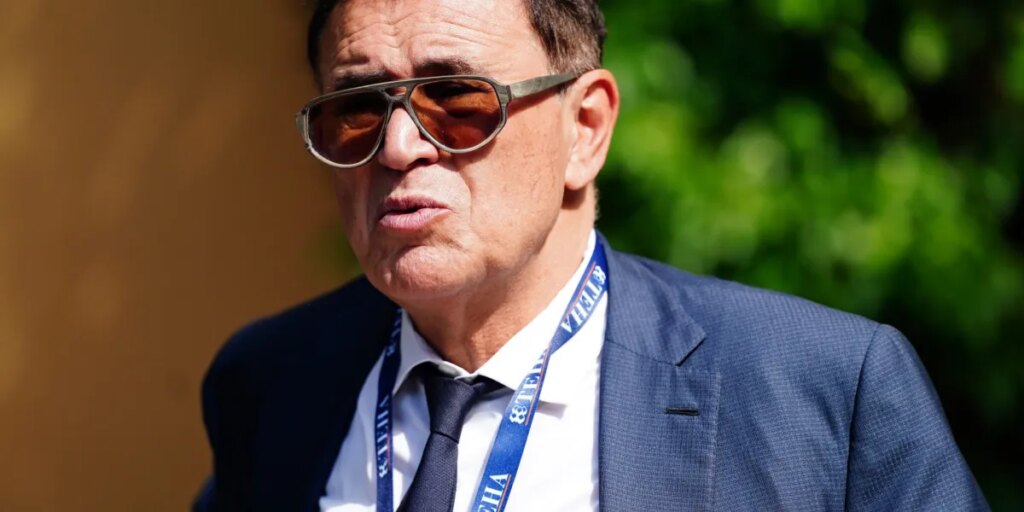
Top economist Nouriel Roubini, who was among the first to predict the 2008 financial crash, earned the nickname “Dr. Doom” for his stark warnings, though he has been more upbeat lately.
And when it comes to artificial intelligence, which has stirred all kinds of apocalyptic predictions, he insists he’s looking at the brighter side.
In an interview on Bloomberg TV on Friday, Roubini was asked about ways to fix Social Security, as the trust fund that helps fund benefits is due to run out of money by 2032.
He replied that a large chunk of the population will be replaced by AI and robots in the next 20-25 years, so raising the retirement age will not be sufficient.
“Eventually, we need some form of universal basic income for everybody while they work and once they retire,” Roubini added. “We’re already on the way.”
With AI poised to disrupt the labor market, top tech leaders like OpenAI CEO Sam Altman have suggested governments might provide a guaranteed amount of money to people, though he has since backed away from the idea.
Still, the idea persists, and the U.K.’s minister for investment said early this year that the government is weighing the introduction of a universal basic income as a means to support workers in industries where AI threatens to displace them.
In Roubini’s view, the AI revolution is the most important in human history in terms of tech innovation, and it will develop into artificial general intelligence, meaning AI will match or exceed human cognitive capabilities.
That will unlock massive economic growth, he said, with GDP accelerating from 2%-4% by the end of the decade to 6% by 2040 and 10% by 2050. At that point, the government can tax the “winners” and redistribute the money to everyone else.
“We’ll have either ex-post distribution—that is universal basic income—or we’ll have it ex-ante. Ex-ante means some form of socialism,” Roubini explained. “Essentially, the government is going to take over some fraction of the big tech firms.”
He said AI companies are already willing to hand over stakes to the government, alluding to a Financial Times report that said OpenAI has discussed giving 5% as a way for the public to share in the upside of AI.
Altman’s proposal would entail other AI companies providing similar stakes, although it’s not clear if his U.S. rivals would be willing to do so.
As a result, Roubini believes universal basic income or socialism is inevitable, saying “We’re going already in that direction, effectively.”
When pressed on his forecast, he denied that it’s gloomy. On the contrary, he called it optimistic, given that it assumes 10% growth and “machines doing all the work.”
That vision echoes what SpaceX and Tesla CEO Elon Musk has laid out. He thinks that in less than 20, AI and robotics will advance to the point where working becomes optional.
“You can grow your own vegetables in your garden or you could go to the store and buy vegetables,” he said on an episode of the People by WTF podcast in December. “It’s much harder to grow your own vegetables. But some people like to grow their vegetables, which is fine. But it’ll be optional, in that way, is my prediction.”