

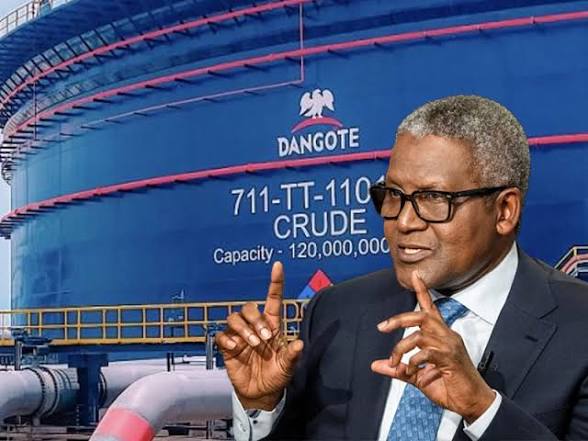
The Dangote Petroleum Refinery reverted to the sale of petrol in naira because importers were allegedly holding back their stocks, a management official of the company has told The PUNCH, ABNTV reports.
The official, who pleaded for anonymity because he was not authorised to speak to the media, told our correspondent that the refinery’s decision to halt dollar-denominated fuel sales was not because the issue of crude oil shortage had been resolved.
He said the reversal was taken in the interest of the country to prevent fuel scarcity and further increases in petrol prices. According to him, the importers were deliberately holding back their stocks in anticipation of higher fuel prices.
“We took a decision in the interest of the country to start selling Premium Motor Spirit in naira, since we saw that the importers were holding back their goods, looking for a price rise,” the source said.
The Dangote refinery recently resumed the sale of petrol in naira, ending its brief dollar-denominated pricing regime. A notice issued by the refinery’s commercial department on Wednesday informed customers that the gantry price of petrol was N1,215 per litre, while the coastal price was N1,602,495 per metric tonne.
The development marked a reversal of the refinery’s decision to sell petrol in United States dollars, a move that triggered anxiety across the downstream petroleum sector and prompted emergency intervention by the Federal Government.
The PUNCH had earlier reported that independent marketers suspended the loading of petrol from the refinery after it commenced dollar-denominated sales, saying they could not source the foreign exchange required for the transactions.
Sponsored
The refinery had defended the decision, explaining that it was compelled to adopt dollar sales because it was no longer receiving adequate crude oil under the federal government’s naira-for-crude initiative and had to source additional crude from the international market in dollars.
Speaking further, the source disclosed that the Dangote Group was still in talks with the federal government, expressing hope that the government would act in good faith once an agreement was reached. “We are still in talks with the government, but I hope that they will be sincere,” he noted.
The Dangote official also regretted that some people in government preferred exporting crude oil and importing refined petroleum products into the country. “As you know, they like to sell the crude to the traders outside the country and import the petroleum products,” he stated.
Before the Dangote refinery began operations in 2024, Nigeria had for years depended on imported petrol despite being one of Africa’s leading oil-producing countries.
The country’s refineries in Port Harcourt, Warri and Kaduna were non-functional, leaving Nigerians at the mercy of fuel importers. The period was marked by persistent fuel shortages and the controversial fuel subsidy regime.
With the commencement of operations at the Dangote refinery, the downstream sector became more decentralised. The Nigerian National Petroleum Company Limited also ended the payment of implicit fuel subsidies, bringing an end to the long queues at filling stations.
It will be recalled that some depot owners last week raised petrol gantry prices to as high as N1,275 per litre after the Dangote refinery temporarily halted loading at its gantry.
SPONSORED