

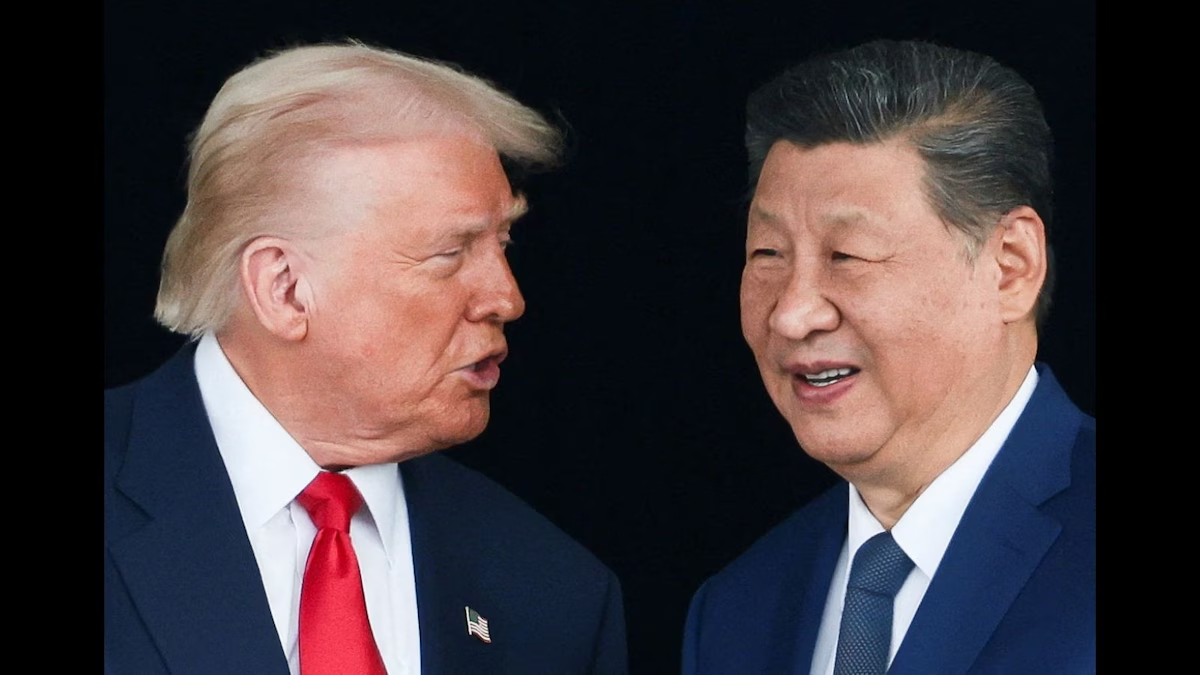
The shift comes as views of China and President Xi Jinping have improved, narrowing — and in many countries reversing — the gap with the US and its leader.
Among 20 countries surveyed annually since 2023, the median share with a favourable view of the US has fallen from 58% in 2023 to 36% in 2026. China’s rating, meanwhile, has climbed from 32% to 46% over the same period.
Last year, the US still held a 48%-38% advantage over China.
The latest survey found China was viewed more favourably than the US in most of the 36 countries covered. The US came out ahead in just six, including India, Japan, the Philippines and South Korea.
The reversal has been particularly striking in Canada.
In 2023, 57% of Canadians viewed the US favourably, compared with just 14% for China. By 2026, China’s favourability had risen to 44%, while that of the US had dropped to 33%. Similar shifts were recorded in several European countries and Australia.
Views of the two countries’ leaders have moved in a similar direction. Median confidence in the US president fell from 32% in 2025 to 21% in 2026, while confidence in Xi rose from 25% to 31%.
The report highlights that while “many people still lack confidence in Xi,” positive views of him have become more widespread and more people overall now express confidence in Xi than Trump.
The US, however, continues to outperform China on perceptions of personal freedom.
Across the 36 countries surveyed, more respondents said the US government respects its people’s personal freedoms than said the same of China. But Pew noted that the gap is narrowing, “driven largely by the fact that people in nearly every country surveyed have become less likely to say the US government respects its people’s personal freedoms” since the question was last asked in 2021.
The survey also found a sharper divide over the two powers’ global roles. Across 17 middle-income countries, a median 75% said the US interferes in other countries’ affairs, compared with 45% for China. Meanwhile, 69% described China as a somewhat or very reliable partner, against 49% for the US.
The findings are based on interviews with 42,151 people across 36 countries conducted between February 8 and May 13, 2026.