


In early June, Tenzin Gyatso, the 14th Dalai Lama, was wheeled into an operating room at Apollo Hospital in New Delhi. Spiritually, His Holiness is an emanation, or tulku, of the bodhisattva Chenrezig, who renounced nirvana to help mankind. But his corporeal manifestation, which just turned 91 on July 6, requires maintenance; this time, it was a left-knee replacement. While he is recovering well, that physical frailty is an alarm bell for the Tibetan diaspora. The vessel is aging, and the war for what happens the moment he leaves it has already begun.
The Chinese Communist Party (CCP) officially rejects the existence of God, the afterlife, and the immortal soul. Back in 1954, Mao Zedong even whispered to His Holiness that “religion is poison.” But the Great Helmsman also vowed “to exterminate the bourgeoisie and capitalism in China,” and today’s People’s Republic of China (PRC) has more billionaires and sells more wares than any other nation in history. The party has proved as malleable to religion as to capitalism, spending billions on the rejuvenation of Buddhist shrines from Sri Lanka to Nepal.
And the officially atheist CCP is now preparing to assert control over the spirit world: when His Holiness dies, his reincarnation must be “approved by the central government,” Foreign Ministry spokeswoman Mao Ning reiterated last July. There is precedent. When in 1995 the Dalai Lama named a Tibetan child as the reincarnation of the Panchen Lama—Tibetan Buddhism’s second highest position—China abducted the boy and installed a state-backed figure instead. The whereabouts of the Dalai Lama’s choice remain unknown—a vanishing that, despite China’s wealth and technological advances, reveals a deep anxiety regarding its claim over Tibet’s land and people, and which its leadership is using diplomatic pressure to assuage.
Soon there will likely be two Dalai Lamas: one sanctioned by the CCP and another by the Office of His Holiness. Following the fate of the Panchen Lama, His Holiness decreed that he will be reborn in a “free” country and that his successor may even break precedent by being female. However, China insists a state-sanctioned short list of Chinese candidates will be placed inside a golden urn gifted to Tibet by the Qing Dynasty court, with the single name then withdrawn as the true reincarnation.
“It is total shamelessness,” Geshe Lhakdor, a Tibetan Buddhist scholar who for many years served as His Holiness’s personal translator, tells TIME. “It’s ludicrous because on the one hand they’re trying to destroy everything that resembles Buddhist practice; on the other hand they want to choose the reincarnation.”
Beijing denies human-rights violations in Tibet, insisting that it fully respects the religious and cultural rights of the 7 million Tibetans inside China, and highlights how development has raised living standards in what was a backward and impoverished land. But advocacy groups and U.N. monitors paint a grim picture of a land systematically surveilled and repressed. And for the over 140,000 Tibetans in exile, the fear is that the Dalai Lama’s passing could deal a major blow to hopes of Tibetan self-rule.
“Some people believe that we should not talk about [the succession] at all, but China is already planning for it,” Penpa Tsering, the Sikyong or Prime Minister of the Tibetan Central Administration (CTA) government-in-exile, tells TIME. “If there are two Dalai Lamas, it will be a lifelong headache. So, does China want a lifelong headache?”
Beijing’s calculation is that discomfort would be a worthwhile price to finally end the Tibetan question. For this spiritual succession is not merely a religious event, but a critical flash point amid a struggle for influence over a faith practiced by almost 500 million people worldwide. While the Dalai Lama has served as an outspoken advocate for democracy and human rights, that moral authority may now be co-opted by an authoritarian superpower.
“It’s not just a question of succession,” says Robert Barnett, founder of the Modern Tibetan Studies Program at Columbia University. “It’s a question of whether the Tibetan exile project will be able to continue as an effective movement.”
As the glue holding together the Tibetan diaspora, His Holiness has long championed the middle-way approach: rather than outright independence, he seeks genuine autonomy and cultural preservation for Tibet under the auspices of the PRC. But a leadership vacuum could fracture the Tibetan movement, potentially giving rise to younger, more radical factions that agitate for total independence, perhaps even violently.
From 2009, Tibet was hit by a wave of self-immolations, when at least 159 predominantly young Tibetans set themselves on fire in protest against Chinese rule. His Holiness has never supported violence, even against oneself, though he also would not condemn the fiery deaths for fear of upsetting bereaved kin. That ambiguity stoked Beijing’s denouncements of “a wolf in monk’s robes.”
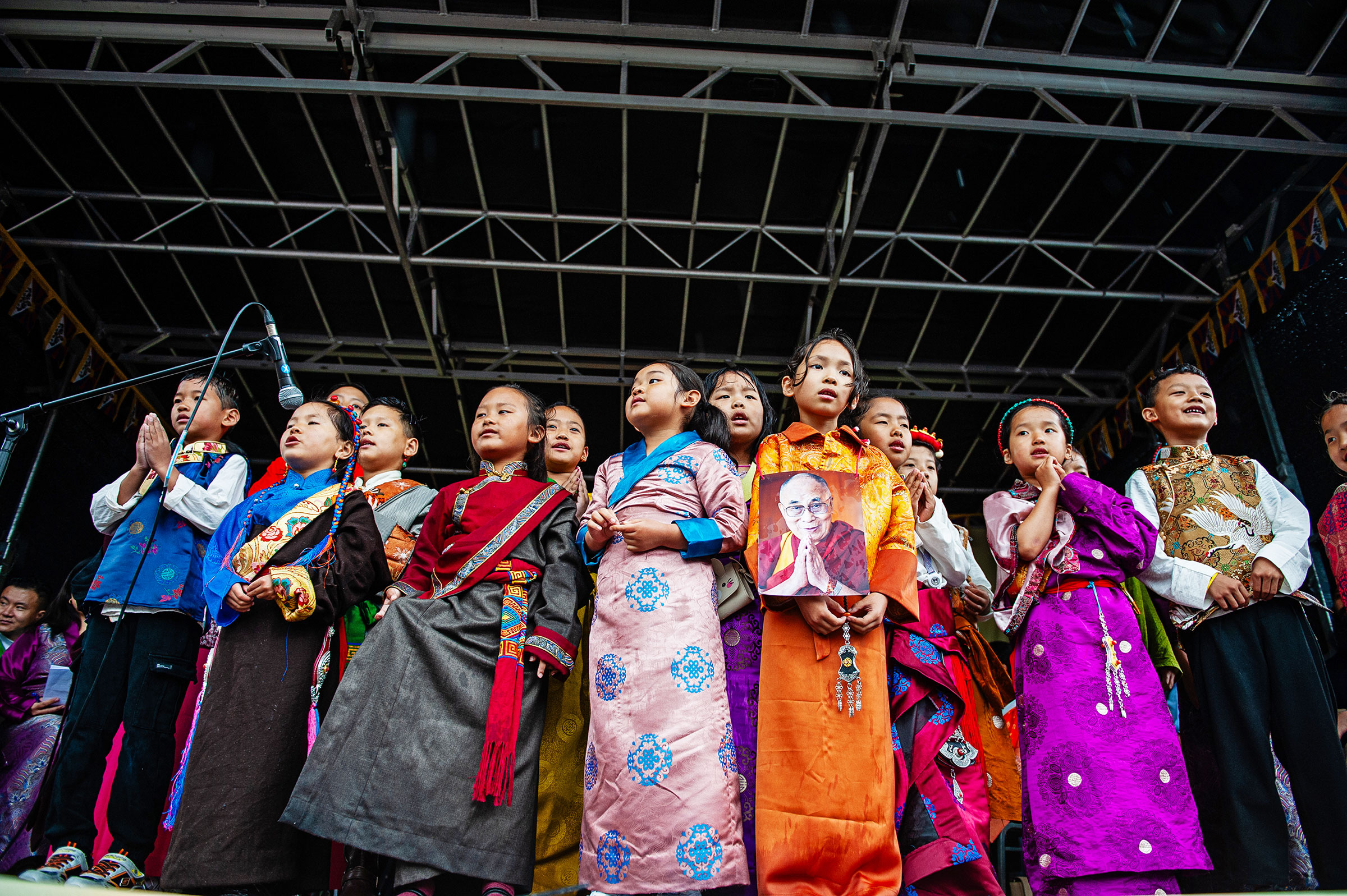
Few outside China share that assessment. The boy born Lhamo Thondup to an impoverished farming family was meant to lead an arcane land veiled behind the planet’s loftiest peaks, but instead became the world’s pre-eminent peace tribune, holding court with world leaders, winning the Nobel Peace Prize and Congressional Gold Medal, and drawing a coterie of celebrity fans from Richard Gere to Lady Gaga.
But as China’s political clout has grown, and old age makes travel more difficult, that global prominence has shrunk. He has not given a press interview since 2020, and those who wish to receive his blessing must generally make the long journey to his home in the ramshackle northern Indian town of Dharamshala, wreathed in prayer flags and sandalwood smoke.
Read more: The God in Exile
His Holiness officially relinquished any political authority back in 2011 to prepare Tibetans for the arduous journey they must continue without him. But in a turbulent world, with conflicts from Iran to Ukraine occupying the public consciousness, keeping the cause of “Free Tibet” alive is a mounting challenge. Amid shrinking recognition, the Tibetan exile community also faces a brain drain to the West, where assimilation dilutes their culture.
While Beijing hopes that Tibetans will accept the party’s chosen Dalai Lama, the diaspora is fighting back. Shortly before His Holiness’s 90th birthday, he stated the nonprofit Gaden Phodrang Trust he created will have the sole authority to identify his reincarnation. (TIME spoke to six of its 17 members for this article.)
The CTA is also cementing ties with democratic nations around the world, using technology to keep His Holiness’s message alive, and planning for a legitimate succession that will safeguard his legacy. Officials from the U.S. Embassy attended the Sikyong’s swearing-in ceremony in Dharamshala on May 27, and the following month Republican Representative Michael McCaul introduced an amendment in Congress that the U.S. government recognizes the Dalai Lama’s succession as a private spiritual matter over which the CCP has no jurisdiction.
“When His Holiness passes away, that would be a huge loss for us and devastating for the Tibetan people,” says Yangten Rinpoche, who heads the Monastic Ordination Section at the Office of the Dalai Lama. “So we need to take steps to prepare for when His Holiness is not here with us.”
To contemporary eyes, the maroon-robed Dalai Lama is the personification of peace and tolerance, a global symbol of compassion famed for his heart and infectious grin. But the institution’s 450-year history is more complex, beset by war, invasion, and internal power struggles.
In 1642, the fifth Dalai Lama first unified Tibet by yoking the strength of Mongol forces, who razed the monasteries of rival sects, killing thousands. His successor was kidnapped by an adversary and never seen again. In the 19th century, four consecutive Dalai Lamas died mysteriously on the cusp of adulthood. Then there is the fate of the incumbent, who fled Tibet’s capital Lhasa for India in 1959 just days before red Chinese troops bombarded the sloping granite walls of his Potala Palace home.
Geopolitics defined His Holiness’s life from the moment he was identified. Following the death of the 13th Dalai Lama in 1933, the search for his heir was a matter of divine detective work. Monks noticed the late leader’s head tilted toward the northeast, while an unusual fungus sprouted on the same side of his shrine. Then came the visions: a mystical lake, a specific house with peculiar eaves, and the Tibetan letter A. The regent, the fifth Reting Rinpoche, believed the latter referred to Amdo, a disputed northeastern province of Tibet then subjugated by a Chinese warlord.
The Reting Rinpoche dispatched a search team of high lamas, who soon heard about a precocious 2-year-old who enjoyed larking inside chicken coops but also frequently spoke yearningly about making a long journey to Lhasa. Inside the modest home, legend has it, the toddler marched straight up to the lead monk, eyed a set of prayer beads belonging to the late Dalai Lama, and despite speaking only a local Chinese dialect demanded in perfect central Tibetan: “Give me my beads.”
Later, presented with an array of objects, the boy is said to have selected only those belonging to his predecessor. The hunt was over. But it would take two years of negotiation before a ransom was agreed with the Chinese warlord, who realized the child must be auspicious and initially refused to sanction his departure.
When the 4-year-old child eventually arrived in Lhasa, he was atop a golden palanquin carried by two dozen courtiers, while thousands of people flooded into the streets, including musicians, military officers, and noblemen in fine silk. His new life was an intense crucible of monastic discipline, complex logic, and rote memorization. Yet his truest education came from the palace sweepers—the humble monk-servants who raised him. From them, he learned a foundational truth: true authority is rooted in affection and kindness, not the rigid hierarchy of the elites.
He would need that grounding sooner than anyone expected. While copying the last testament of his predecessor—which warned of the dire need for a strong military—the young Dalai Lama discovered that corrupt officials were embezzling army funds. The weakness of Tibet’s forces soon became clear.
In October 1950, Chinese forces invaded and the ragtag Tibetan army was swiftly crushed. The regent turned to the 15-year-old boy and handed him full political power, five years ahead of schedule.
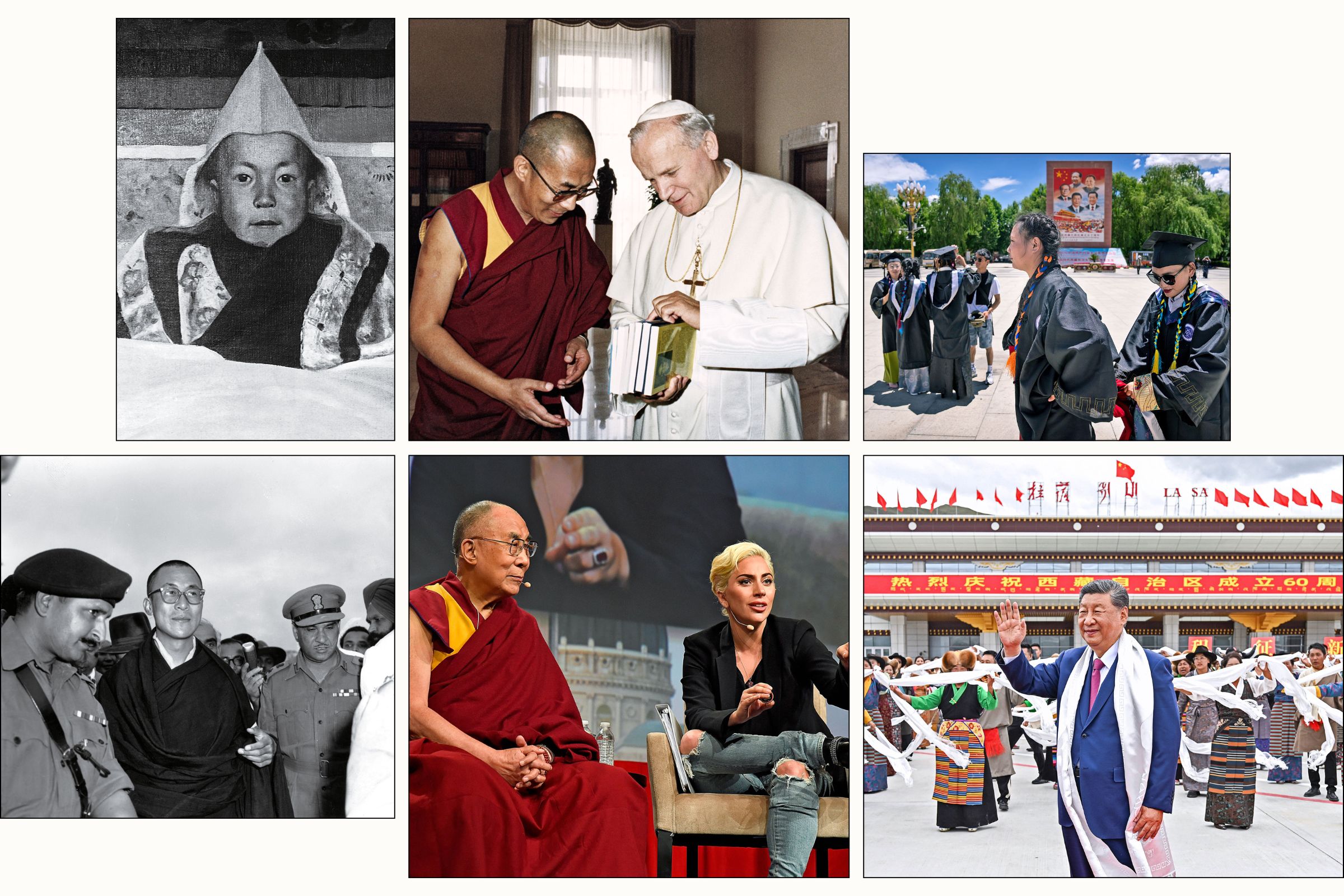
Deserted by Western nations like the U.S. and U.K., the young leader traveled to China to negotiate with Mao. By 1959, following a failed Tibetan uprising, he was forced to flee to India upon a dzo, a cross between a yak and a cow, beginning an exile that continues today. The Dalai Lama’s political displacement gave rise to a global spiritual phenomenon.
That prominence extends beyond the confines of Buddhism, which as a nontheistic religion without a creator deity is uniquely accessible to followers of other faiths, and even atheists, with practices like mindfulness and meditation adopted by millions around the globe. Bridging ideological divides, the Dalai Lama became the epitome of “soft power,” viewing even philosophical antagonists not as monsters, but as equally flawed siblings. He campaigned for the environment, secular ethics, and interfaith harmony: that, at the end of the day, we are all just humans on this planet together.
“My No. 1 commitment is to try to promote awareness about our inner value, not based on religion,” His Holiness told TIME in 2019. “How to bring inner peace, how to tackle our anger, fear, through training of our mind.
Read more: A Conversation with the Dalai Lama
The paradox of Tibetan Buddhism is this blending of secular wisdom and mystical rite. Several times each year, His Holiness requests guidance from Kuten La, who in his role as State Oracle serves as mouthpiece for Nechung, an ancient deity and Tibet’s spiritual protector. The air inside his temple in Dharamshala thickens with the sharp, medicinal sting of burning juniper and the low, rhythmic thrum of drums and horns. In the center sits Kuten La, whom attendants drape with 80 pounds of ceremonial armor, before crowning him with a towering headdress of gold and mirrors, and securing a silk cord tightly around his throat.
Kuten La’s limbs twitch. His breathing shifts to an unnatural cadence. The physical strain is immense—his face flushes crimson under the regalia—but his consciousness is no longer entirely his own. As he passes the delicate threshold into the trance state, the oracle begins to dance with an otherworldly vigor. He hisses commands, bends iron swords with bare hands, and speaks in a high-pitched, archaic dialect: cryptic divinations sent to aid Tibet’s people and those who lead them. “When Nechung enters me it’s just a feeling of equanimity,” Kuten La says. “But when he’s gone, there’s a bit of discomfort in my heart, or maybe my muscles and joints.”
It is Nechung, via Kuten La, that will help steer the Gaden Phodrang Trust toward the next Dalai Lama. However, the most pressing issue facing Tibetan exiles is the looming gap in leadership. Even if the next emanation is discovered within months, Tibetans face a perhaps two-decade interregnum while his successor comes of age. While the Dalai Lama democratized the exile administration—separating his executive power and creating an elected leader in 2011—the new democratic structure lacks the charismatic gravity of his historic role.
China is maneuvering to exploit this vulnerability. Inside Tibet, Beijing is pursuing the “Sinicization of religion,” an active campaign to redefine Tibetan Buddhism to align with state directives. Monasteries are no longer exclusively places of spiritual study but regulated sites of political indoctrination. Through mandatory patriotic education campaigns, monks and nuns are required to study CCP ideology, Chinese law, and the speeches of Xi Jinping. Students must pass political exams to remain in their monasteries and publicly denounce the 14th Dalai Lama as a “separatist.” Refusal to participate or pass these exams routinely results in expulsion, arrest, or the institution’s closure.
Monks and ordinary Tibetans are forced to replace portraits of previous Dalai Lamas and even traditional thangkas with portraits of Xi Jinping and Mao Zedong. In March, the CCP introduced a new Law on Promoting Ethnic Unity and Progress, ostensibly to “foster a strong sense of community for the Chinese nation,” though critics argue it places severe curbs on minority languages, faiths, and cultures.
By forcing Tibetan children into state-run boarding schools where instruction is almost entirely in Mandarin, the state is weakening the linguistic tie that the next generation needs to read traditional Buddhist scriptures and engage in spiritual debate. “If you forget your language, you lose your identity,” says Jetsun Pema, His Holiness’s sister, who served as president of the Tibetan Children’s Villages for 42 years.
Tibet is far from alone. Article 4 of the PRC constitution guarantees equality for all its 56 ethnic groups, though in reality the national vision hews to a Han Chinese orthodoxy, which avers a direct lineage from the early Yellow River basin tribes. Critics see parallels between Beijing’s repressive policies in Tibet and attempts to muzzle minority language and inculcate a singular identity along China’s restive periphery, including Hong Kong, Inner Mongolia, Xinjiang, and indeed self-ruling Taiwan. “It’s the same thing,” says the Sikyong. “They are talking about peace, dialogue, negotiation … but China always has double standards.”
Outside Tibet, China’s strategy is more insidious. From Sri Lanka to Myanmar, China has spent billions on rejuvenating ancient Buddhist sites, including $3 billion to transform the Nepalese town of Lumbini, birthplace of Lord Buddha, into a luxury pilgrimage site. China has hosted World Buddhist Forums since 2006, courting monks from across the globe. China actively targets Tibetan lamas in exile with inducements. “Some lamas who are not motivated to solve the Tibetan problem, or to preserve Tibetan culture, have a relationship with the Chinese government,” says the 13th Kundeling Rinpoche, whose role traditionally served as a regent of Tibet. “But they’re not motivated by fairness and openness or wanting to help the Tibetan society.”
Geopolitically, China uses the Dalai Lama succession as a bargaining chip. When foreign governments are pressed to support the CCP’s right to oversee the Dalai Lama’s reincarnation, the true objective is rarely about religion. Countries that agree effectively accept Beijing’s claims of authority, quashing Tibetan exile activities within their borders. Those that refuse are framed as an enemy of the Chinese people.
In 2008, reeling from the global financial crisis, the British government formally recognized Tibet as part of China—surrendering over a century of support for Tibetan autonomy. Just months later, Chinese Premier Wen Jiabao visited London and agreed to boost bilateral trade to $60 billion. In 2014, the Dalai Lama visited Norway to celebrate the 25th anniversary of his Nobel Peace Prize but was snubbed by the entire Norwegian government, which caved to Chinese threats to halt fish imports. Two years later, when the Dalai Lama visited Mongolia for a purely religious trip, China hit its export-reliant landlocked neighbor with retaliatory tariffs. “It’s a Trojan horse,” says Barnett. “If a country doesn’t concede on this issue, then China can then demand another, far more significant concession in exchange.”
China is also utilizing economic corridors through nations like Nepal—which is ramping up arrests of Tibetan new arrivals—to court other Buddhist countries, laying the groundwork for international compliance when the time comes to name their own successor. Nations like Mongolia, Bhutan, and Nepal are acutely aware of the danger, fearing that not capitulating on the Dalai Lama succession issue could open the door to broader Chinese territorial claims.
“Tibet is not just a territorial occupation,” says Dolma Tsering, deputy speaker of the CTA. “We are the front line of a totalitarian CCP whose eyes are far beyond Tibet.”
The Dalai Lama bet that modern, secular democracy would protect his people after his death. But as his succession looms, it’s clear that the survival of the Tibetan exile project will depend not just on democratic institutions, but also on whether the rest of the world will withstand Beijing’s pressure.
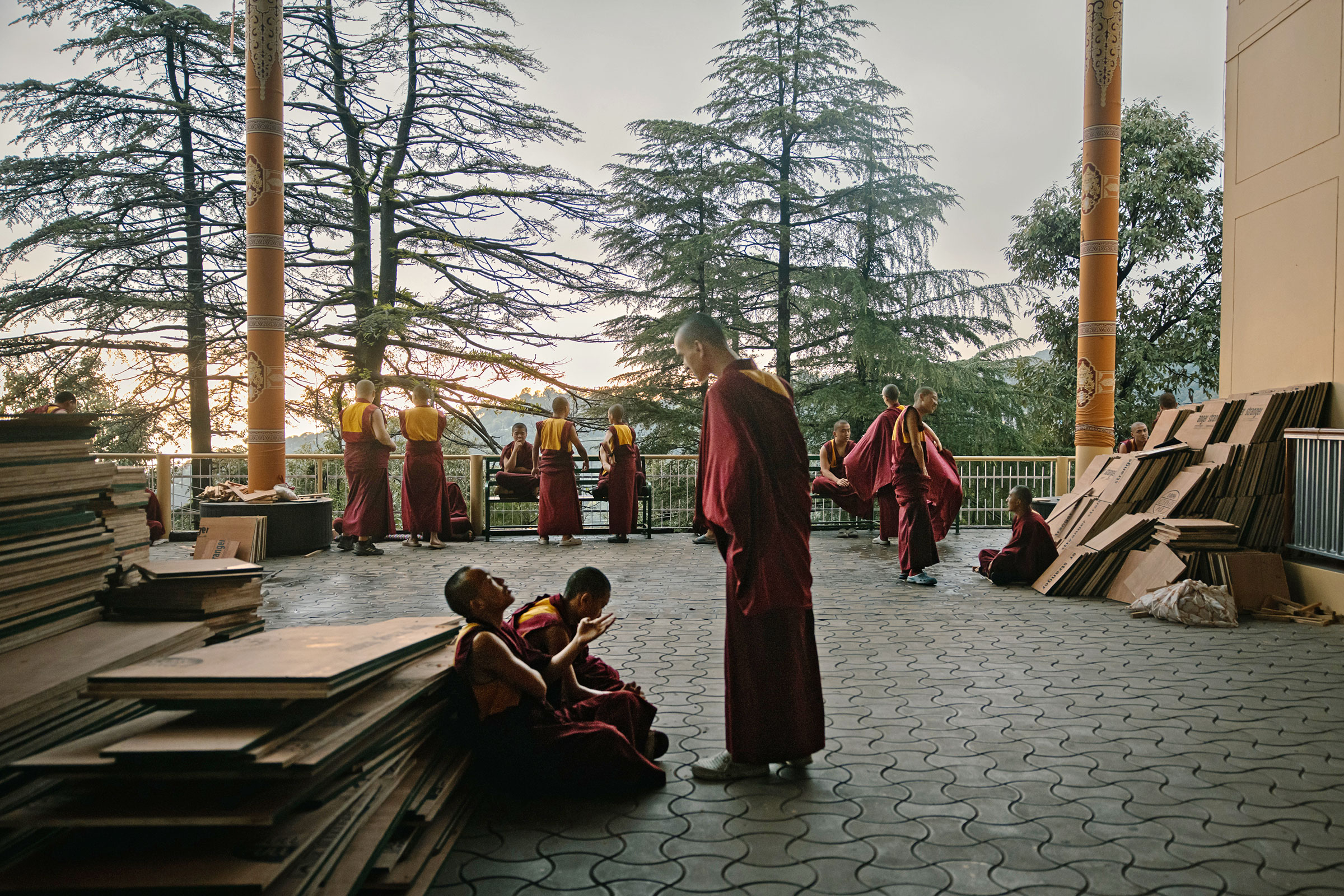
The CTA maintains “Offices of Tibet” in over a dozen countries, which function as de facto embassies to lobby foreign governments and organize the diaspora. Civil groups such as the Tibetan Youth Congress and Tibetan Women’s Association continue to provide community welfare programs as well as mobilize protests outside Chinese embassies and international forums.
In India, the book Why Tibet Matters has been translated into 15 local dialects to galvanize solidarity among the host community. Tibetan Buddhist sites are being promoted as tourism destinations to both generate income and keep the struggle alive in visitors’ minds. Across the globe, the CTA runs 92 weekend Tibetan language and cultural classes to preserve solidarity among the diaspora. “But it’s still a huge challenge,” says the Sikyong.
The diaspora is also leaning into technology. Yangten Rinpoche is currently digitizing the entire canon of the 14th Dalai Lama’s teachings, comprising over 110 books, and is looking into coalescing that wisdom into an AI agent which people can solicit for his spiritual advice. “We will try to disseminate that information using different technologies and different means,” he says.
The U.N., as well as countries such as Canada, Australia, the U.K., and various European nations, have periodically passed legislative motions condemning human-rights violations in Tibet. The U.S. has had a special coordinator for Tibetan issues since 1997, and the CTA is lobbying the E.U. to create an equivalent post.
The U.S. remains unique in creating binding laws that specifically direct diplomatic strategy and impose direct sanctions over the Tibet issue, including the 2018 Reciprocal Access to Tibet Act; the 2020 Tibetan Policy and Support Act; and the 2024 Resolve Tibet Act. Despite today’s polarized political landscape, all were bipartisan and some even passed unanimously—under both Joe Biden and Donald Trump. “That’s not a product of Shangri-la, or yaks, or anything else in Tibet,” says Cameron Warner, a professor at Denmark’s Aarhus University. “The Dalai Lama did that.”
The challenge for the exile community is to maintain that broad support after His Holiness has departed. “It is a big concern, but it’s one we cannot avoid,” says Geshe Lhakdor. “His Holiness not being with us will, of course, set us a big challenge, but you need to test the reality.”
How could the CTA reshape that reality to its own benefit? His Holiness has said he would be reborn in a “free” country, and the assumption was that meant a democratic Asian nation, such as India, Bhutan, or Mongolia. But what about the self-styled land of the free? “Certainly,” says Kundeling Rinpoche with a chuckle. “Maybe His Holiness could be reborn in the USA. Anything is possible.”
Asked the same question, Kuten La goes further, expounding the historical precedent of previous reincarnations outside Tibet when geopolitically expedient. The fact that the fourth Dalai Lama was born in Mongolia empowered his successor to unite the territory in the 17th century. That the sixth Dalai Lama was born in modern-day Arunachal Pradesh of northern India helped seed an affinity for Buddhism, which led to a warm welcome for the incumbent almost three centuries later.
Given today’s fraught new era of great-power competition, where would be the most strategically useful birthplace for a figure Beijing regards as a threat? There are, after all, around 30,000 Tibetan Americans, mainly concentrated around Queens and Minneapolis. Catholics already have an American Pope. Could the 15th Dalai Lama be a Timberwolves fan? “The U.S. is a free country, it’s a democratic country,” grins Kuten La. “So if His Holiness sees benefit in taking rebirth there, that will happen.”
His Holiness has already tested the water. In 2023, he named an 8-year-old Mongolian boy called Aguidai Altannar as the 10th Khalkha Jetsun Dhampa Rinpoche, the third highest leader of Tibetan Buddhism. But Altannar was actually born in Washington, D.C., and his dual nationality is seen as a diplomatic shield. “It would be beneficial to the Dalai Lama’s institution if the next person also had a different nationality,” says Warner. “A kid who’s basically Tibetan but maybe born in America or the U.K. to parents from northern India.”
The Dalai Lama’s body may be ailing, true, but no one should bet against the punch line belonging to the monk who never stopped laughing. China has claimed Tibet’s soil, but by entrenching their identity in the free world, Tibetans can ensure their culture lives on. Perhaps longer than the regime that seeks its erasure.