

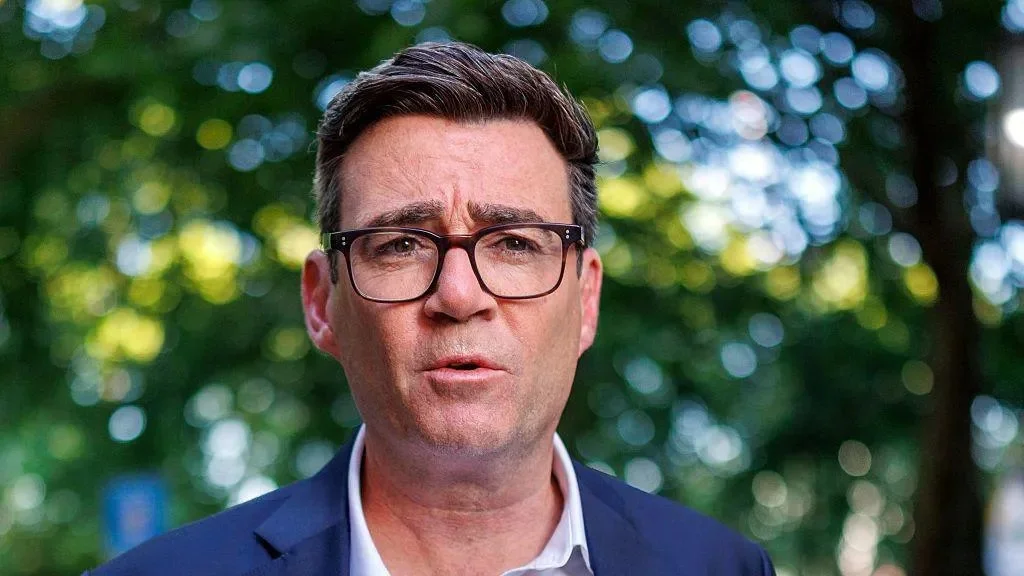
Andy Burnham is set to become the United Kingdom’s seventh prime minister since 2016, taking over from Keir Starmer after emerging as the new leader of the governing Labour Party in yet another leadership transition for British politics.
Burnham, who was the sole candidate in the Labour leadership race, secured the backing of 379 of the party’s 403 MPs in the House of Commons, paving the way for him to succeed Starmer without a contested vote.
On Monday, Starmer will travel from Downing Street to Buckingham Palace to formally tender his resignation to King Charles III. Shortly afterwards, Burnham will meet the monarch, who will invite him to form a government, officially making him Britain’s new prime minister in a constitutional ceremony traditionally known as “kissing hands”, although no hand-kissing actually takes place.
A spokesperson said Burnham would use his first speech as prime minister to acknowledge the political instability Britain has experienced over the past decade.
“He is acutely aware of how many changes of leader the country has been through in the past 10 years,” the spokesperson said, adding that Burnham would pledge to restore stability and rebuild public confidence.
Under Britain’s parliamentary system, a governing party can replace its leader, and, by extension, the prime minister, without holding a general election. The next nationwide election is not due until 2029, although Burnham has the authority to call one earlier.
After leaving Buckingham Palace, Burnham will return to Downing Street to deliver his first address as prime minister.
The former Greater Manchester mayor has promised to make politics “less toxic,” improve living standards and restore optimism across the country.
“I will work to build a new politics,” Burnham said after being elected Labour leader on Friday. “The country is crying out for it.”
His administration is expected to come under immediate scrutiny as critics and supporters alike seek details of how he intends to deliver on those promises.
Political analyst Joshi Herrmann, founder of the Manchester news outlet The Mill, said Burnham’s success would ultimately depend on his ability to revive Britain’s economy.
“Fundamentally, it only will work if you can generate significant economic growth, because it’s the lack of growth that’s really holding the country back,” Herrmann said.
Attention is also expected to shift quickly to Burnham’s Cabinet appointments, with changes anticipated in key positions, including the Treasury, Foreign Office and Home Office.
While outlining his vision for the future, Burnham paid tribute to Starmer, saying he intended to “build on the foundation laid” by his predecessor.
Starmer became Labour leader in 2020 following one of the party’s worst electoral defeats and led it back to power with a landslide victory four years later. However, his government later struggled with the pressures of governing.
During his final Prime Minister’s Questions in Parliament on Wednesday, Starmer defended his administration’s record, highlighting support for Ukraine, stronger protections for workers, measures to reduce child poverty, legislation aimed at preventing official cover-ups after public tragedies, and increased defence spending.
“I am proud to leave this country in a better shape than I found it,” he said.