

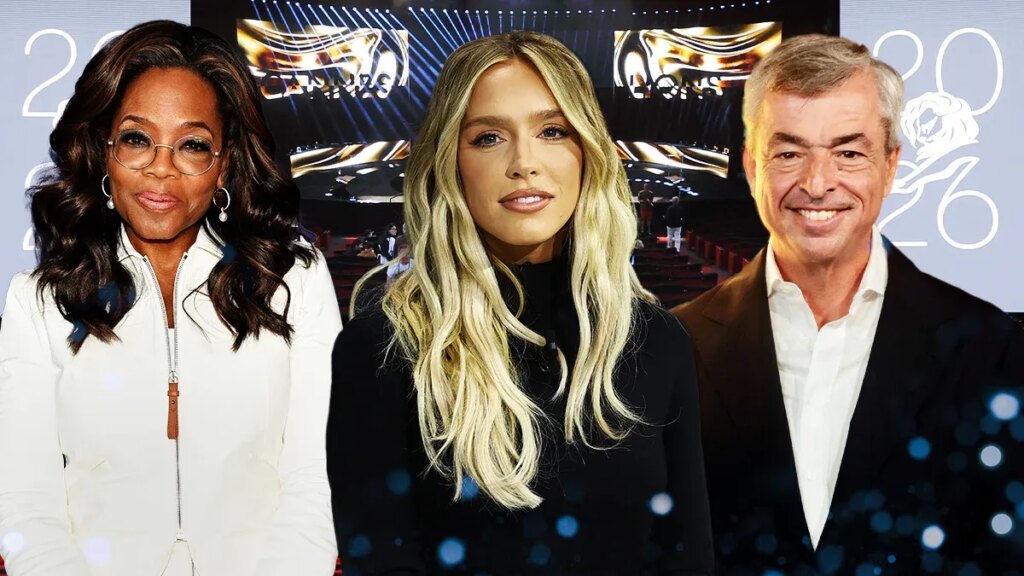
Artificial intelligence remained a hot topic at this year’s Cannes Lions, with panelists publicly touting its opportunity for the creative and advertising industries. But the personal conversations I had about the technology on the branded beaches and in the swanky hotels last week sounded a bit different.
Repeatedly, I was asked if I thought the AI bubble was going to pop, a question that was often asked in hushed tones — as if Claude or ChatGPT was lurking behind us. That fretting often came from professionals working on the brand and agency sides as well as from those leading the various cottage industries designed to help support the creator economy.
Creators themselves were far more blunt. While almost all of the creators I spoke to used AI to better understand their audience and help them create content, most expressed a distaste for wholly AI-generated content, noting that audiences can tell and dislike the trend.
Even AI’s biggest proponents — Google had a major presence at Cannes Lions — seemed to recognize this particular vibe shift. There were far fewer wholly AI-generated projects and more announcements about AI agents and tools to aid you in your human work. A contrast to the more AI-curious vibe that TheWrap experienced at the Cannes Film Festival back in May.
That change in attitude is just one of the themes I saw play out after spending a week in the south of France for the Cannes Lions International Festival of Creativity. The festival was positively crawling with creators — another advertising trend that was talked about at length — though few companies seemed to know what to do with these creators. YouTube emerged as the exception and the gold standard on that front. There was also an overall shift from advocating for broader campaigns that appeal to a wide audience to smaller, more specialized campaigns that can capitalize on higher engagement. That’s especially good news for smaller creators.
Though this was my first Cannes Lions, I have covered several major festivals and conferences as they were on the precipice of a major change, events like Comic-Con and the Television Critics Association’s press tour. And Cannes Lions had all the markings of a changeup. From who won, who disappointed and everyone’s favorite trends, here are the most interesting takeaways from a week spent networking and coveting cute Canva totes in France.
The creeping skepticism of AI
AI-generated creative content was all the rage last year, a trend that ultimately ended with Coca-Cola debuting a completely AI-generated holiday ad for a second year in a row (outside of the marketing community, the ad was mostly criticized — or worse, ignored). But this year the growing backlash against AI was palpable.
Even the most pro-AI presentations felt eager to reassure audiences about this technology. TikTok unveiled a new AI agent, called Symphony AI, designed to better connect advertisers to creators who may be suited for their campaigns. Google debuted a film that used AI to recreate Pelé’s historic three consecutive “sombreros,” an especially difficult kick that defined his legacy. In a conversation with TheWrap, a high-ranking executive from Amazon Web Services highlighted Amazon’s Gen AI fund as well as how Amazon’s AI is helping filmmakers streamline production and rights holders retain control over their IP.
Google seemed especially keen to rebrand its AI product. “Our AI will not replace creativity. We aim to remove friction that may prevent reactive scale,” Sean Downey, president of Americas and global partners at Google and YouTube, said during an event with press that included TheWrap.
It’s an odd position since Google’s Nano Banana AI image generator and Veo video generator are among the top-tier tools people use for creating content.
As for TikTok, the short-form leader debuted Symphony Agent, an AI platform designed to help connect marketers with creators for potential campaign collaborations.
“Rather than simply generating videos, you can think of Symphony Agent as working alongside marketers at every single step of the process,” Moritz Bartsch, global head of creative operations at TikTok, explained during a press event.
The AI tool was developed with built-in safeguards around AI labels, invisible watermarks and content moderation filters all designed to make collaborations between brands and TikTok creators easier.
“Symphony Agent is able to take information from several sources, such as what type of campaigns are working well for the advertiser, what type of creators are performing for a certain vertical or what type of trends do we have emerge in a certain audience on the platform,” he said.
Fueled by a new focus on agentic AI (a trend of souped-up digital assistants able to accomplish tasks based on your preferences), the underlying message was clear: generative AI that used to make content that replaces creative people is out. AI tools that silently help with workloads are in.
Creators have replaced celebrities as the it-talent
For years, Cannes Lions was known for bringing some of the biggest names in entertainment to the south of France as the most powerful companies and marketers in the world tried to prove their brand was the most influential. There were still some traditional celebrities this year. Oprah Winfrey and Keke Palmer were there, and Ludacris, Ja Rule and Zara Larsson all played at various concerts connected to the week.
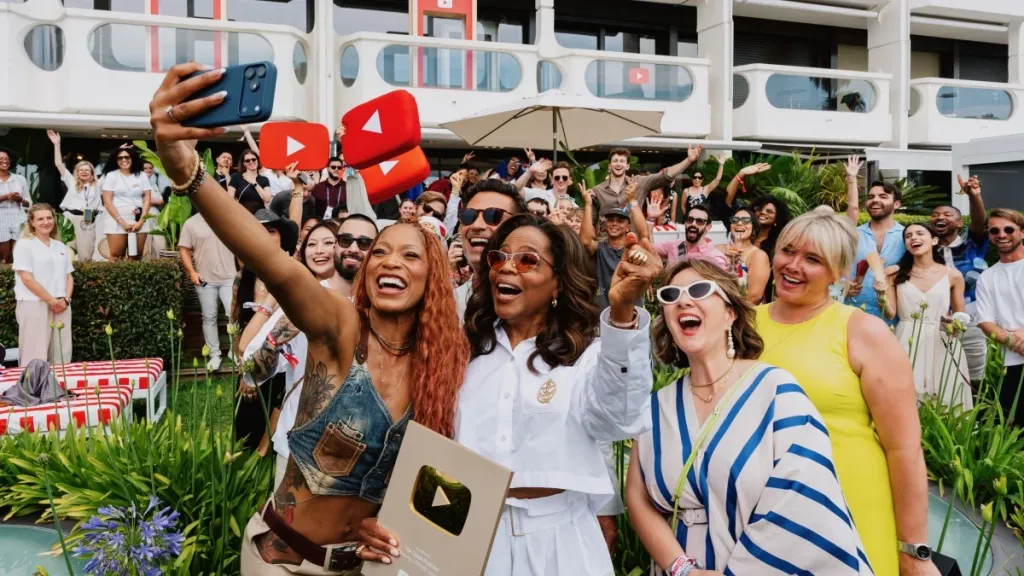
However, there were at least 10 times as many creators as there were celebrities from the music, film and TV worlds. In fact, many attendees were most excited to see those creators rather than more traditional celebrities. Alex Cooper’s Unwell party at The Female Quotient’s beach and her panel with YouTube Chief Business Officer Mary Ellen Coe, which also featured fellow creators Jack Goldburg and Brittany Broski, drew a great deal of excitement and anticipation. Adding to the prevailing sense that creators are the new it-talent of Cannes, Palmer and Winfrey even stopped by YouTube’s Creator Club so that Palmer could award Winfrey’s podcast for surpassing 1 million subscribers.
The reason for this shift is because creators’ devoted fanbases have completely changed the marketing industry.
“Creators are a more strategic part of brand integration,” Scott Sutton, CEO of the influencer marketing company Later, told TheWrap. “Creator views have more legs and better record on downstream conversion than traditional ads.”
YouTube was the creator king, Meta was quiet and Canva was very loud
Do you know who had a very good Cannes Lions? YouTube. A good amount of the creators who showed up for the international festival of creativity were linked to the platform in some way, either through a YouTube channel or Shorts page. But the real reason why YouTube’s presence was so strong is because the platform went out of its way to make sure its creators had a positive and productive Cannes experience. As I’ve covered before, that meant setting creators up with an air-conditioned hub away from the sweltering beaches, programming panels specifically designed to help creators get brand ready and organizing ways for creators and advertising and marketing leaders to meet.
“Because our platform is ultimately about creators telling their stories and connecting with fans, we wanted to bring brands into that,” Coe told TheWrap. “The more creators we can have introduced to more brands and marketing agencies, it’s kind of symbiotic.”
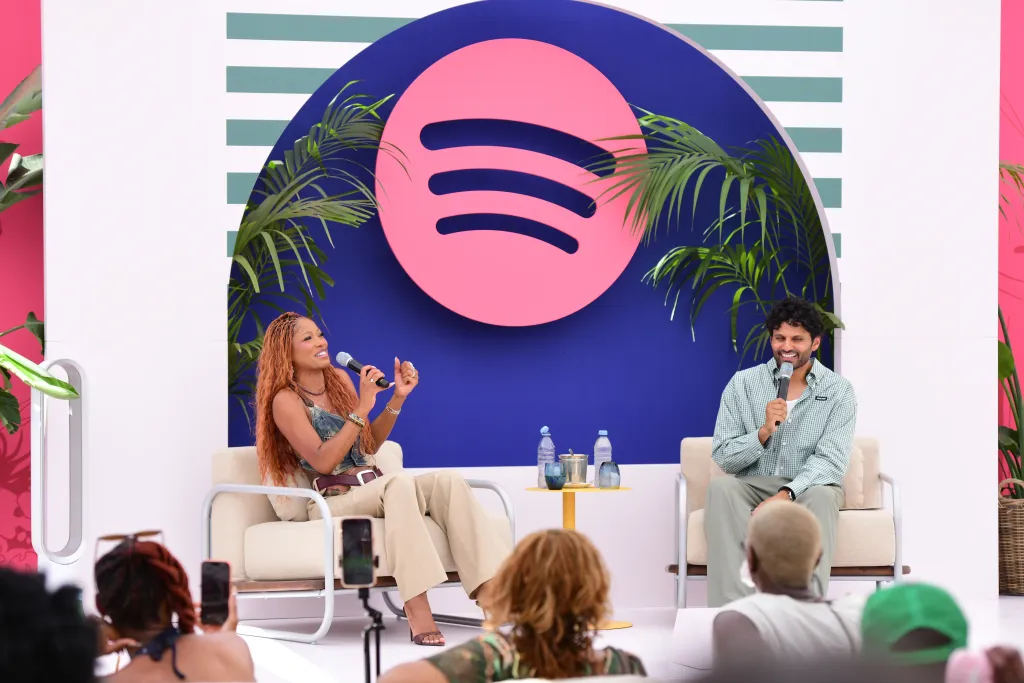
Though their creator support was the strongest and most ambitious, YouTube was far from the only social media platform that had a good Cannes Lions. Spotify set up meetings for its top creators, and its beach was once again one of the hottest places to be, featuring performances from Raye and Mumford & Sons. Pinterest also returned to the sandy side of Cannes, and Snapchat took over the art gallery La Malmaison. TikTok set up shop at the gardens of the Carlton, and Patreon partnered with Billion Dollar Boy and FiveTwoNine to bring 20 creators to France while offering panels on the roof of the Canopy by Hilton. Even Twitch and Reddit — two platforms that aren’t as conducive to brand partnerships — showed up thanks to a Reddit deli that was available to Cannes Lions badge holders and a Twitch activation inside of Amazon’s Port.
The only massive social media player that didn’t seem to show off its full potential was Meta. The company behind Facebook, Instagram and WhatsApp once again had a beach that was located behind the main Cannes Lions track. However, it was not one of the more popular places. Though I never made it to the beach, several creators, advertising executives and agents told me they thought Meta’s beach was disappointing. That’s a shame considering how many creators depend on Instagram as a revenue source.
However, Canva, a platform favored by creators, showed up in a big and surprising way. The free-to-use photo editing app upped its beach presence after 4,000 people stopped by its activation last year. This year’s beach, which was three times the size of last year’s, gave out blue striped totes with a yellow lining — a piece of merch that quickly became a coveted part of the festival. On Thursday, Canva then celebrated Pride month with a performance by the Teletubbies and ended its Cannes presence with a yacht adorned by its company name.
Does all of this make sense? Not really. Did it generate a lot of attention? You bet.
Fox was having a moment
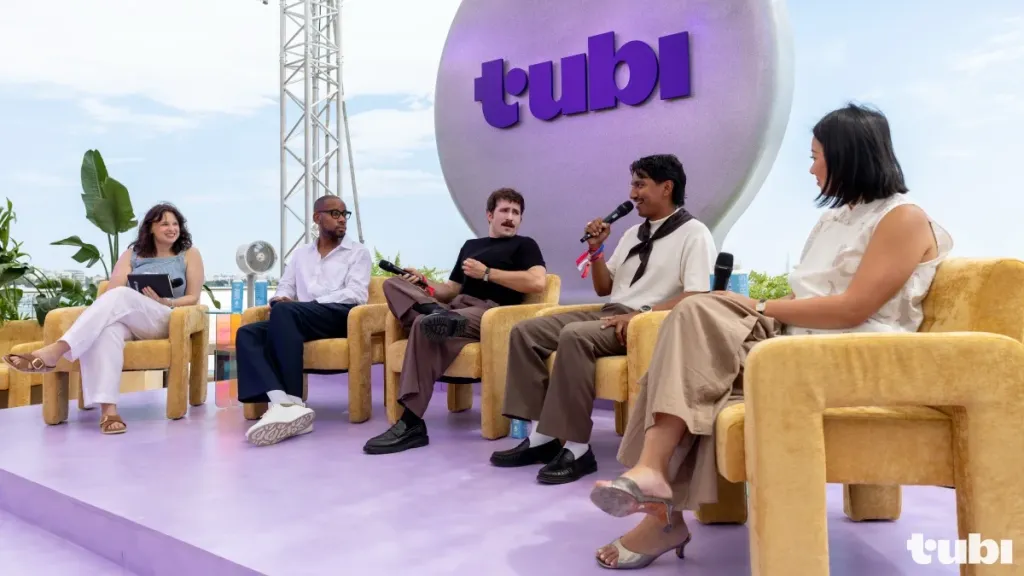
Surprisingly, Fox had the buzziest Cannes Lions of practically any traditional TV network. The company’s intention to acquire the free ad-supported streamer and smart TV maker Roku was widely discussed and repeatedly praised. Many noted that Fox has already proven it can make a FAST platform work thanks to the continued success of the Gen Z-focused Tubi.
Though no one from Fox or Roku had any news to share about the proposed deal, executives at both parties seemed excited about the acquisition when I spoke to them.
But it wasn’t just Fox’s Roku plan that gained positive attention for the network. Professionals in the creator industry praised the Fox-owned Tubi for its continued investment in creator content as well as its deal with TikTok to help shortform creators develop more longfrom content for television. The FAST streamer was compared to Netflix as one of the few companies that has been intelligently investing in creators. Tubi also announced a deal with Amazon’s Fire TV during the festival, and Fox signed a deal with the creator-focused animation studio Toonstar.
Several other TV players showed up during the festival. Netflix flexed its fanbase with a rooftop activation centered on its biggest shows, showcasing their popularity through a series of mini games and giveaways. That move felt in line with Netflix’s increasing focus on in-person events, like with last year’s openings of its Philadelphia and Dallas Netflix Houses. A Las Vegas version will be opening next year.
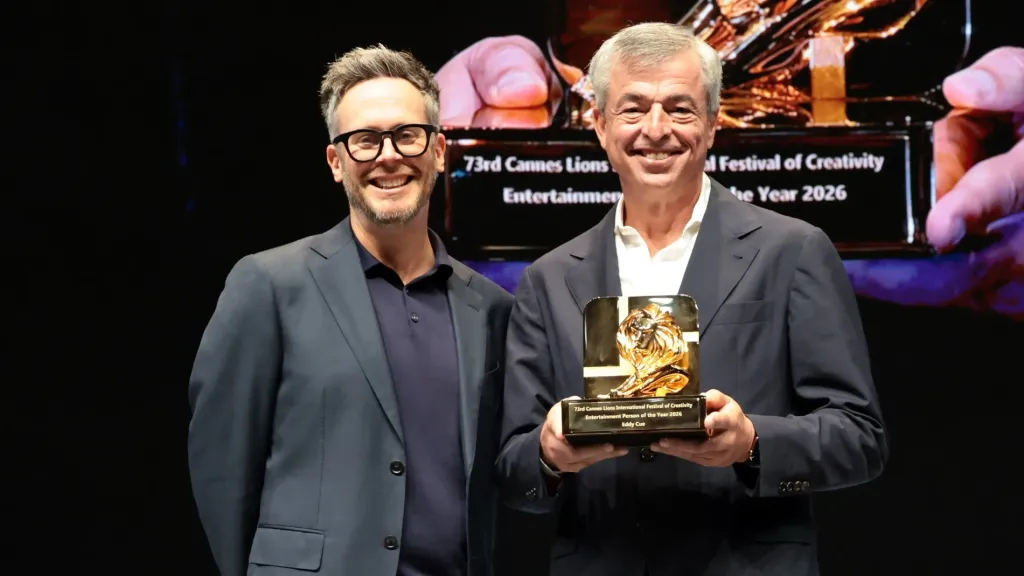
NBCUniversal showed off its unscripted roster with a party featuring “The Traitors” host Alan Cumming and “Late Night” host Seth Meyers. And though Apple intentionally didn’t make a big deal of the festival, their executives were on the ground with Eddy Cue, senior vice president of services and health at Apple, being named Cannes Lions Entertainment Person of the Year. By and large, the TV and film industries had a far more scaled back presence at Cannes Lions. Speaking of the changing of the times …
Bespoke approaches are the new black
It’s no surprise that Cue was named as Cannes Lions’ Entertainment Person of the Year. Every professional, whether they were on the brand, agency or talent side, emphasized that customized campaigns are the best way to break through the clutter these days rather than splashy campaigns designed to reach as many people as possible.
And when it came to bespoke campaigns, few players in film and TV were better than Apple. Last year, “Severance” returned to TV with a surprise pop-up featuring the entire cast in Grand Central Terminal. And the brand integrations in “F1” were so varied and well-incorporated, they reportedly brought in at least $40 million for the film in a way that felt authentic to the racing world.
“We’ve always said, ‘We don’t want to be the most. We want to be the best.’ That’s what it’s always been about, and it’s part of the DNA of who Apple is,” Cue told TheWrap. Though Apple TV’s lack of a library of content was challenging when the streamer started six and a half years ago, that curated approach has grown into a strength for the streamer known for its prestige content. “Everything matters a lot to us, and so that’s one of the reasons why I think it’s worked so well. But the people have been the key to the whole thing.”
This prevailing sense that appealing to highly specific audiences is chic now is a major reason why so many companies have been investing in creators. Many people I spoke to confirmed that brands are still very interested in micro- and nano-influencers — creators with smaller followings of highly connected fans. Even the more traditional media companies partnering with creators have learned to adjust their approach when it comes to this next generation of talent.
“I find that they’re all hyper involved in every extension of them,” Marian Lee, chief marketing officer at Netflix, told me at a press roundtable. Netflix has been aggressively investing in creators, including Mark Rober, Jordan and Salish Matter, Sean Evans and Ali Earle, over the past year. For its creator partnerships, Netflix has learned to customize its approach to meet the needs and goals of each creator.
“The same level of partnership is there, but how we structure the team around them, how we think about their brand extensions is very different from how we work on ‘Stranger Things’ or ‘Bridgerton — any of our shows or films,” Lee said. “Salish knows exactly who her audience is. She knows exactly what her five-year vision for her brand is for her and her dad. So how we interact with them, it’s definitely like they’re thinking about [their brand] all the time. It’s like 24/7, and so we just have to surround them a little differently.”
Creators will become the next media companies
There are already several creators who have become media companies in their own rights; MrBeast, Alex Cooper, Dhar Mann and Alan Chikin Chow all come to mind. But most people I spoke to believe that trend is only going to continue as the creator ecosystem matures.
Sutton had a theory about this evolution that I subscribe to. Personal boredom and loneliness led to several creators starting to post during the COVID pandemic, content that was ravenously consumed by an audience that was eager to watch something new. Many of those creators started on TikTok, which is great for building large followings quickly. But the threat of a TikTok ban in the U.S. spooked several creators, ultimately causing them to think more seriously about their channels as a business and to invest in platform diversification.
“There’s been a massive upside to this strategy shift,” Sutton said. “Creators are now starting to think about their brand, media plan and business sooner than ever before.”
All of the creators I spoke to certainly demonstrated that professionalism. Morgan Jay highlighted his upcoming YouTube series as well as his Netflix special and his A24 show. Alex Maystrik and Pablo Hernandez — the pair behind the fandom-loving channel durafest2 — were coy but teased they have some bigger projects on the horizon during a panel I moderated for Tubi and TikTok. Jay Shetty highlighted his upcoming Netflix and Spotify deals, which will add video episodes of “On Purpose” to those platforms.
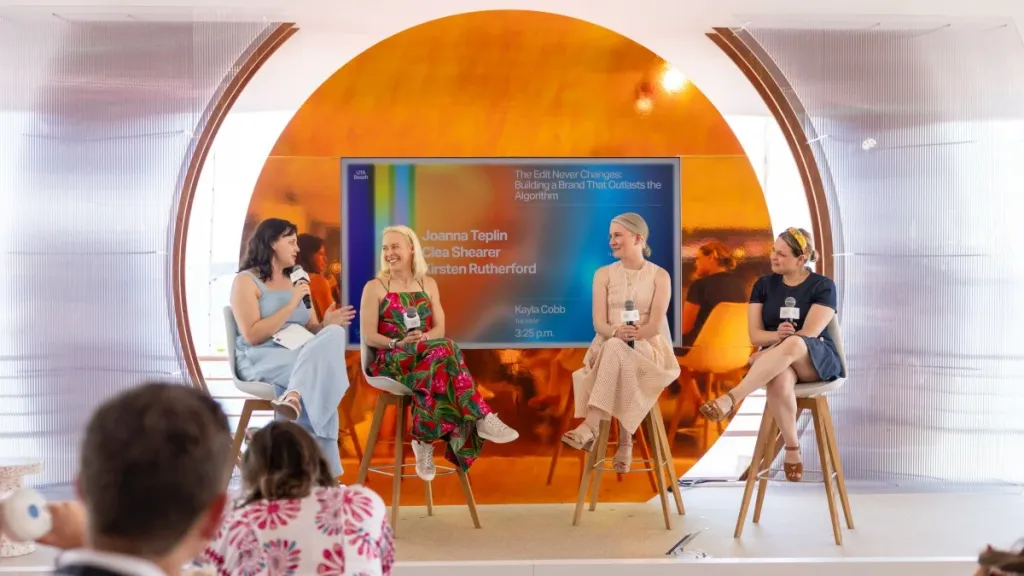
Perhaps one of the biggest success stories has been Clea Shearer and Joanna Teplin, the duo behind the social media channels and organizational brand The Home Edit. Shearer and Teplin were able to take their natural love of organizing and translate it into a brand that’s available in 31 countries, three New York Times bestselling books and two TV shows, Netflix’s “Get Organized” and ABC’s “Extreme Makeover: Home Edition.” That’s the sort of thinking more creators seem to be utilizing.
At the same time, more creators want more direct access to their audiences.
“I started a podcast because I loved podcasts. I was self-employed, and I wanted to make longform content that kept people company,” Kate Kennedy, host of the “Be There in Five” podcast told me.
Though Kennedy started her creator career by podcasting, she eventually moved to Patreon — a platform that lets fans directly subscribe to their favorite creators — because so many creators she loved were on there. Over time, she’s used her Patreon account to test out new editing or content formats, show a more vulnerable side to herself and even poll her audience about what content they want to see from her. She now sees the community she’s built as a “safe space.”
Kennedy has even hosted live events, another emerging and potentially lucrative trend in the creator ecosystem. “The people who are members and who have stuck around, they have the context and share inside jokes in the comments. They’re the ones who buy tickets for any shows,” Kennedy said.
Podcasts aren’t going anywhere
There have been growing whispers about whether the video podcast bubble is going to pop. That still may happen to some degree; we’ll probably know more about the longevity of these shows on streamers and traditional TV once Netflix releases its viewership numbers later this month. But I walked away from Cannes Lions feeling more secure about podcasting’s existence in Hollywood than I have in months.
It’s widely known that adding video podcasts to streaming platforms is a relatively cheap way to grow libraries using content that already has a dedicated fanbase. However, people both on the streaming, podcasting and creator sides told me that there are several other benefits to the uptick in video podcasts. Because most podcasts have ad breaks, it’s incredibly easy for streamers to swap out old ads and add their own, a huge benefit for platforms looking to expand their libraries quickly and on a budget. They’re also largely owned by their respective creators, meaning that each podcast operates a bit like a mini studio. As long as a partnership with a company like Spotify, YouTube or Netflix makes sense, they’ll license out their content. Once it doesn’t, they’ll pack up their feed and move to a new platform.
“The way we build our video and audio product is we don’t force the consumer in one or the other,” Roman Wasenmüller, Spotify’s global head of podcasts, told me. “I truly believe that a podcast, in essence, is a formula you still can consume with only audio, but video is a layer that gives you more discovery opportunities and deeper engagement. So I don’t see reason that video is not incremental to that.”