
After a nearly 800% explosion, this AI supplier is about to make its U.S. debut and could signal if the market can still boom—or is headed for a bust

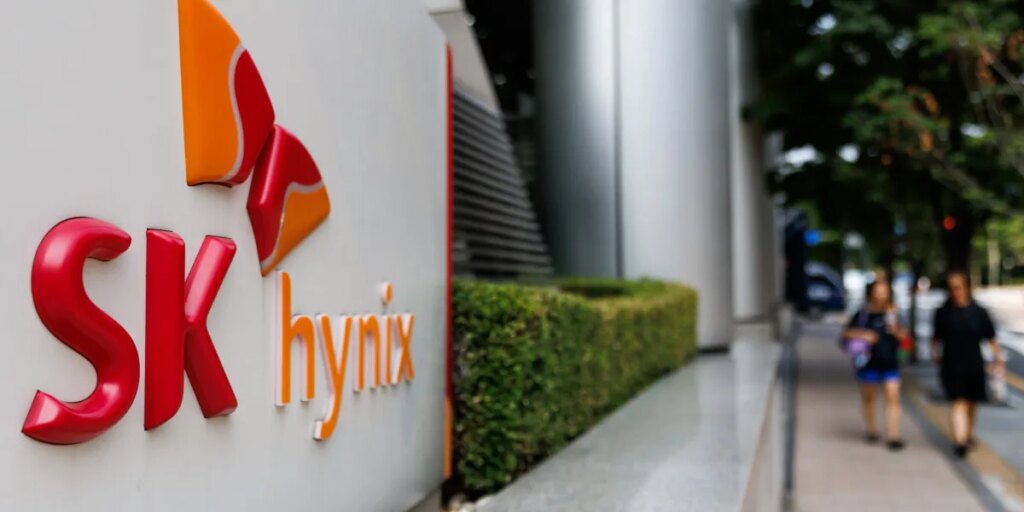
South Korean chipmaker SK Hynix isn’t one of the Magnificent 7 stocks but is in a class of its own after pulling off a stunning rally on the back of the AI boom, and it’s about to land on U.S. markets.
Shares will list on the Nasdaq and are expected to start trading on Friday, raising about $29 billion in what could be the biggest-ever first-time share sale by a foreign company.
That’s after SK Hynix’s Korean-listed stock has shot up 770% over the last 12 months, even after a 20% selloff from a peak in June.
The surge even outpaces Micron Technology’s 700% rally over the same time, with makers of memory chips emerging as critical enablers of AI agents. And SK Hynix is the top supplier of high-bandwidth memory after becoming Nvidia’s favorite provider.
While SK Hynix’s U.S. stock listing won’t be as big as SpaceX’s $86 billion IPO last month, it could serve as a key barometer for the market.
In fact, the Korean company has already sent ripples around the world. Comments from SK Hynix last month that it planned to slow down its AI memory business caused the high-flying Kospi stock index to suffer its fifth worst daily plunge ever. Global stock indexes followed, and strong earnings from Micron weren’t enough to revive confidence.
For analysts at Capital Economics, the big swings were especially worrisome, pointing out that such selloffs have previously only happened during bear markets like during the Asian financial crisis, the dot-com bubble, and the Great Financial Crisis.
“This volatility is, in our view, evidence of excessive froth and calls into the question the sustainability of this rally,” James Reilly, senior markets economist, wrote.
Shares of SpaceX, which is also an AI company after acquiring xAI, has been similarly volatile since going public. The stock jumped in its initial trading sessions, then fell sharply and is back near its first-day closing price.
Even bonds issued by SpaceX soon after the IPO quickly sold off, putting them at levels comparable to those of junk-rated borrowers, despite getting investment-grade ratings.
The wobbles were another troubling sign about the market’s direction and reportedly are factoring into OpenAI’s IPO, which could be pushed out to 2027 instead of later this year.
It wasn’t supposed to be like this. With the U.S. and Iran finally ending hostilities, the path looked clear for the AI boom to reach even greater heights as oil prices and bond yields fell.
But estimate-beating earnings reports and buoyant guidance—which the 1990s tech bubble lacked—haven’t been enough to sustain bullishness as investors start to doubt whether profits will come in as strong as expected.
Spending by the so-called hyperscalers has exploded so quickly that it could hit $1 trillion next year. As a result, cash flow is no longer sufficient to keep feeding the beast, prompting companies to issue bonds and fresh stock.
For now, demand from Wall Street has been enough to meet the supply, but concerns are rising about the sustainability of relying so much on debt.
Any slowdown in capital expenditures by hyperscalers could reshape the chip market. Their insatiable demand has caused shortages in consumer electronics, forcing Apple and other device makers to hike prices.
To keep up with all the demand, SK Hynix will spend hundreds of billions of dollars for two new production plants in South Korea. But in an industry infamous for boom-and-bust cycles, that capacity could end up fueling oversupply.
Analysts at Bank of America warned in a note on Tuesday that stocks are headed lower and reaffirmed their year-end S&P 500 target of 7,100, representing a 5% drop from the week’s closing level.
“Our bear market signposts suggest speculation is hitting extreme levels as high multiple stocks have gapped up demonstrably, an event that has historically preceded a valuation ‘snapback,’” BofA said.