

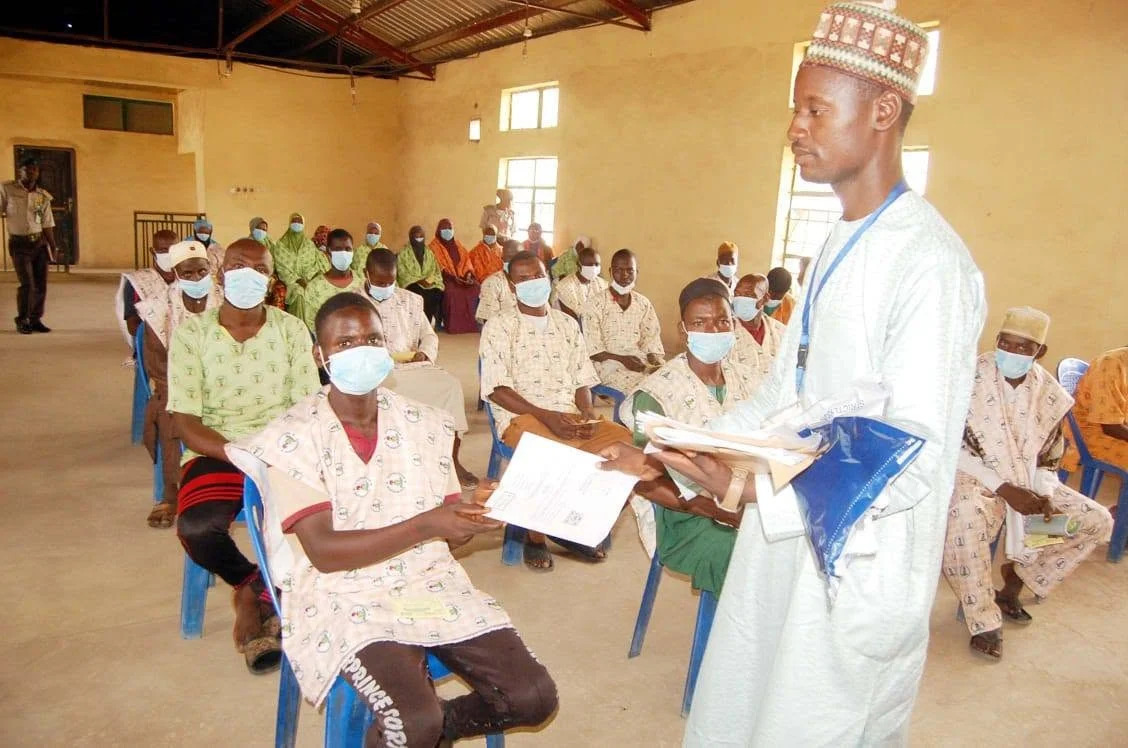
The candidates, 41 male and 11 female inmates drawn from various custodial centres in the state, are also participating in the 2026 National Board for Arabic and Islamic Studies (NABAIS) Senior School Certificate Examination, in an act to promote rehabilitation and reformation by providing inmates with access to quality education, vocational development and opportunities that will enhance their prospects after completing their custodial terms.
Speaking while monitoring the inmates at designated centres the Controller of Corrections, Kano State Command, Yusuf Lakpene, described the exercise as another significant milestone in the Nigerian Correctional Service’s correctional and rehabilitative mandate.
Lakpene urged the inmates to demonstrate discipline, honesty and integrity throughout the examination process, stressing that education remains one of the most effective tools for transforming lives, reducing recidivism and equipping inmates with the knowledge and confidence needed to become productive members of society upon their release.
He noted that the Service places a high premium on educational advancement as a critical component of its broader correctional philosophy, adding that inmates who take advantage of learning opportunities while in custody are better positioned for successful reintegration and self-reliance after serving their sentences.
He also commended the Governor Abba Yusuf for sponsoring the registration fees of the inmate candidates and described the intervention as a demonstration of the government’s commitment to inclusive education and human capital development, noting that extending educational opportunities to persons in custodial facilities reinforces the principle that rehabilitation remains a shared responsibility.
Lakpene reaffirmed the Nigerian Correctional Service’s resolve to expand educational programmes across custodial centres in line with its broader strategy of encouraging learning, personal development and lasting behavioural change among inmates, maintaining that access to education remains central to the Service’s efforts to reduce repeat offending and promote safer communities.