

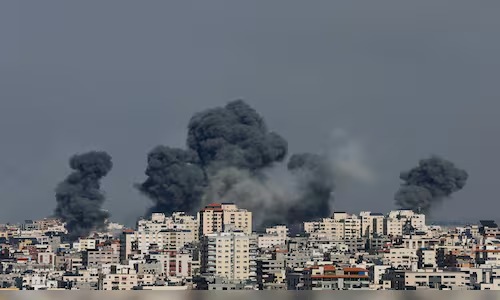
Speaking to CNBC-TV18, foreign affairs expert Robinder Sachdev said the growing list of issues linked to the Iran-Israel conflict is making negotiations increasingly complex and reducing the chances of a comprehensive settlement.
His remarks came after Trump claimed that an agreement with Iran was in the “final throes” and suggested that the Strait of Hormuz could reopen within “two or three days” if a peace deal is reached. The comments helped cool oil prices after Israel and Iran paused attacks following Trump’s appeal for restraint.
However, fresh Israeli strikes on Lebanon and Tehran’s warning that any attack on Lebanon would trigger a severe response have once again raised doubts about the durability of the current calm.
Sachdev said the focus of the conflict has shifted significantly since fighting first erupted.
“When the war started, the top issue was Iran’s uranium programme and, let’s say, also the ballistic missile programme,” he said. “When the war came to a ceasefire, a new super issue was born — the Strait of Hormuz.”
According to him, the agenda has become increasingly crowded, with Iran now insisting that attacks on Lebanon must stop, while the threat posed by Yemen’s Houthis and potential disruption in the Red Sea could further complicate negotiations.
“There are too many of these issues interlinked. How are they going to untangle them? That is the challenge,” Sachdev said.
He added that even if a temporary ceasefire is agreed, major disagreements could remain unresolved.
“So this may not be a sustained ceasefire. It may instead be a sustained low-intensity conflict, with back-and-forth skirmishes. That could perhaps be the future, unfortunately,” he said.
Ajay Dua, former Commerce Secretary, also questioned whether Trump’s public optimism reflects the reality of negotiations taking place behind closed doors.
Trump has repeatedly stated that a deal between Iran and the United States is close. CNN has counted at least 37 occasions on which he claimed an agreement was around the corner, including before the ceasefire announced in April. On June 7, he again said the two sides were “very close” to reaching a deal.
Dua said Washington’s public messaging and private discussions may not necessarily be the same.
“I think President Trump cannot do without being on the side of Israel,” Dua said. “What they are talking about privately could well be totally different from what has been made known publicly.”
He argued that Iran appears more confident than it did during the initial phase of the conflict, when Israeli and US strikes inflicted significant damage on Iranian targets.
According to Dua, Tehran has since been able to strengthen its negotiating position by introducing new demands, including calls to halt military action against Lebanon and the Houthis.
“The Iranians are saying that the fighting must stop in Lebanon. There should be no attacks on the Houthis,” he said.
Dua believes these conditions will be difficult for Israel and its allies to accept, reducing the likelihood of a quick breakthrough.
“I think we will have to wait and watch rather than take these claims at face value,” he added.
Also Read | Can Trump end the Israel-Iran conflict? Experts say key obstacles remain despite ceasefire push
Sachdev also suggested that Trump’s public criticism of Israeli Prime Minister Benjamin Netanyahu could be part of a broader negotiating strategy aimed at securing concessions from Iran.
At the same time, he said concerns about Israel’s growing international isolation are becoming more pronounced, with support for Netanyahu weakening in parts of the United States and Europe.
For markets, the uncertainty surrounding the Strait of Hormuz remains critical. Any disruption to shipping through the waterway could affect global oil supplies and energy prices. While Trump’s latest comments briefly eased concerns, experts said the expanding list of demands and flashpoints across the region means investors should remain cautious about expecting a swift and lasting resolution.