

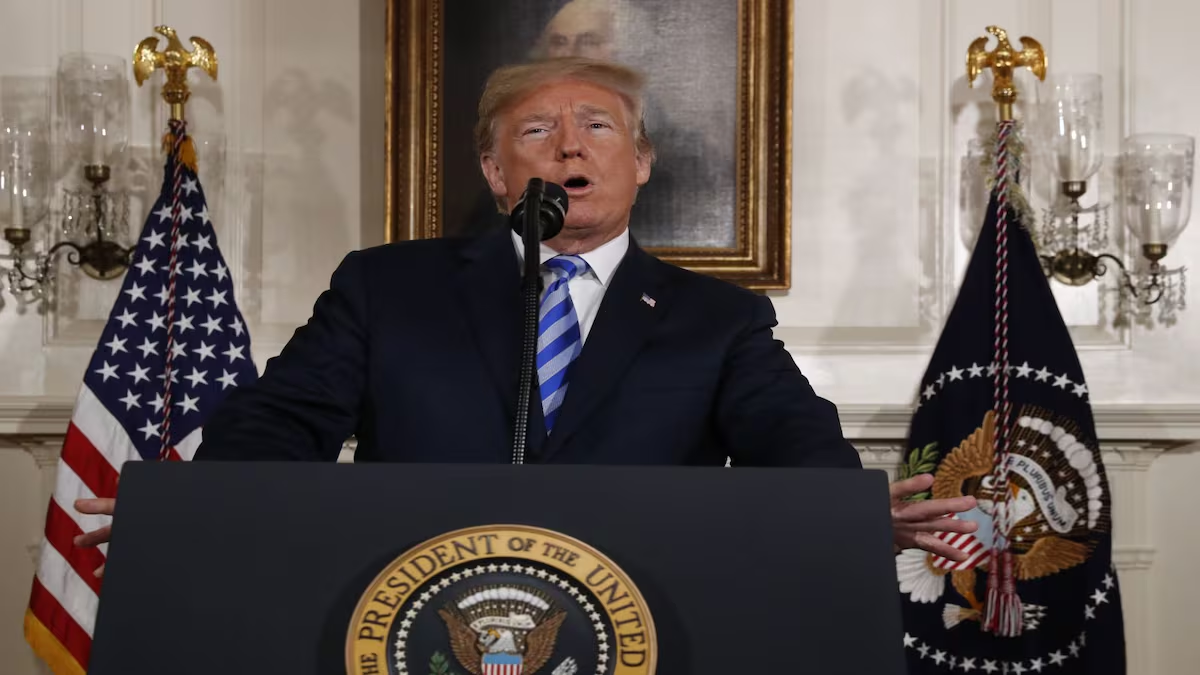
Trump’s promise of opening up a new market for American farmers came despite several rejections from Iranian leaders who have emphasised they have the liberty to decide how the unfrozen funds assets are used.
The US President had previously claimed that funds would be exclusively channeled to buy American agricultural goods such as corn and wheat.
Speaking about the proposal, Trump said Iran was facing food shortages and suggested the arrangement would create a significant market for American producers.
“We have a new market coming up, and that’s called the lovely country of Iran. It’s a beautiful place. Would anybody like to go there? They’re having a hard time with food and we’re going to be taking some of their money and we’ll spend it and we’re going to be buying wheat, soybeans, and corn, a lot of it, and that process is going to be starting soon. It’s going to be big,” he said.
Trump to Farmers: We have a new market coming up, and that’s called The Lovely Country of Iran. It’s a beautiful place. Would anybody like to go there? They’re having a hard time with food and we’re going to be taking some of their money and we’ll spend it and we’re going to be… pic.twitter.com/k2IUXVDZsD
— Acyn (@Acyn) June 25, 2026
Iran’s negotiator MB Ghalibaf, in response, said, “The only crop we’re harvesting is what you planted: decades of mistrust.”
The exchange comes as Iran is expected to receive up to $24 billion after its assets in the US are unfrozen under a US-Iran deal.
The memorandum of understanding signed by Trump and Iranian President Masoud Pezeshkian indicates the funds could be released before the final agreement ending the war is signed.
US farmers, who are a key voter base for Trump, have faced financial setbacks during his second term. They incurred billions of dollars in losses after the administration ended several federal programmes that purchased food from farmers for distribution through government schemes.
The administration also halted US Aid programmes that bought American agricultural produce for distribution overseas, including in conflict zones and some of the world’s poorest countries.
Despite rejecting Trump’s claim, Iran is experiencing a food crisis. According to The Guardian, food price inflation has accelerated since the US and Israel launched the war, with vegetable oil prices rising by 308%, chicken by 190%, and rice by 170%.