
Truce in Lebanon, Strait of Hormuz reopening and more: Inside the 14-point deal between US, Iran

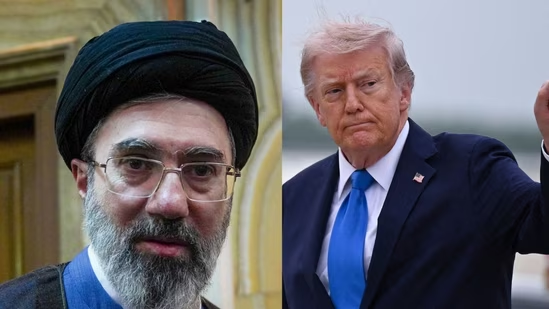
The United States and Iran reached an agreement earlier this week to end the ongoing conflict in the West Asia region and pave the way for a 60-day negotiation period between the two.
With the deal expected to be signed on Friday in Geneva, Switzerland, Bloomberg accessed the text of the 14-point memorandum of understanding between the US and Iran. Track the latest on the US-Iran war
From ending hostilities in Lebanon and the region to the reopening of the Strait of Hormuz, here’s a look at some of the key details inside the peace deal.
What’s inside the US-Iran peace deal?
The memorandum of understanding, as seen by Bloomberg, begins with the declaration to end the war on all fronts, including Lebanon. The agreement further states that neither the US nor Iran will engage in any hostile action against the other or use threats or force.
Also Read | ‘Will not compromise’: Why Israel is against the peace deal between US and Iran
The first few points of the MoU call for a fresh 60-day period of negotiations between Washington and Tehran. As per previous statements from US officials, these negotiations will focus on Iran’s nuclear ambitions and enrichment of uranium.
Upon signing the agreement, a few key changes will take place. These are –
- Lifting the US naval blockade on Iranian ports and restoring traffic within a maximum of 30 days to its full capacity.
- The removal of the blockade should allow the restoration of traffic at Iranian ports to pre-war levels.
- The US will also withdraw its forces from the surrounding areas within 30 days after the final agreement.
- The Strait of Hormuz will be reopened, and movement through the key strait will be restored to pre-war volume within 30 days, after taking into account the need for “the removal of technical obstacles and the neutralisation of mines by Iran.”
Funds for Iran?
As per the memo accessed by Bloomberg, the US and regional partners will work on redevelopment projects for Iran, as part of a war compensation. The memo adds that funds of at least $300 billion will be provided.
This clause, however, remains contested as US President Donald Trump has denied any sort of payment to Iran. Meanwhile, US Vice President JD Vance has stated that the 300 billion figure will focus on funds from Gulf nations.
“Not a single dime of that money comes from the United States,” Vance told NBC News. However, Vance added that the funds for Iran from Gulf nations will depend only if Tehran makes its “economy investable and starts behaving like a normal country.”
Also Read | Sanctions relief, frozen funds, $300 billion plan: What Iran stands to gain under Trump’s deal | In numbers
While this $300 billion clause is yet to be confirmed, the memo adds that all sanctions against Tehran from the UNSC, IAEA and US government will be gradually lifted.
The draft further stated that the United States Treasury Department will issue waivers for the export of Iranian crude oil, petrochemical products and their derivatives, and all related services, including banking, insurance, and transportation, upon signing the agreement.
The nuclear question
In the draft and based on comments made by Trump, US officials and Iranian officials, Iran has stated that it does not wish to pursue a nuclear weapon.
The deal between the US and Iran will lead to fresh negotiations, during which the fate of Iran’s nuclear and uranium enrichment programme.
The final agreement between the two nations will be approved by a binding resolution of the UN Security Council, according to the memo.
White House remains tight-lipped
The US government has remained tight-lipped regarding the details of the 14-point memo with Tehran.
Earlier this week, the US downplayed the texts released by Iranian media, which JD Vance stating that many of the points issued by said agencies were false.
Donald Trump has also not disclosed details of the agreement. The final text of the MoU is expected to be released after it is signed on Friday.