

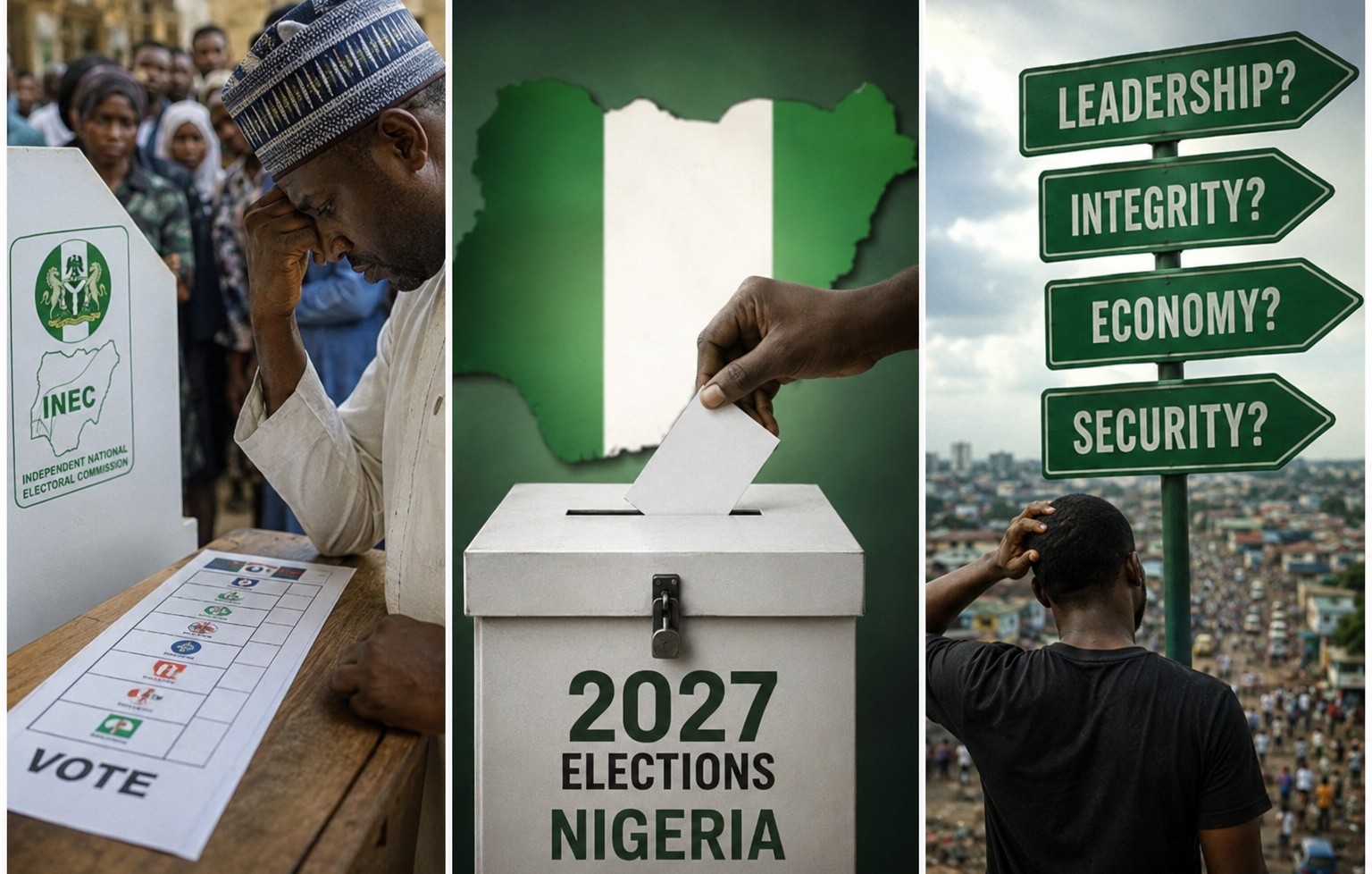
The Burden of Choice: Nigerian Voters and the 2027 Elections
By Mukhtar Ya’u Madobi,
As political activities gradually gather momentum ahead of the 2027 general elections, familiar scenes are beginning to emerge across the country’s political landscape. Political realignments are taking shape, coalition talks are intensifying, defections are becoming more frequent, and aspirants are quietly positioning themselves for electoral contests that could redefine Nigeria’s future.
While much attention is often focused on politicians, political parties and institutions, the most critical stakeholders in any democracy remain the citizens themselves.
However, the success or failure of Nigeria’s democratic journey in 2027 will depend not only on the quality of candidates presented by political parties but also on the civic consciousness, political awareness and sense of responsibility demonstrated by the electorate. Elections are not merely ceremonial exercises conducted every four years. They are powerful democratic instruments through which citizens determine leadership, influence governance outcomes and shape the future direction of their nation.
As Nigeria prepares for another electoral cycle, there is an urgent need to remind citizens that democracy thrives not simply because elections are held, but because electorates understand and faithfully discharge their civic responsibilities.
Meanwhile, electoral participation in Nigeria is often reduced to the act of casting votes on election day. Civic responsibility, however, extends far beyond that singular event. Responsible citizenship requires active engagement throughout the electoral cycle, from voter registration and political awareness to candidate scrutiny, election monitoring and post-election accountability.
As preparations for 2027 intensify, Nigerians must recognize that they are not passive observers in the political process. They are critical stakeholders whose collective choices can strengthen or weaken democratic governance.
The Hidden Election Begins Before Election Day
One of the most overlooked aspects of Nigeria’s electoral process is the role political parties play in determining who eventually appears on the ballot.
Before citizens cast their votes, political parties conduct primaries to select candidates, which sometimes are marred with controversies. The reality is that leadership selection often begins long before the general election. Therefore, citizens who genuinely desire good governance must pay close attention to developments within political parties.
As political parties begin consultations and preparations for 2027, Nigerians should demand transparency, fairness and adherence to democratic principles during party primaries. The electorate must insist that merit, competence, integrity and proven capacity become the primary criteria for selecting candidates rather than political patronage, financial influence or godfatherism.
Rejecting the Politics of Sentiment
Nigeria’s electoral history has frequently been influenced by ethnic, religious, regional and partisan considerations. While identity remains an important aspect of society, elections should primarily be contests of ideas, competence and vision.
The challenges confronting Nigeria today—including insecurity, unemployment, inflation, infrastructure deficits, education gaps and economic instability—require leaders with demonstrable capacity and practical solutions.
As political campaigns approach, citizens must carefully evaluate candidates based on their track records, policy proposals, integrity and ability to deliver measurable results.
The question before voters in 2027 should not simply be, “Where is the candidate from?” but rather, “What can the candidate do?”
Democracy advances when performance becomes the basis of political support. It declines when sentiment overrides substance.
Vote Buying: Selling Tomorrow for Today’s Gratification
One of the most persistent threats to electoral credibility in Nigeria remains vote buying.
Across election cycles, politicians have exploited economic hardship and poverty by offering cash, food items and other incentives in exchange for votes. While such inducements may provide temporary relief, they often carry long-term consequences for governance and development.
A vote is far more valuable than any amount offered during elections. It represents a citizen’s voice, future and stake in national development. When votes are exchanged for immediate financial gain, accountability is weakened because elected officials often perceive public office as an investment to be recovered rather than a responsibility to serve.
Now that the race toward 2027 gathers pace, voter education campaigns must intensify efforts to enlighten citizens about the dangers of electoral inducement. Nigerians must understand that every vote sold today may translate into years of poor governance tomorrow.
The electorate must become the first line of defence against electoral corruption.
Fighting Voter Apathy Before 2027
Another significant challenge confronting Nigeria’s democracy is voter apathy.
Despite widespread public dissatisfaction with governance, many eligible voters fail to register, collect their voter cards or participate in elections. This contradiction creates a situation where a small fraction of the population determines outcomes that affect millions.
Democracy functions effectively only when citizens participate actively. Abstaining from elections does not eliminate political consequences; it merely transfers decision-making power to others.
The forthcoming 2027 elections present an opportunity for Nigerians, particularly young people, to become more actively involved in shaping the country’s future. The growing population of young voters represents a significant democratic force capable of influencing governance outcomes if effectively mobilized and properly informed.
Political participation should not begin and end on social media platforms. It must translate into voter registration, civic engagement, policy discussions and responsible electoral participation.
The Need for Inclusive Politics
The increasing commercialization of politics remains a major concern in Nigeria.
Over the years, the cost of nomination forms and party tickets has risen dramatically, creating barriers that exclude many competent and credible individuals from seeking elective office. As a result, political competition is increasingly dominated by wealthy elites and individuals with access to powerful political networks.
This trend undermines inclusiveness and limits opportunities for broader representation.
If Nigeria is to deepen its democracy before 2027, serious conversations must begin around electoral and political reforms that promote inclusiveness and reduce excessive financial barriers to participation. Democracy should not become an exclusive preserve of the wealthy.
Nevertheless, democracy does not end when election results are announced.
One of the most important civic responsibilities of citizens is holding elected leaders accountable after they assume office. Effective governance requires continuous oversight by the electorate through advocacy, constructive engagement, public discourse and democratic pressure.
Citizens must monitor campaign promises, evaluate government performance and demand transparency in public administration. Accountability should become a permanent feature of democratic participation rather than a seasonal activity during elections.
When voters remain vigilant between election cycles, political leaders become more responsive to public needs and expectations.
A Defining Moment for Nigeria’s Democracy
The road to 2027 has already begun. The future of Nigeria’s democracy depends on an electorate that is informed, vigilant, patriotic and resistant to manipulation.
Citizens must reject vote buying, resist misinformation, scrutinize candidates, participate actively in political processes and demand accountability from both political parties and elected leaders.
As Nigeria moves steadily toward the 2027 General Elections, the message to every voter is clear: democracy is not merely a right to be enjoyed; it is a responsibility to be exercised. The quality of leadership that emerges in 2027 will ultimately reflect the quality of choices made by the electorate.
The future of Nigeria may well depend on how seriously citizens embrace that responsibility.
MUKHTAR Ya’u Madobi is a Research Fellow at the Centre for Crisis Communication.