

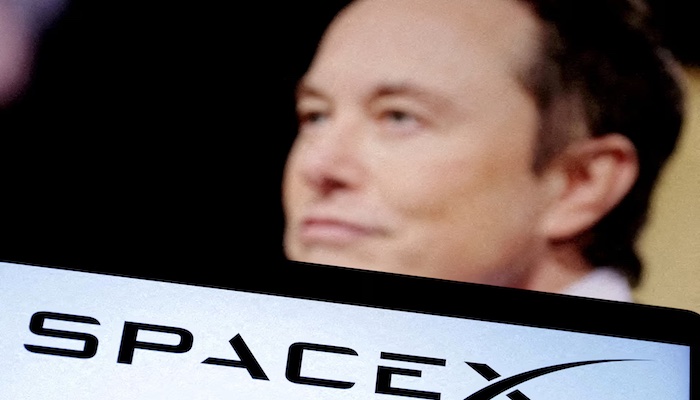
Elon Musk’s SpaceX has become one of the world’s most valuable companies after pricing its record-breaking initial public offering (IPO) at $135 per share, raising an unprecedented $75 billion from investors.
The offering, announced on Thursday, values the rocket, satellite and artificial intelligence company at $1.77 trillion, making it the largest IPO ever completed in the United States and eclipsing the previous record set by Saudi oil giant Aramco in 2019.
The company sold 555.56 million shares in the offering and is expected to begin trading on the Nasdaq on Friday. At its new valuation, SpaceX would rank as the seventh most valuable publicly listed company in the United States, ahead of major corporations including JPMorgan Chase, Berkshire Hathaway, Eli Lilly, Meta Platforms and even Musk’s electric vehicle company, Tesla.
The blockbuster listing marks the culmination of months of preparations and a highly unconventional IPO process that saw Musk challenge several long-standing Wall Street traditions.
Unlike most major public offerings, SpaceX announced its pricing while U.S. markets were still open and reserved 30% of its shares for retail investors, a significantly larger allocation than is typically seen in large IPOs.
Analysts said the offering represented uncharted territory for public markets.
“The real test will be how the market digests the IPO over the next several weeks, not just one day,” said Adam Sarhan, chief executive of 50 Park Investments in New York. “The pricing came in just about right not too hot, not too cold.”
Rick Meckler, a partner at Cherry Lane Investments, said the process departed sharply from traditional IPO practices.
“The SpaceX pricing is really in uncharted territory. I’ve never seen the price announced instead of the normal process of price discovery based on orders,” he said.
Following the IPO, Musk will retain overwhelming control of the company, holding approximately 82% of SpaceX’s voting power.
Founded in 2002, SpaceX has grown into the world’s dominant commercial space company. The firm says it has been responsible for more than four-fifths of all mass launched into orbit over the past three years, while its Starlink satellite internet service now serves millions of customers across 164 countries and territories.
Starlink currently generates the majority of SpaceX’s revenue, although the company is increasingly investing in artificial intelligence through its xAI division. SpaceX recently signed a multi-year cloud computing agreement with Google, securing additional computing capacity as competition intensifies in the AI sector.
Despite investor enthusiasm, some analysts have questioned whether the company’s lofty valuation can be justified, particularly given its reliance on government contracts and future growth projections.
“The financial forecasts are uncertain because of the reliance on large amounts of government contracts,” said Kim Forrest, chief investment officer at Bokeh Capital Partners. “People buying the stock are buying into the future and mankind escaping the Earth not really investing in a company.”
The IPO comes amid signs of a broader recovery in the US public offerings market. Goldman Sachs has forecast that IPO proceeds could reach a record $160 billion in 2026, driven by a strong pipeline of listings that includes major artificial intelligence firms.
Erizia Rubyjeana
Follow us on: