

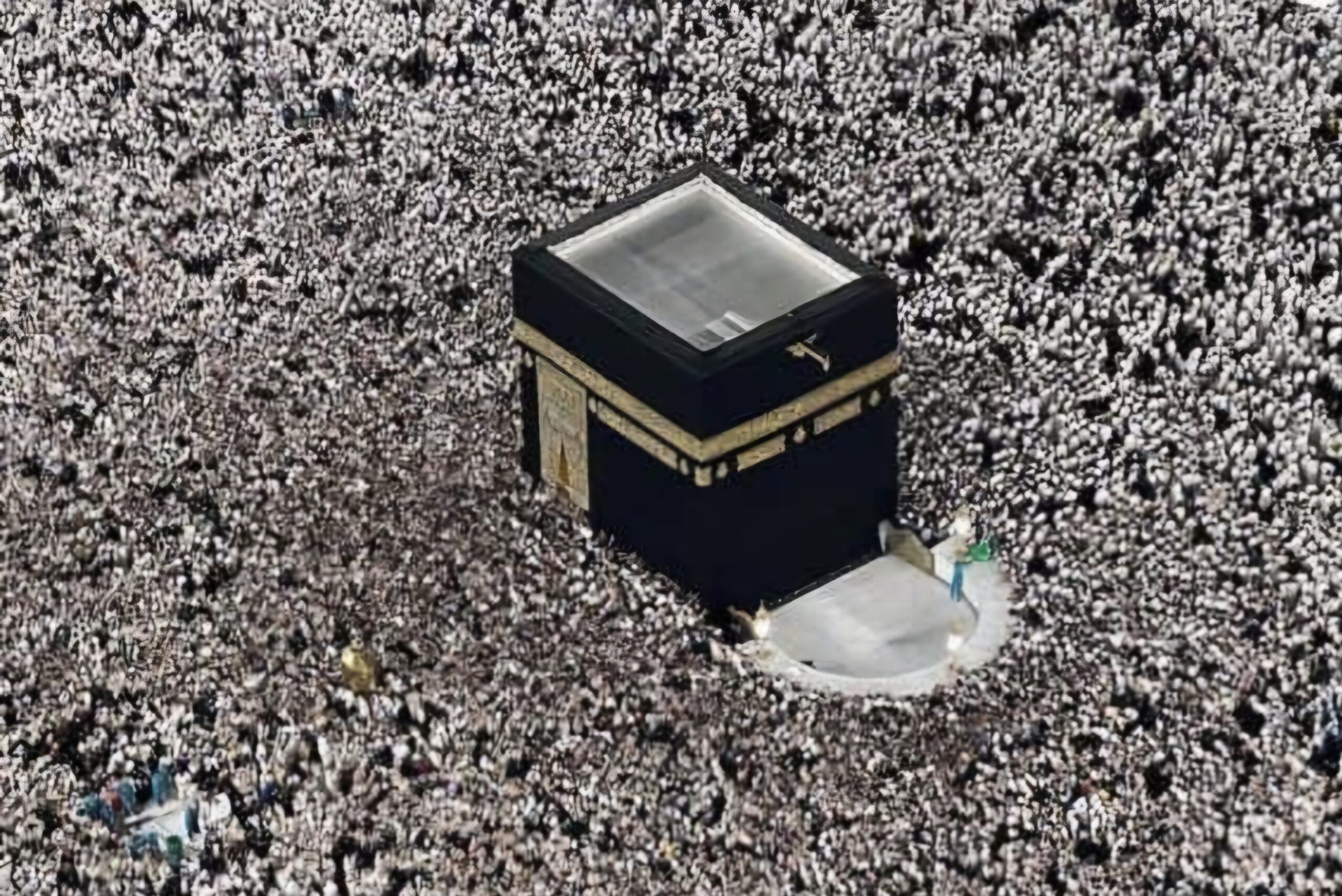
Saudi Arabia Begins Preparations for Annual Replacement of Holy Kaaba’s Kiswa
Saudi Arabia has commenced preparations for the annual replacement of the Kiswa, the black silk covering of the Holy Kaaba, as part of a centuries-old Islamic tradition that underscores the Kingdom’s commitment to serving the Two Holy Mosques and preserving Islamic heritage.
The replacement exercise is being coordinated by the General Authority for the Care of the Affairs of the Grand Mosque and the Prophet’s Mosque through the King Abdulaziz Complex for the Holy Kaaba Kiswa, the institution responsible for designing and producing the sacred covering.
As part of the preparatory process, workers have begun removing the gold-embroidered ornaments, decorative elements, lamps, and other embellishments attached to the current Kiswa. The curtain covering the Kaaba’s door has also been lowered ahead of the installation of the new covering.
According to the Saudi Press Agency (SPA), the new Kiswa is being transported from the King Abdulaziz Complex to the Grand Mosque under a carefully coordinated operational plan that adheres to international standards. The replacement operation is being supervised by a team of highly trained Saudi specialists responsible for removing the existing covering and fitting the new one.
The production of the new Kiswa involves the use of premium materials and advanced manufacturing techniques. The sacred covering is made from approximately 825 kilograms of natural silk, including 47 rolls of black silk used for the outer covering and 400 kilograms of raw cotton for the inner lining.
In addition, the intricate Quranic inscriptions and decorative motifs adorning the Kiswa are embroidered using 60 kilograms of pure silver and 120 kilograms of gold-plated silver, reflecting the exceptional craftsmanship that characterises the annual project.
Saudi authorities said all raw materials undergo extensive laboratory testing before production begins to ensure they meet stringent quality requirements and can withstand different climatic conditions.
The manufacturing process includes several stages, beginning with the dyeing and weaving of the silk, followed by printing Quranic verses and Islamic designs onto the fabric. The inscriptions are then meticulously embroidered with gold and silver threads using specialised techniques.
Saudi artisans continue to play a central role in preserving the centuries-old tradition. Hand weaving remains an essential component of the process, particularly for the production of delicate decorative pieces that require exceptional precision and artistic expertise.
Upon completion of the dyeing, weaving, testing, printing, embroidery, handcrafting, and assembly stages, the various sections are carefully joined together to form the complete Kiswa before it is installed on the Holy Kaaba.
The seven-stage production process combines traditional Islamic craftsmanship with modern technology, ensuring that the Kiswa remains one of the most remarkable artistic and spiritual symbols in the Islamic world.
For more than a century, the annual replacement of the Kiswa has stood as a powerful expression of Saudi Arabia’s dedication to the care of the Two Holy Mosques and the preservation of Islamic traditions. The Kingdom continues to rely on local expertise, innovation, and meticulous quality standards to sustain one of Islam’s most revered religious practices.
By TimesNG