

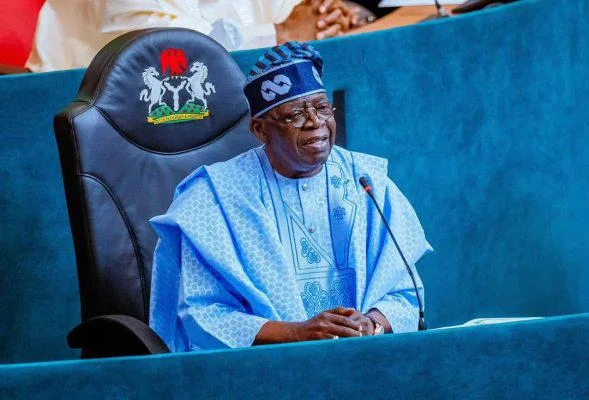
The Presidency has dismissed recent calls by the presidential candidate of the Nigeria Democratic Congress (NDC), Peter Obi, for President Bola Tinubu to resign, describing the demand as “childish, hollow and an unwarranted distraction.”
Obi had called on the President to step down, citing worsening economic hardship, rising insecurity and deepening public frustration over governance outcomes.
He made the call in a statement on Monday after reflecting on the resignation speech of the British Prime Minister, which he said underscored the importance of leadership accountability in governance.
Responding to the former Anambra State governor, the President’s Special Adviser on Information and Strategy, Bayo Onanuga, said Obi’s comparison of Nigeria’s political situation with the resignation of the British Prime Minister was misplaced and failed to recognise the differences between Nigeria’s presidential system of government and the United Kingdom’s parliamentary system.
In a statement issued hours after obi’s take, Onanuga argued that President Tinubu was elected for a fixed four-year term and should be assessed by Nigerians at the next presidential election.
He also pointed to recent electoral victories by the ruling All Progressives Congress (APC), including in Ekiti and several senatorial by-elections, as evidence of continued public support for the administration.
Responding to Obi’s criticism of the government’s handling of insecurity, the Presidency maintained that Nigeria’s security challenges predated the current administration.
It claimed that under Tinubu’s leadership, security agencies had intensified operations, resulting in the rescue of hundreds of kidnapped victims, the neutralisation of terrorist leaders and the elimination of thousands of insurgents across different parts of the country.
On the economy, the Presidency rejected Obi’s assertion that Nigeria was in its worst condition, citing what it described as positive economic indicators since Tinubu assumed office in May 2023.
According to the statement, the country has recorded consistent GDP growth, increased oil production, higher foreign reserves, improved government revenues and stronger investor confidence.
The statement also highlighted infrastructure projects being undertaken by the administration, including the Lagos-Calabar Coastal Highway and the Sokoto-Badagry Superhighway, as well as reforms in the power sector, education financing and the adoption of compressed natural gas (CNG) as an alternative energy source.
The Presidency further defended Tinubu’s record on electricity supply, arguing that the President had never promised immediate nationwide 24-hour electricity.
It noted that the administration had enacted the Electricity Act to decentralise power generation and distribution while expanding the rollout of prepaid meters and off-grid solar solutions.
While acknowledging the high cost of living, the Presidency attributed the economic pressures partly to global factors, including tensions in the Middle East and disruptions to international supply chains.
Concluding the statement, Onanuga described Obi’s call for Tinubu’s resignation as political grandstanding and insisted that the administration remained focused on economic reforms, improved security and long-term national development rather than political rhetoric.
He added that the President remained committed to addressing the country’s challenges and keeping Nigeria on what he described as a path of progress.