

Political discourse in Nigeria has devolved into a toxic arena of personal attacks, intimidation and character assassination, a governance expert has warned.
Salis Muhammad Moriki, a political analyst, expressed deep concern over what he described as the erosion of civility in the nation’s democratic space, noting that many political actors now prioritise abusive rhetoric and propaganda over substantive engagement with the electorate.
“Increasingly, politics has become a battlefield of insults and unnecessary hostility,” Moriki stated on Wednesday. “Rather than persuading voters through ideas and performance, many now rely on mobilising supporters to attack perceived opponents.”
He cautioned that this trend has gradually undermined the values of statesmanship and mutual respect essential to democratic governance.
“Political disagreement has become synonymous with personal hatred,” he observed. “Loyalty to a politician is now measured by how aggressively one attacks rivals. Such a culture weakens democratic institutions, deepens divisions and distracts from the real issues affecting the people.”
Zamfara’s Political Climate Under Scrutiny
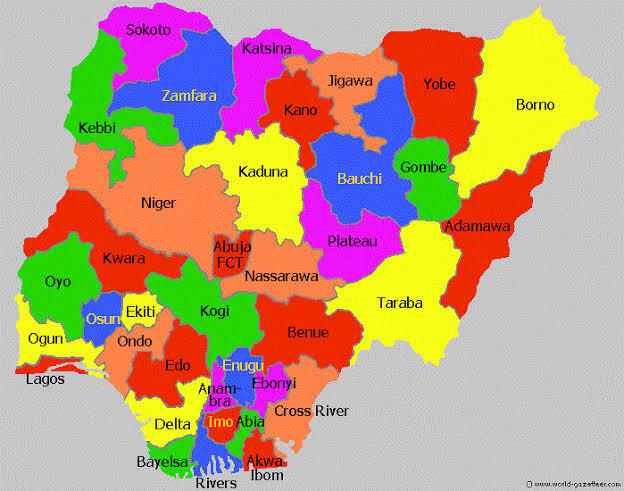
Moriki pointed to Zamfara State as a troubling illustration of this phenomenon, where supporters of major political figures frequently engage in exchanges of insults and personal attacks, creating unnecessary tension within the political space.
“Whether directly encouraged or merely tolerated, such conduct does little to strengthen democracy or inspire public confidence in political leadership,” he lamented.
A Model of Restraint
However, Moriki singled out Hon. Aminu Sani Jaji, member representing Kaura Namoda/Birnin Magaji Federal Constituency, as a rare exception to the prevailing trend.
“As one of the three most influential political figures in Zamfara State and a leading voice within the ruling party, Jaji has consistently demonstrated that politics can be practised with decency, restraint and maturity,” Moriki said.
He noted that throughout his political career, Jaji has maintained a reputation for treating political opponents with respect, regardless of ideological differences or party affiliations.
Unlike many politicians who respond to criticism with insults or encourage confrontational politics, Jaji has largely maintained a dignified disposition. His public engagements reflect moderation rather than provocation, dialogue rather than hostility, and persuasion rather than intimidation.
“More importantly, his supporters are widely perceived as conducting themselves with similar restraint, focusing on promoting his leadership instead of attacking others,” Moriki added.
The Mark of True Leadership
The analyst stressed that a leader’s influence is measured not solely by electoral victories but by the political culture he cultivates among his followers.
“Leadership is demonstrated by the ability to disagree without hatred, compete without bitterness and lead without creating unnecessary enemies,” he asserted.
Moriki praised Jaji’s political style as reflecting the qualities of an elder statesman—patience, humility, tolerance and respect for the dignity of others—virtues increasingly scarce in today’s political environment.
“In a state like Zamfara, where political cohesion is vital to addressing developmental and security challenges, this style of leadership deserves recognition and encouragement,” he said.
A Vision for Democratic Stability
Moriki argued that politics without bitterness is not a sign of weakness but evidence of confidence, maturity and strategic leadership.
“Great leaders understand that today’s political opponent may become tomorrow’s ally,” he explained. “The ultimate objective of politics is not the destruction of rivals but the advancement of society.”
He concluded that at a time when Nigeria’s democracy requires leaders capable of fostering unity across political, ethnic and social divides, individuals who embrace civility and responsible political engagement become invaluable assets.
“This is the kind of political culture that complements the broader objective of national unity and democratic stability under the administration of President Bola Ahmed Tinubu,” Moriki said.
Jaji, he noted, has continued to project himself as a politician who values respect above hostility, dialogue above confrontation and service above personal vendettas—qualities of leadership that Zamfara State needs as it looks toward a future anchored on unity, development and responsible governance.