

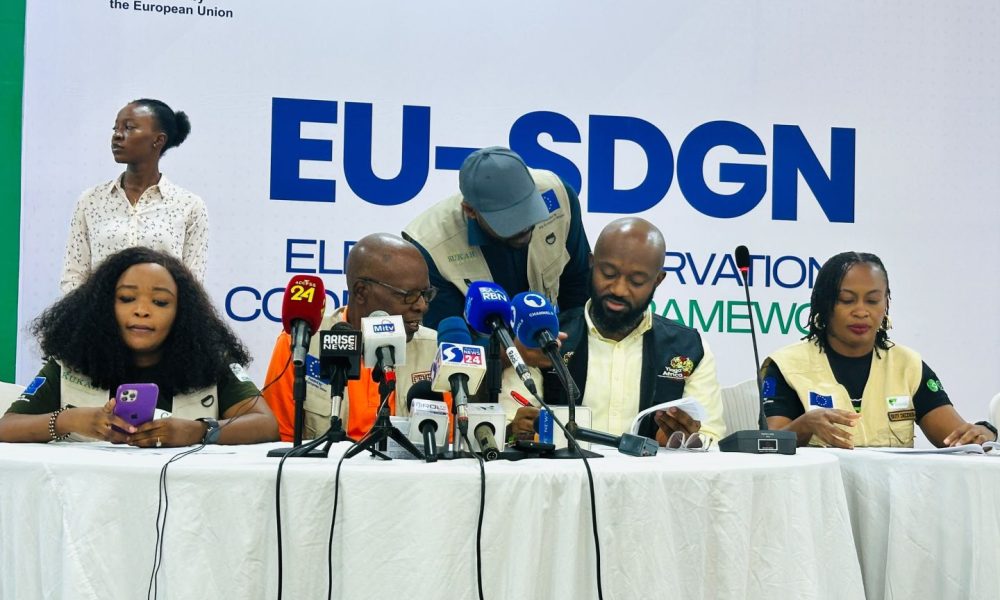
The EU-SDGN Election Observation Hub has commended the performance of the Bimodal Voter Accreditation System (BVAS) during Saturday’s governorship election in Ekiti State, while raising concerns over incidents of vote buying, voter intimidation and discrepancies in election materials observed during the exercise.
The observation mission, comprising the Kukah Centre, TAF Africa, Nigerian Women Trust Fund (NWTF), Yiaga Africa, International Press Centre (IPC) and the Centre for Media and Society (CEMESO), disclosed its findings in a preliminary assessment presented in Ado-Ekiti.
According to the observers, reports received from 246 out of the 250 sampled polling units indicated that election officials and sensitive materials arrived on schedule in most locations across the state. The report noted that voting had commenced by 8:30 a.m. in approximately 69 per cent of the polling units monitored, reflecting a generally timely deployment by electoral authorities.
The group gave a positive assessment of the BVAS technology, stating that the electronic voter accreditation system functioned effectively throughout the election. It reported a 96 per cent success rate across the polling units observed, describing the device’s performance as satisfactory, reliable and instrumental in facilitating the accreditation process.
Despite the strong showing by BVAS, the observers identified several irregularities relating to election materials. Among the issues highlighted were inconsistencies between the number of political parties listed on ballot papers and those reflected on result sheets in some polling units, a development the group said could potentially create confusion during vote collation and documentation.
READ ALSO; Mild drama at Ekiti polling unit as electorates send EFCC team away
The report also praised the level of participation by women during the election. Women were actively involved not only as voters but also as party agents and polling officials, demonstrating increased inclusion in the electoral process. The observers further noted that Persons with Disabilities (PWDs) participated actively in the poll, with only minimal accessibility challenges reported in the areas monitored.
However, some operational shortcomings were recorded. The observers stated that a number of elderly voters experienced difficulties with biometric verification during accreditation. In a separate incident, a nursing mother in Ifaki, located in Ido-Osi Local Government Area, was reportedly denied priority voting initially before the situation was addressed.
While describing the overall conduct of the election as peaceful and orderly, the observation hub documented 24 incidents of violence across 10 local government areas. The group also expressed concern over what it described as organised vote-buying activities and voter intimidation recorded in nine local government areas, warning that such practices continue to undermine the integrity of Nigeria’s electoral process.
On media coverage, the observers commended the generally enabling environment provided for journalists reporting the election. Nevertheless, they cited reports of restrictions on media access and movement in parts of Ikere, Ado-Ekiti, Ekiti West and Ikole local government areas, calling for greater protection of press freedom and unhindered access for election observers and journalists in future elections.
The EU-SDGN Election Observation Hub said its findings were preliminary and would be expanded upon in a comprehensive post-election report, while urging stakeholders to address the identified challenges to strengthen electoral transparency, credibility and public confidence in future polls.