

Youth
By Anthony Isibor
PRESIDENT Bola Tinubu has assured global investors that Nigeria’s youthful population is ready to compete and thrive in the digital economy, describing the country’s young people as tech-savvy, adaptable and eager to learn.
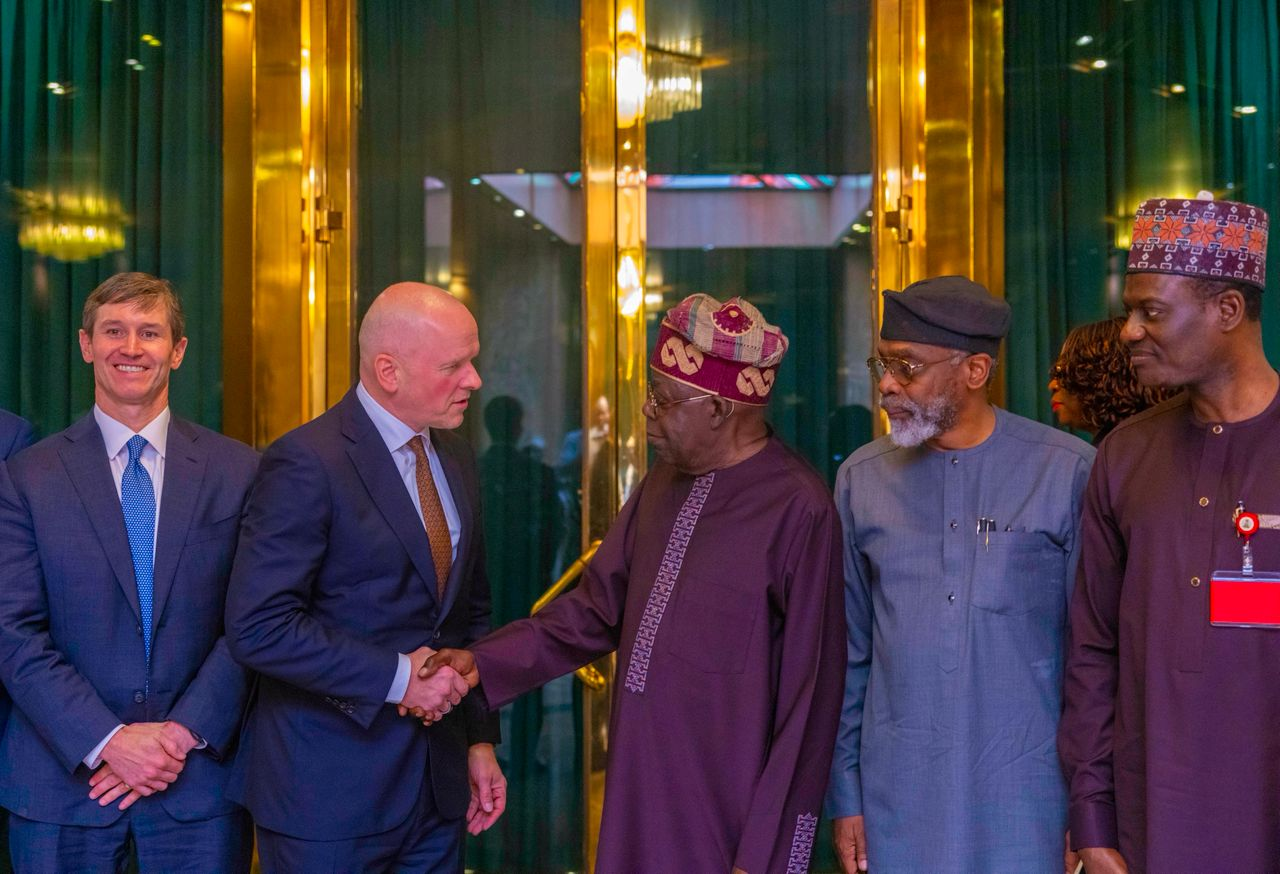
The President gave the assurance on Tuesday while receiving a delegation from Mastercard led by its Chief Executive Officer, Michael Miebach, at the Presidential Villa in Abuja.
During the meeting, Mastercard unveiled plans to support the digital transformation of Nigeria’s small business sector by providing digital skills training to millions of entrepreneurs across the country.
Tinubu stated that the ongoing economic reforms have repositioned Nigeria to participate more effectively in the global economy, with a strong focus on empowering young people and small businesses through technology.
According to him, efforts to formalise the country’s vast informal sector are already creating new opportunities for investment, employment and digital inclusion.
“Our greatest asset is our youth population,” he said, noting that government would continue to support initiatives that equip young Nigerians with skills needed to tackle current and future economic challenges.

He also stressed the importance of payment systems and digital platforms in expanding financial inclusion for small and medium-sized enterprises, SMEs, pointing to the Bank of Industry’s database of businesses as a potential resource for collaboration.
Tinubu commended Mastercard’s growing involvement in Nigeria, describing the company as a trusted partner with a strong reputation in financial services.
The Minister of Finance and Coordinating Minister of the Economy, Taiwo Oyedele, said that the administration’s reforms were opening new opportunities in the country’s payment and credit sectors.
Oyedele disclosed that over 10,000 informal businesses have been applying for registration daily in recent months, a development he linked to ongoing tax and fiscal reforms.
He added that the government’s digitisation drive extends across public services and aims to create opportunities for at least three million Nigerian youths within the digital economy.
According to him, reforms in consumer credit, mortgages, student loans, auto financing and small-business lending are creating a more robust credit ecosystem that global financial institutions can tap into.

Oyedele also highlighted Nigeria’s growing fintech industry, noting that five of Africa’s nine fintech unicorns are Nigerian.
For Mastercard, the Nigerian market represents both familiarity and opportunity.
Miebach, who said he personally helped establish Mastercard’s operations in Nigeria in 2011, described his return as “coming home.”
He praised the Tinubu administration’s alignment of fiscal and monetary policies, saying the country is attracting increasing attention within global financial circles.
According to him, Mastercard is helping to prevent about $200 million in fraud annually in Nigeria, while facilitating roughly $2 billion in foreign exchange inflows.
The company is also working with banks and businesses across the country to strengthen digital payments and support SME growth.
Miebach said Nigeria’s estimated 40 million small businesses present enormous opportunities for digital transformation and economic expansion.
To support that goal, Mastercard has developed programmes designed to help entrepreneurs build digital capabilities, improve cybersecurity awareness and safely conduct business online.
“We don’t want this to be just talk,” he said. “We already have a three-year programme and technical workshops planned to ensure measurable impact.”
The Mastercard CEO also announced plans to deepen investments in cybersecurity and digital resilience, including the establishment of initiatives focused on threat intelligence, artificial intelligence risks and cyber incident response.
He said the company remains committed to helping Nigeria strengthen its digital economy, boost financial inclusion and drive intra-African trade through technology.
The meeting comes as the Federal Government intensifies efforts to expand digital access, formalise businesses and attract foreign investment as part of broader economic reforms.
A.I
June 24, 2026
Tags: Anthony Isibor Michael Miebach President Bola Tinubu Taiwo Oyedele