

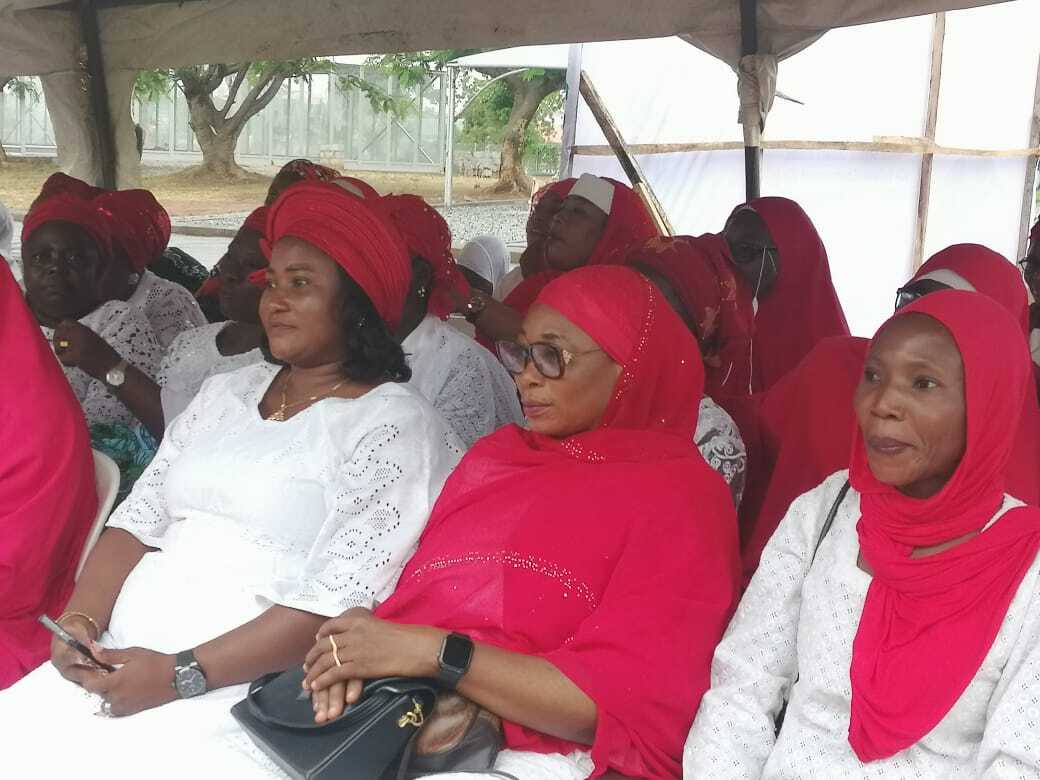
Widows from 21 clusters across the Federal Capital Territory gathered at the Sen. Remi Tinubu Skills Empowerment Village, Abuja, at the weekend to showcase skills acquired through the Helpline Social Support Initiative (HSSI), marking the 2026 International Widows’ Day.
Hajiya Imaan Sulaiman-Ibrahim, Minister of Women Affairs and Social Development, represented by Princess Dr. Joan Jummai Idonije, Chairman of the Board of Directors at the Maryam Babangida National Centre for Women Development, emphasised that widows are not marginalised but remain central to family stability and national development.
“Widows are central to the stability of the family, the wellbeing of the community and the development of our nation,” the Minister stated.
With Nigeria accounting for over two million of the world’s 258 million widows, the Minister noted that this year’s global theme—”Justice, Dignity and Economic Power for Widows”—calls for transformative action rather than mere sympathy.
The International Widows’ Day, observed annually on 23 June, was established by the United Nations to highlight the hardships widows face following the loss of their spouses.
Grant Boosts Self-Reliance
Dr. Jumai Ahmadu, President of HSSI, explained that the organisation operates across 21 clusters in Kogi, Niger, Nasarawa, Kaduna and Enugu states, providing non-profit loan schemes, skills acquisition and financial literacy programmes.
The weekend event served as a stock-taking exercise for the N8.5 million empowerment grant awarded to 17 clusters in 2025 by the Women Affairs Minister.
Beneficiaries including Hajara Adejo (Bwari Cluster), Hajiya Khadijat (Gwagwalada), Mrs. Alice Oguche, Mrs. Beatrice Nwafor (Kurudu), Hajiya Amina Dahiru (Kuchigoro) and Hajiya Aisha Bukar testified to the initiative’s impact.
The women, who have ventured into charcoal and akara (bean cake) businesses, called for additional support, acknowledging the challenges at the grassroots level.
Hygiene Education and Product Showcase
Aisha Bakpet educated the widows on water, sanitation and hygiene (WASH) practices, highlighting their role in building resilient communities.
The event concluded with a product exhibition, demonstrating that targeted support creates sustainable livelihoods and restores dignity to vulnerable women across the nation.