

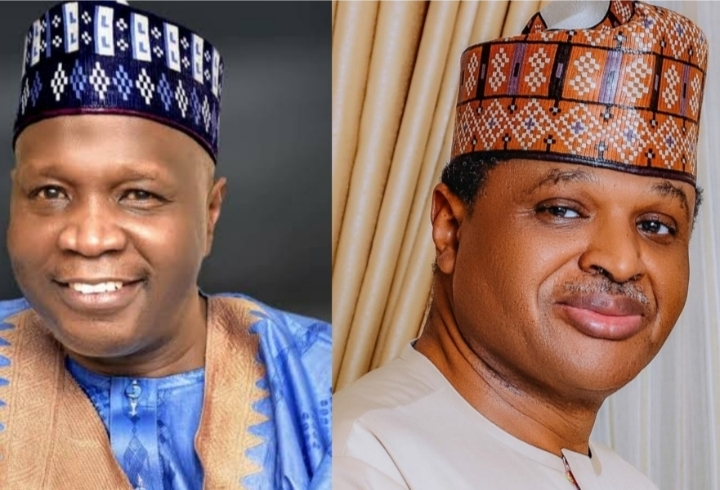
Governor Muhammadu Inuwa Yahaya set the tone early: “Today’s politics is not a do-or-die affair.” That declaration has since become the moral compass for Gombe State’s political class as it prepares for the 2027 general election, with stakeholders prioritising stability over confrontation.
Dr Jamilu Isyaku Gwamna reinforced the same message after emerging as the All Progressives Congress (APC) consensus governorship candidate. He called on “all the sons and daughters of Gombe” to embrace peace, unity and collective development, insisting that the state’s progress must outweigh individual ambition.
A lesson from two decades of patience
Dr Gwamna’s appeal carries weight because of his own political history. Twenty years ago, he was denied a similar opportunity. Rather than escalate rancour, he accepted defeat. At the time, politics in Gombe was tense, with the then-incumbent Governor Danjuma Goje presiding over an era marked by intimidation under the notorious “Kalare” style.
Despite that difficult environment, Gwamna was later invited by elders and traditional rulers to accept the collective decision. He chose restraint. That experience now informs his message of peace: he understands both the pain of denial and the responsibility of acceptance.
Consensus as a governing philosophy
The elders’ decision to invite Gwamna reflects a deeper Gombe philosophy: “This is our turn for people to accept what Allah has destined. Whatever God destines, no one can change it.” That belief in divine destiny has long guided how traditional and community leaders manage political tension.
When Governor Inuwa Yahaya announced Dr Gwamna as the consensus candidate a few weeks ago, he presented it not as a personal choice but as “the collection of the entire Gombawa”. Stakeholders, elders, women’s groups and youth leaders were consulted before the party settled on a candidate with decades of service and minimal political baggage.
That consultative process has created what analysts call a “soft landing” for the government and its people. Instead of a bruising primary that splits the party, APC Gombe chose a route anchored on dialogue, tradition and consensus – the same approach Governor Inuwa has used to manage local government, assembly and federal appointments since 2019.
Contrast with the PDP camp
The contrast with events in the Peoples Democratic Party (PDP) has not been lost on observers. UK-based lawyer Bulama Audu Bukarti, in a recent Fashin Baki interview on BBC, analysed the circumstances that produced Sheikh Isa Ali Pantami as the PDP candidate. He argued that the process mirrored the “injustice” Pantami himself once condemned in the APC.
Bukarti’s point was not about individuals but about process. He recalled Pantami’s earlier BBC interview in which he said he would not accept injustice even if it favoured him. “If that principle was valid then, it must be valid now,” Bukarti said, urging due process in party primaries.
For PDP Gombe, Bukarti warned of two legal risks: Section 84 of the Electoral Act (concerning primary fairness), and the Independent National Electoral Commission’s (INEC) membership register deadline. “If even one of the four cleared aspirants goes to court… it becomes a matter of law,” he noted. That scenario represents the opposite of a soft landing.
APC Gombe, by contrast, avoided that landmine by leaning on elders. Governor Inuwa and the Elders Forum carried stakeholders along, choosing a long-standing party member over a last-minute entrant. The result is a ticket with fewer internal disputes heading into election season.
A campaign focused on development
Dr Gwamna’s pledge to “work towards building Gombe with all sons and daughters” directly reinforces Governor Inuwa’s “not do-or-die” doctrine. Both leaders are framing 2027 as a contest of ideas and service delivery, not one of court injunctions or political vendetta.
Civil society groups and voter education advocates say this tone matters. When political leaders preach acceptance of destiny and due process, it reduces political violence, voter apathy and post-election litigation. Gombe’s recent history of relative peace during elections is now being tested again.
For the people of Gombe, the soft landing means campaigns can focus on schools, hospitals, roads, agriculture and youth employment – issues Governor Inuwa’s administration has prioritised. It also means traditional rulers and religious leaders can mediate rather than manage crises.
As 2027 approaches, Gombe is showing an alternative path. Governor Inuwa’s early declaration that politics is not do-or-die, combined with Dr Gwamna’s peace message and the elders’ consensus tradition, has given the state a calm political runway. Even the Pantami scenario in the PDP serves as a reminder: process matters. In Gombe’s case, embracing peace and destiny over desperation may be the biggest win before a single vote is cast.