

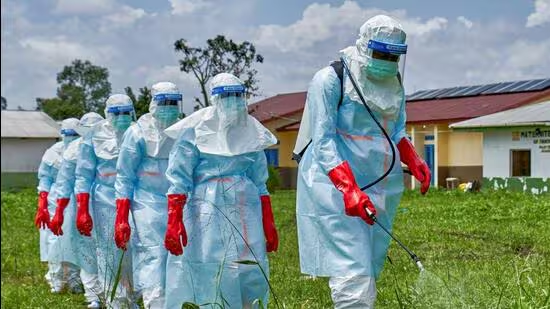
At least 100 persons have been killed in Africa during the current Ebola Virus Disease outbreak caused by the Bundibugyo virus that has largely affected the Democratic Republic of the Congo.
“The Bundibugyo virus disease (BVD) outbreak in the Democratic Republic of the Congo continues to evolve rapidly, with increasing case numbers, geographic spread, and cross-border transmission to Uganda. In Uganda, the outbreak remains epidemiologically linked to transmission originating in the Democratic Republic of the Congo, with evidence of both imported infections and secondary transmission among contacts and healthcare workers,” said the UN health body in a statement.
Local authorities, in collaboration with WHO and partners, are undertaking a wide-ranging package of response measures.
On 5 June, the Africa Centres for Disease Control and Prevention (Africa CDC) and WHO, together with partners, launched a joint Ebola continental preparedness and response plan, with an ask of US$518 million to support African countries in preparing for, rapidly detecting, and responding to the outbreak.
There are no vaccines or medicines specifically against the current strain.
BVD is a severe and often fatal form of Ebola disease caused by the Bundibugyo virus, one of the Orthoebolavirus species. It is a zoonotic disease, with fruit bats suspected to be the natural reservoir.
According to WHO, human infection is thought to occur through close contact with the blood or secretions of infected wildlife, such as bats or non-human primates. It subsequently spreads from person to person through direct contact with the blood, secretions, organs, or other bodily fluids of infected individuals or contaminated surfaces or items. Transmission is particularly amplified in health-care settings when infection prevention and control measures are inadequate, and during unsafe burial practices involving direct contact with the deceased.
The incubation period for BVD ranges from two to 21 days, and individuals are not infectious until symptom onset. Early symptoms such as fever, fatigue, muscle pain, headache, and sore throat are non-specific, complicating clinical diagnosis and potentially delaying detection. These symptoms then progress to gastrointestinal symptoms, organ dysfunction, and in some cases, haemorrhagic manifestations. Case fatality rates in the past two BVD outbreaks, reported in Uganda and in the Democratic Republic of the Congo in 2007 and 2012, were 30% and 50%, respectively.
On June 6, WHO reassessed the risk of the outbreak of BVD, and termed the risk in the DRC as very high due to ongoing transmission and the continued expansion of the outbreak into new health zones; however, risk at the global level was assessed as low.