

Foreign
PARTICIPANTS at the Seminar on Ethnic Policy and Practice for Belt and Road Countries have described China’s approach to ethnic governance, cultural preservation and national development as a valuable model from which developing countries can draw lessons.
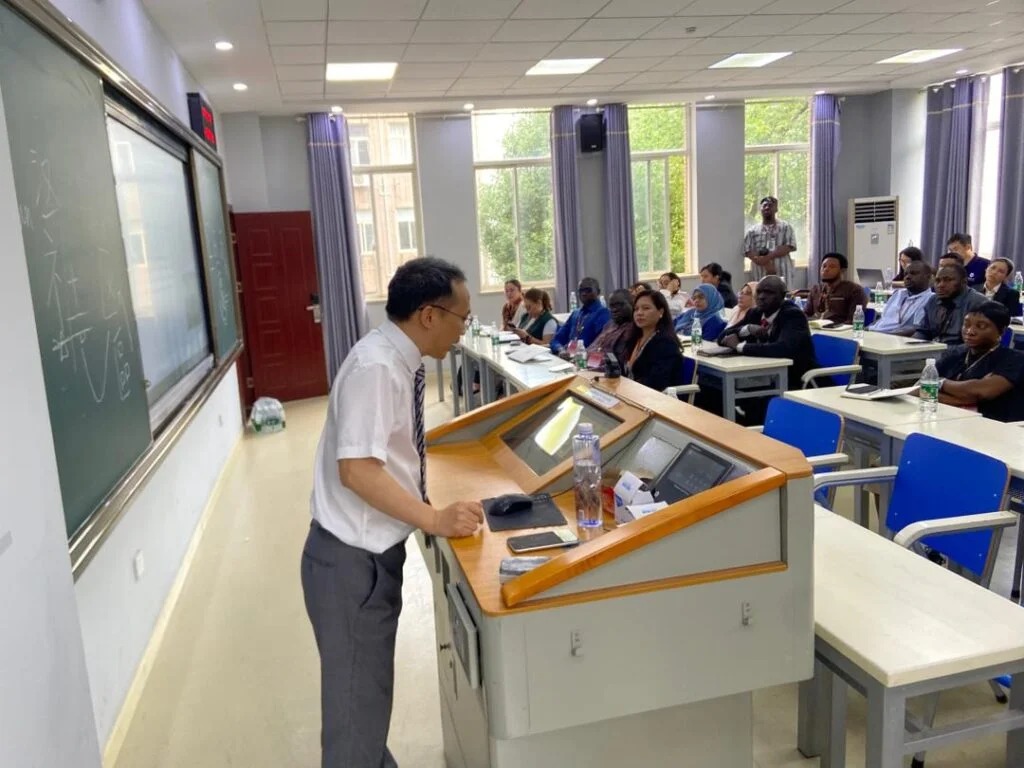
The participants spoke during lectures and exchange sessions at the South-Central Minzu University, Wuhan on Wednsday, where government officials, academics and delegates from Asia, Africa and Latin America gathered to study China’s experience in ethnic affairs management.
Welcoming the delegates, President of South-Central Minzu University, Prof. Liu Yi, said the institution had played a significant role in research, education and policy support on ethnic affairs in China.
Liu said the university, established in 1951, currently has more than 30,000 students drawn from all 56 ethnic groups in China and has trained over 200,000 professionals in its 75 years of existence.
According to him, the university has strengthened cooperation with Belt and Road partner countries through academic exchanges, joint research, training programmes and scholarships for international students.
He said connectivity under the Belt and Road Initiative went beyond physical infrastructure to include stronger cultural and people-to-people ties.
“The better we understand one another, the more clearly we can communicate our ideals and the more effectively we can work together to address shared challenges,” Liu said.
He expressed optimism that the seminar would deepen international exchanges and promote innovative solutions to ethnic governance challenges.
Also speaking during a lecture on China’s language policy tradition, Jiang Zhaozhong of the School of Ethnology and Sociology said China’s approach was anchored on promoting a common national language while protecting the linguistic rights of ethnic minorities.
Jiang explained that China’s Constitution guarantees the use and development of ethnic minority languages alongside the nationwide promotion of Putonghua, the country’s common language.
“China’s current language policies have the fundamental attributes of subjectivity and diversity,” he said.
According to him, China’s multilingual governance tradition dates back centuries, with successive dynasties employing multiple languages in administration, diplomacy and ethnic affairs.
He said the approach had contributed to balancing national cohesion with cultural diversity.
Speaking on behalf of participants, Mr. Meksavang Phommaly of Laos commended the organisers for the comprehensive structure of the seminar, describing the programme as relevant to contemporary governance challenges.
“The content has been instructive and of great value. We are full of anticipation for the upcoming sessions,” he said.
Meksavang noted that participants were particularly interested in learning from China’s experiences in ethnic unity, grassroots governance, public service delivery and cultural preservation.
He said the knowledge acquired during the seminar would help participants strengthen governance systems and development programmes in their respective countries.
“We intend to bring back advanced concepts, governance experiences and working methods gained from this seminar and adapt them to our national realities,” he said.
The seminar features thematic lectures, policy discussions, industrial experience-sharing sessions, field studies and cultural exchanges designed to provide participants with a deeper understanding of China’s ethnic governance practices.
The programme forms part of broader Belt and Road cooperation efforts aimed at strengthening mutual learning among civilizations, enhancing people-to-people exchanges and promoting sustainable development among participating countries. (NAN)
Tags: China Ethnic Governance