

Featured, Security
By Wealth Ufford
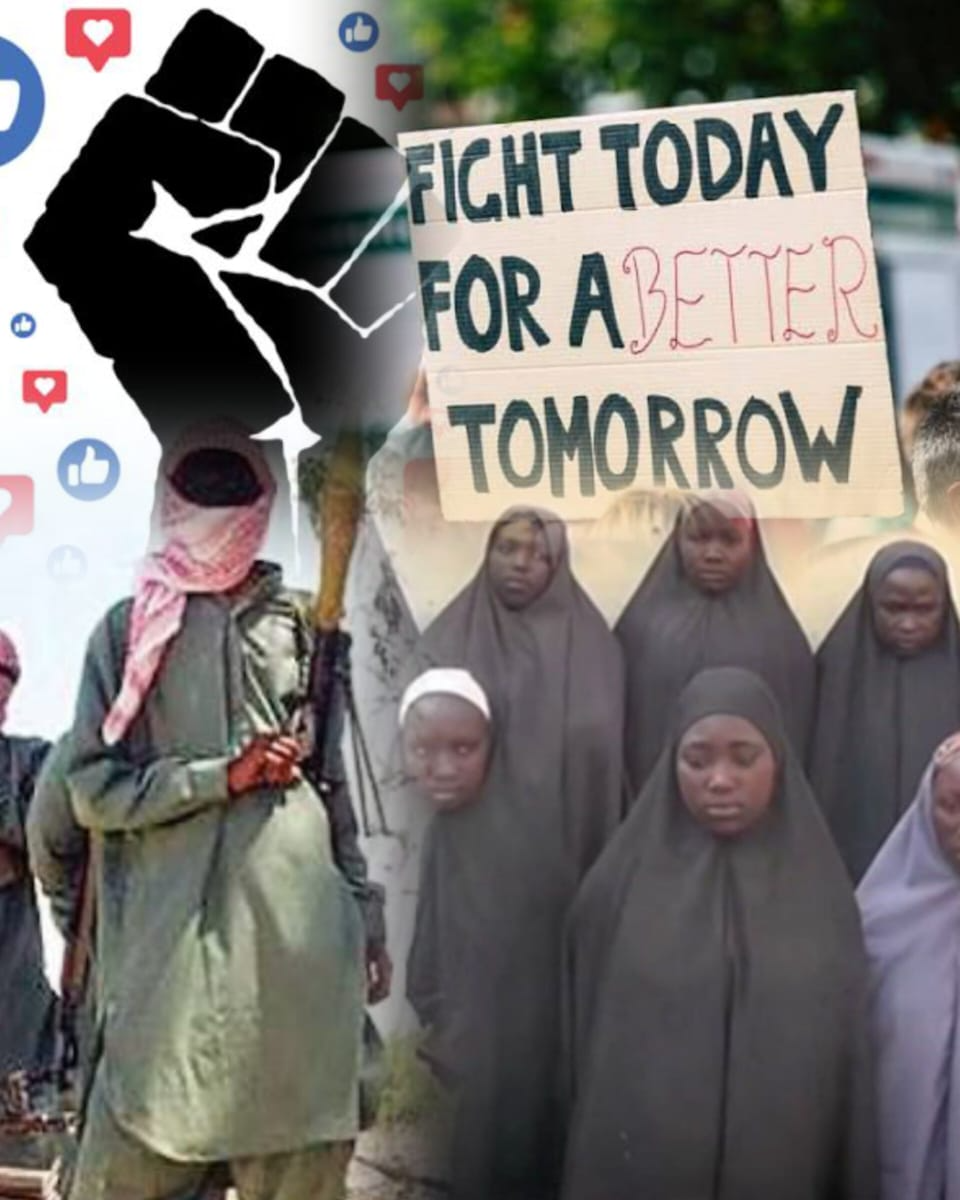
IN April 2014, the abduction of 276 school girls from Chibok went from being a local tragedy to an international cause. Human rights activists marched, religious leaders spoke from pulpits and mosques, while civil society organizations mounted immense pressure on the government under the banner – #BringBackOurGirls.
Over a decade later, kidnappings have become a recurring headline across Nigeria. Yet, the nationwide outrage and activism that once dominated public discourse/space appear to be absent.
Oby Ezekwesili, former Vice President of the World Bank for Africa delivered a speech in which she demanded that the Nigerian government should ‘bring back our girls’. The phrase stuck among social media users and gained momentum. With this, Ezekwesili teamed up with other rights activists to form the #BringBackOurGirls movement.
At the time, we also saw global public figures like the former U.S First Lady Michelle Obama supporting the movement. She posted a photo of herself at the White House holding a placard that read “BringBackOurGirls”. The post stated: “Our prayers are with the missing Nigerian girls and their families.-mo” (The “-mo” sign indicated the First Lady composed the tweet personally).
The #BringBackOurGirls campaign showed how powerful coordinated advocacy can be.
The joint efforts transformed the local tragedy into a global movement and kept pressure on the government long after the initial outrage had subsided.
Over a decade later, Nigeria is still faced with security crisis, more specifically banditry and kidnapping.
From schoolchildren to farmers and commuters, thousands have been abducted across different parts of the country.
According to the Global Centre For The Responsibility To Protect, since 2014, more than 2,000 children have been abducted or kidnapped, largely in mass abductions targeting schools. Armed extremist groups, including Boko Haram and ISWAP, as well as local bandits, are implicated in many cases, often using kidnappings to demand for ransom or to recruit children.
The question on the lips of many Nigerians now is whether activism still exists. If it exists, why does it seem less powerful and visible today?
The recent waves of kidnapping have not resulted in comparable nationwide campaigns as that of the time of the Chibok era.
Activists and civil society organizations may argue that advocacy has not disappeared.
Organizations such as Amnesty International, SERAP and other civil society groups continue to issue statements, publish reports and demand accountability from the government over insecurity and human rights violations in the country.
In addition, Amnesty International has been consistent in reporting security issues in the country and has not hesitated to mount pressure on the federal government to tackle this very pressing issue.
Just recently, The Socio-Economic Rights and Accountability Project, SERAP, urged President Bola Tinubu to urgently direct the Attorney General of the Federation and Minister of Justice, Lateef Fagbemi, SAN, and relevant anti-corruption agencies to investigate allegations that the ₦145 billion Safe Schools Initiative funds may be missing, mismanaged or diverted, following reports that more than 600 pupils and teachers have been abducted in school-related attacks across the country between March 2024 and May 2026.
In the same vein, the Christian Association of Nigeria, CAN, on June 2 called on the federal government to declare a state of emergency on security across the country amid escalating killings, kidnappings, terrorist attacks and the destruction of communities.
Civil society organizations remain among the most consistent voices drawing attention to the country’s insecurity challenges.
Despite the continued interventions by human rights organizations and civil society groups, we can argue that these efforts have struggled to attract the kind of public engagement that characterized the #BringBackOurGirls movement.
While advocacy has not disappeared, its visibility and ability to galvanize nationwide action have diminished.
The reason for this may lie in a combination of factors that have reshaped both Nigeria’s security landscape and the environment in which activists operate.
Unlike the Chibok abduction, which united the country around a single tragedy, today’s kidnapping crisis is broader, more frequent and often dispersed across multiple communities.
One explanation frequently cited by analysts is what has become known as “crisis fatigue.”
When the Chibok girls were abducted in 2014, the incident shocked the nation and generated widespread outrage.
Today, however, reports of kidnappings have become a recurring feature of Nigeria’s news cycle.
From schoolchildren and farmers to travellers and community residents, abductions occur so frequently that many Nigerians may have become desensitized to the crisis.
Citizens are no longer surprised when these abductions occur because they have become too familiar with the country’s security challenges.
Nigeria’s worsening economic conditions may also have contributed to the decline in visible activism.
Rising inflation, unemployment and the increasing cost of living have forced many citizens to focus primarily on meeting their daily needs.
In the Chibok era, many Nigerians had the time and resources to participate in rallies, advocacy campaigns and public demonstrations but today, economic pressures have shifted priorities for many households.
For people struggling to afford transportation, food and other necessities, participation in activism may no longer be seen as an immediate concern to them.
The changing nature of insecurity itself may have also affected public advocacy.
Human rights activists, community leaders and ordinary citizens now operate in an environment where kidnappings, banditry and violent attacks remain persistent threats.
In some communities, openly challenging authorities or becoming the public face of a campaign can carry significant risks.
As a result, some advocacy efforts have moved away from highly visible street protests toward quieter forms of engagement such as policy advocacy, media campaigns and behind-the-scenes consultations with government officials.
Another factor is the fragmented nature of today’s kidnapping crisis.
The Chibok abduction provided a single, identifiable event around which activists, civil society groups and concerned citizens could rally. The #BringBackOurGirls campaign had a clear objective, a defined group of victims and a message that resonated both locally and internationally.
Today’s insecurity challenges are more dispersed. Kidnappings occur across multiple states and affect different categories of victims, making it harder to build a unified national movement around a single cause.
Without one defining event to focus public attention, advocacy efforts can become scattered and less visible.
Some observers also point to what they describe as a shrinking civic space.
Over the years, civil society organizations and rights groups have raised concerns about restrictions on civic engagement, increasing tensions between activists and authorities, and growing public distrust of institutions.
The Nigerian government often reacts to protests by using excessive force, carrying out arbitrary large-scale arrests and restricting internet access.
Security forces commonly deploy tear gas and in some cases, use live ammunition against protesters.
While advocacy groups continue to operate, some analysts argue that the environment for large-scale public mobilization has become more challenging than it was during the Chibok era. This may have affected both the willingness and the ability of activists to sustain highly visible campaigns over long periods.
Taken together, these factors suggest that the apparent decline in activism may not simply be a result of silence or indifference.
Rather, it reflects a combination of changing social, economic and political realities that have altered the way advocacy is conducted in Nigeria.
While activists and civil society organizations remain active, the conditions that once enabled a movement like #BringBackOurGirls to capture national and global attention may be far more difficult to recreate today.
Large scale street protests may have become less common, advocacy has increasingly moved online.
Social media platforms continue to serve as spaces where Nigerians share information about kidnappings, demand accountability and organise campaigns.
However, the fast-paced nature of digital platforms often makes it difficult for individual incidents to sustain public attention for long periods, which makes it look like Nigerians move on quick from issues that continue to plague the country.
The legacy of the #BringBackOurGirls movement demonstrates that collective action can influence national and international attention.
Today, insecurity is more widespread, economic pressures are greater and advocacy efforts are often fragmented across multiple causes and platforms, highlighting how significantly the conditions that produced the #BringBackOurGirls movement have changed.
Civil society organisations continue to speak out, but recreating the level of public mobilisation witnessed in 2014 remains a difficult challenge.
As kidnappings continue to affect communities across Nigeria, the future of activism may depend not on whether people still care, but on whether advocates can once again unite public attention around a common cause. The challenge is no longer simply raising awareness of insecurity; it is sustaining that awareness long enough to inspire collective action and meaningful change.
W.U
June 9, 2026
Tags: Amnesty International Christian Association of Nigeria Lateef Fagbemi Michelle Obama Oby Ezekwesili The Socio-Economic Rights and Accountability Project