
Beyond Politics: Why Public Service Experience Should Matter in Leadership By As-sayyidul Arafat Abdulrazaq

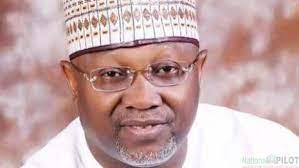
Beyond Politics: Why Public Service Experience Should Matter in Leadership
By As-sayyidul Arafat Abdulrazaq
During a recent visit to Ilorin for the Eid-el-Kabir celebrations, I found myself in one of those ordinary conversations that often reveal extraordinary truths.
As is increasingly common in Kwara these days, the discussion drifted towards politics and the growing permutations surrounding the 2027 governorship election. Names were mentioned, political calculations were dissected, and opinions freely exchanged. Then someone raised the name of Engr. Suleiman Bolakale Kawu Agaka, popularly known as Kale Kawu.
The response was immediate.
“He just retired from the civil service. Politics doesn’t work like that.”
The remark was not hostile. Neither was it intended as an insult. Rather, it reflected a deeply held assumption in Nigerian politics: that public service experience and political leadership are two entirely different worlds, and that success in one does not necessarily qualify an individual for the other.
Yet the more I reflected on that conversation, the more it raised a question that extends far beyond the ambitions of one man. At what point did politics become a profession that only politicians are qualified to practise?
Across virtually every sector of society, experience is regarded as an asset. We trust experienced doctors with our health. We trust seasoned engineers with our roads, bridges, and infrastructure. We trust accomplished academics with our universities and experienced lawyers with our courts. Society rewards those who dedicate decades to mastering their craft and solving complex problems.
Yet something curious happens when such individuals venture into politics.
Suddenly, decades of professional accomplishment are discounted. Their expertise becomes secondary to one question: “Has he done politics before?”
It is perhaps one of the most paradoxical features of our political culture. In every other profession, competence, knowledge, and experience are celebrated. In politics, however, these qualities are sometimes treated as less important than political pedigree.
The implication is troubling. Should leadership be determined primarily by years spent navigating political structures, or by the capacity to solve problems, manage institutions, and improve people’s lives?
If an engineer, doctor, professor, entrepreneur, or seasoned public administrator decides to seek elective office, should their lifetime of professional achievement suddenly become irrelevant because they are not career politicians?
These questions make the conversation around Engr. Kale Kawu particularly interesting.
Before retiring from the Rural Electrification Agency (REA) in July 2025, he spent more than three decades in public service, building a career in one of Nigeria’s most challenging sectors: power infrastructure. Rising through the ranks, he served as Director of Projects, Director of Procurement, Director of Monitoring and Evaluation, Senior Manager, and South-West Zonal Coordinator of the agency. Along the way, he acquired extensive expertise in project management, renewable energy systems, procurement processes, and rural electrification.
His professional development took him across several countries, including China, South Korea, Germany, Greece, Bulgaria, Portugal, and Senegal, where he received specialised training in energy infrastructure and project delivery.
More importantly, he accumulated practical experience in one area where many public institutions often struggle: implementation.
One of the most significant projects associated with his tenure was the World Bank-supported Energising Education Programme (EEP), designed to provide reliable electricity to federal universities and teaching hospitals across Nigeria.
Under the programme’s first phase, approximately 28.5 megawatts of power were delivered to nine federal universities and a teaching hospital, directly benefiting over 127,000 students, more than 28,000 university staff, healthcare workers, and surrounding communities. Thousands of streetlights were installed, while dependence on costly and environmentally harmful generators was significantly reduced.
His contributions earned him repeated recognition within the agency, including multiple nominations as Best Director of the Year before his retirement.
Yet for many Kwarans, Engr. Kale Kawu’s story is not told through policy documents or official records. It is told through lived experiences.
One Ilorin resident narrated how a friend operating a business in the Sobi-Alagbado area repeatedly complained about the absence of electricity in the community.
According to him, Engr. Kale Kawu happened to pass through the area and asked a simple question: “What do you need here?”
The answer was straightforward. “We need electricity.”
Days later, a transformer arrived. Not long after, streetlights followed.
Whether one chooses to interpret that story politically or not is beside the point.
What matters is what it reveals: a habit of noticing problems and responding to them. That pattern appears repeatedly.
In Alubarika Community, located around Al-Hikmah Apalara in Ilorin, residents benefited from the donation and commissioning of a 300kVA transformer that addressed longstanding electricity challenges.
In Ogidi Okolowo, another community that had struggled with power supply for years reportedly received similar intervention after numerous unsuccessful appeals elsewhere.
In Lafiagi, a 100KW Hybrid Solar Mini-Grid project was facilitated to support agricultural activities, improve irrigation, and enhance productivity among local farmers.
Comparable interventions extended to healthcare facilities where mini-grid projects improved access to reliable electricity for critical medical services.
These projects are easy to list. Yet listing them alone misses the larger point.
A transformer is not merely a transformer. To a student, it may mean the opportunity to study after sunset. To a trader, it may mean preserving goods and reducing business losses. To a healthcare worker, it may mean keeping essential medical equipment operational. To a farmer, it may mean improved productivity and higher income.
Electricity, in many communities, is not simply infrastructure. It is opportunity. It is economic empowerment. It is dignity.
Which brings us back to the original question. If someone spends thirty-five years understanding how projects are conceived, funded, implemented, monitored, and delivered, does that experience suddenly become irrelevant because he decides to contest an election?
If a person has spent decades solving practical problems before seeking power, should that count for less than years spent navigating political alliances and party structures?
These are not questions about Engr. Kale Kawu alone. They are questions about how we evaluate leadership itself.
Too often, politics is treated as a closed profession reserved exclusively for career politicians. The underlying assumption is that leadership can only be learned through politics.
History suggests otherwise. Some of the most transformative leaders around the world emerged from backgrounds in business, academia, engineering, public administration, medicine, and civil society. What distinguished them was not their political longevity but their capacity to solve problems, inspire confidence, and deliver results.
Democracy thrives when people from diverse professional backgrounds bring their knowledge and expertise into public life. Of course, public service experience alone does not automatically qualify anyone for leadership.
Neither does being a politician.
Ultimately, leadership should be judged on competence, character, vision, integrity, and capacity for service. But it remains curious that many people are willing to dismiss decades of public service experience simply because that experience was acquired outside traditional politics.
Perhaps the true test of leadership is not what a person promises while seeking power. Perhaps it is what they choose to do before power arrives. Anyone can commission projects after assuming office.
The greater test is what they accomplish when there are no elections to win, no campaigns to run, and no political office to occupy.Anyone can become generous with public resources.
The more revealing question is how they use their own expertise, influence, and opportunities before political ambition enters the picture.
The conversation in Ilorin stayed with me long after it ended.
“He just retired from the civil service.”
Perhaps the statement was intended as a criticism. Yet the more I thought about it, the more it sounded like a qualification.
Because at its core, governance is public service.
And if thirty-five years of public service, infrastructure delivery, project management, and community development do not count as preparation for leadership, then one is compelled to ask: What exactly does?
Arafat Abdulrazaq writes from Wuye District Abuja