

APRA Scribe Pushes for Trust Engineering Amid Nigeria’s AI Communication Revolution
The Secretary General of the African Public Relations Association (APRA), Dr. Omoniyi Ibietan, has called on Nigeria to urgently adopt transparent and accountable artificial intelligence (AI) governance frameworks, warning that nations that fail to build trust into their AI ecosystems risk losing public confidence, institutional credibility, and democratic legitimacy.
Ibietan made the call while delivering the first lead paper titled “Engaging the Blackbox-Glassbox Paradox: Media Imperatives in the Era of Artificial Intelligence” at the maiden International Conference of the Department of Mass Communication, Usmanu Danfodiyo University, Sokoto (UDUS).
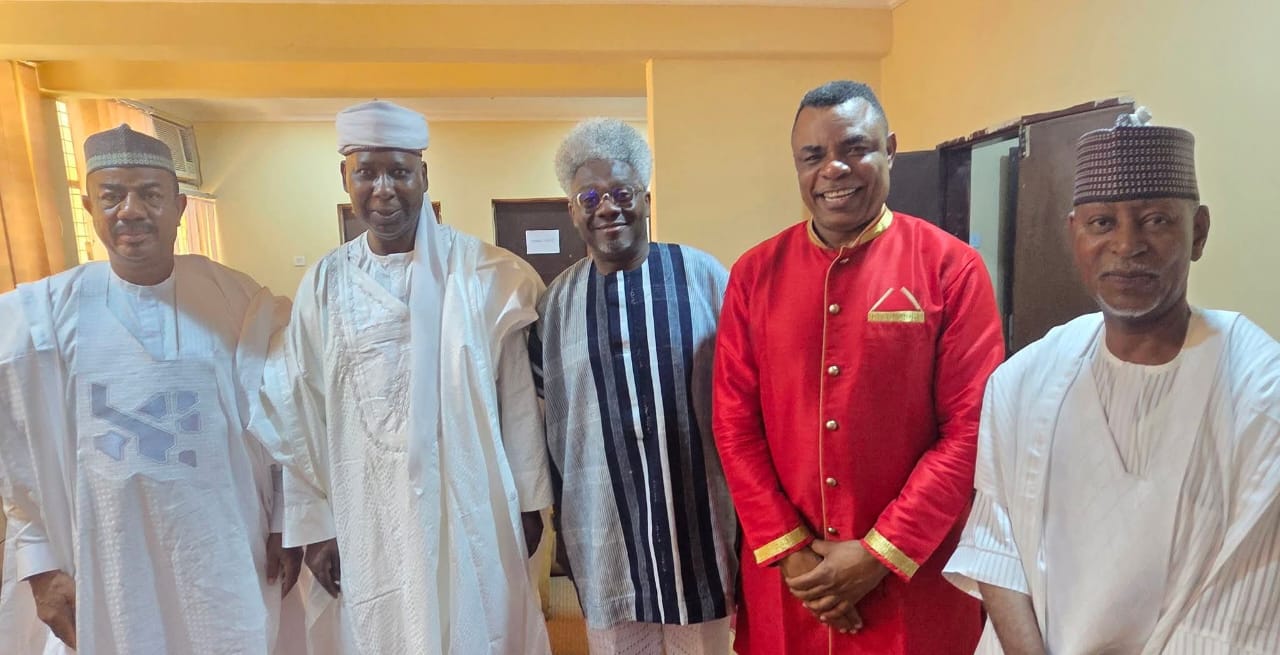
The conference attracted prominent academics, communication scholars, policymakers, researchers and industry practitioners from within and outside Nigeria. Dignitaries at the event included the Vice Chancellor of Usmanu Danfodiyo University, Sokoto, Prof. Bashir Garba, who served as Chief Host; former Nigeria’s Permanent Representative to the United Nations and Chairman of the Conference, Prof. Tijjani Muhammadu Bande; Chair of the School of Communications at Howard University, United States, Prof. Kehbuma Langmia, who delivered the keynote address; and former Vice Chancellor of UDUS, Prof. Riskuwa Arabu Shehu.
Addressing participants, the APRA Secretary General argued that communication should no longer be viewed merely as the transmission of information but as a cooperative process of meaning-making, shared intentionality, and social reality formation.
According to him, the rise of artificial intelligence has fundamentally altered the communication landscape, where a simple statement or press release can instantly evolve into a national or global conversation shaped by algorithms, emotions, social pressures, and geopolitical realities.
“Communication is not merely the transfer of information. It is a meaning-making and meaning-sharing activity rooted in mutual understanding, shared intention, and collective goals,” he said.
Drawing from cognitive science, developmental communication theories, and contemporary AI discourse, Ibietan challenged traditional assumptions about communication and language acquisition, arguing that today’s digital environment demands a more contextual and dynamic understanding of how meaning is created and disseminated.
AI Must Remain a Tool, Not a Thought Leader
While acknowledging the transformative potential of artificial intelligence as a driver of the Fourth Industrial Revolution, Ibietan cautioned against uncritical adoption of emerging technologies.
He welcomed the Federal Government’s approval of the National Artificial Intelligence Strategy (NAIS) 2025, describing it as a significant step towards positioning Nigeria within the global AI ecosystem.
However, he urged policymakers to pursue phased implementation, prioritising critical sectors such as media, culture, security, agriculture, education, and healthcare.
“Nigeria needs to be in the AI optimisation loop, but implementation must be strategic, realistic and measurable. AI is a tool; we cannot make it a thought leader,” he said.
The communication scholar also called for deeper assessment of the broader societal implications of AI deployment, including energy demands, ethical concerns, data privacy, algorithmic transparency, labour displacement, and governance challenges.
The Blackbox-Glassbox Paradox
A central theme of Ibietan’s presentation was what he described as the “Blackbox-Glassbox Paradox” in contemporary media practice.
He explained that AI systems increasingly perform functions traditionally reserved for human editors, including content curation, audience targeting, story selection, and narrative amplification.
Yet, the processes behind these decisions often remain hidden.
“The Blackbox represents AI systems whose logic, training data, biases, and decision-making processes are opaque to editors, audiences, and regulators,” he said.
In contrast, he advocated a “Glassbox” approach in which AI systems are transparent, interpretable, auditable, and subject to accountability mechanisms.
According to him, AI systems that influence public discourse, determine information visibility, and shape political narratives effectively function as unelected editorial authorities whose operations must not remain beyond public scrutiny.
“In the context of media and national development, transparency is not merely a technical issue; it is a governance question,” he stated.
VERIFY Protocol Against AI Misinformation
To combat the growing threat of AI-generated misinformation, deepfakes, and synthetic media, Ibietan highlighted the importance of the VERIFY Protocol, a structured framework developed to strengthen institutional fact-checking and editorial verification processes.
The framework includes validating sources, examining signals, reconstructing timelines, interrogating intent, flagging questionable content, and maintaining public accountability records.
He said the protocol enables media organisations to move from reactive correction to proactive defence of the information ecosystem.
“When applied institutionally, VERIFY transforms media organisations from passive victims of misinformation into active defenders of truth,” he noted.
From Engineering Consent to Engineering Trust
Ibietan also used the platform to advocate a shift from the traditional public relations concept of “Engineering of Consent” to what he termed “Engineering of Trust.”
According to him, trust should no longer be viewed as a by-product of communication but as a deliberately designed outcome embedded within media systems, governance frameworks, and technological infrastructures.
“Engineering of Trust is the deliberate design of AI-media systems, data flows and governance structures that make truth visible, traceable and institutionally accountable,” he explained.
He identified transparency, verification, and accountability as the three pillars required to sustain trust in the AI era.
“Trust is not a soft asset. It is national infrastructure. Nations that wish to leverage it must deliberately architect it,” he said.
Policy Recommendations
To strengthen Nigeria’s readiness for AI-driven communication systems, the APRA Secretary General proposed several policy measures, including the establishment of Glassbox disclosure standards, AI verification competency frameworks, a National AI-Media Trust Index, and institutional trust audits.
He stressed that trust has become a strategic national asset capable of strengthening governance, citizen engagement, national reputation and economic development.
Ibietan concluded by urging the Federal Government to accelerate implementation of the National Artificial Intelligence Strategy, beginning with media and cultural institutions before extending to education, healthcare, agriculture, and security governance.
“The role of the media in national development is not diminished by artificial intelligence; it is intensified by it. Nations that fail to engineer trust into their AI-media systems will not merely struggle with misinformation; they will struggle with legitimacy itself,” he added.
The conference provided a platform for robust discussions on the opportunities and challenges presented by artificial intelligence, emerging communication technologies, and their implications for media practice, governance, public policy, and national development in Africa.
By TimesNG