

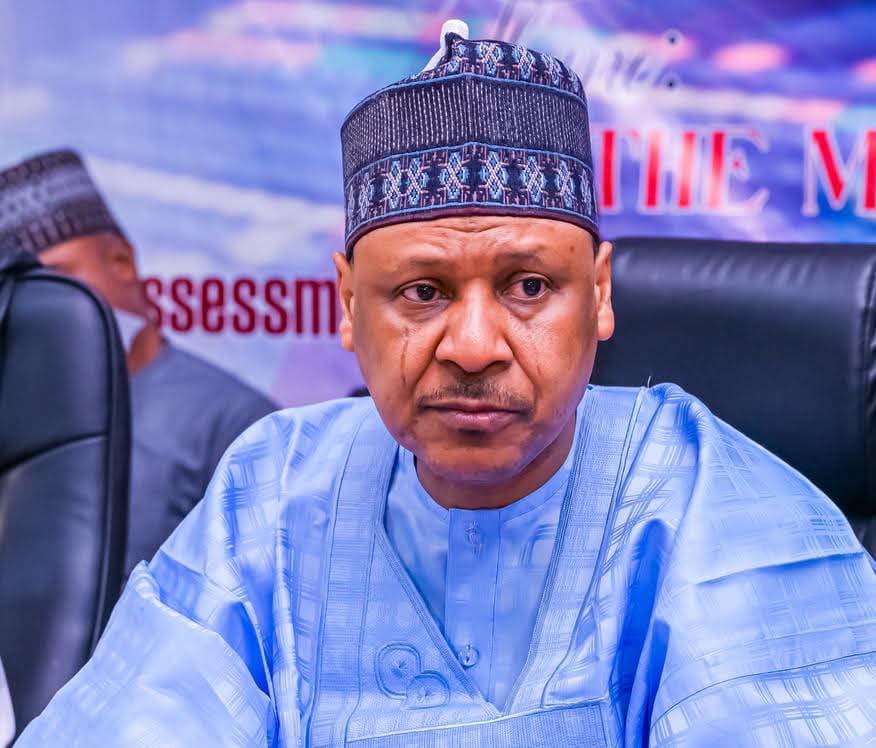
Malagi: A Credibility Architect at 60 By Ahmed Balarabe Sa’id
In an era where government communication has been reduced to sterile press releases, performative elocution, and practiced evasiveness, Information and National Orientation Minister, Mohammed Idris has done something quietly revolutionary. He has chosen to be reachable. To be human. To be believable.
Turning sixty years old today, the Minister has spent the past two years systematically dismantling the fortress of Nigerian public communication and rebuilding it as an open courtyard where journalists and purveyors of truth are not adversaries but colleagues, where citizens are not an audience to be managed but partners to be heard, and where the currency of governance is not control but credibility. But this did not begin with Idris being a Minister. He is a publisher who built a media empire from the ground up. A career public relations practitioner who understands that trust is earned in increments, not demanded by decree. A Fellow of the Nigerian Institute of Public Relations who has spent a lifetime mastering the architecture of belief. And the revered Kaakaki Nupe, the herald of his people, who carries the ancient understanding that the herald’s power lies in the trust of those who listen and not in the volume of hisvoice.
Rather than see a problem to be managed when he walks into a room of journalists, he sees colleagues to be engaged, a remarkable departure from old traditions. It is why in many instances, he has described himself as an “adjunct member of this noble family.” This is not rhetorical performance. Here is a man who has manned the gatekeeper’s chair, who has met payrolls and anticipated libel suits as a publisher. The one who understands that a free press is not a threat to democracy but its central nervous system. And he has carried that understanding from the newsroom to the cabinet, transforming how Nigeria communicates with itself.
The evidence is evolving. Just two days ago, in a ceremony that drew international attention, Nigeria launched the world’s first Category 2 UNESCO Media and Information Literacy Institute, a project that Idris has championed since his first days in office. It is a landmark, long-term investment in the very fabric of Nigerian democracy. The institute will train journalists, educators, and ordinary citizens to navigate the digital information jungle, to verify sources, to resist manipulation, to think critically about everything they read and hear. It will operate not as a government mouthpiece but as a neutral, pan-African hub for media literacy. In country after country, the government response to misinformation has been to reach for the lever of coercion, to censor, to criminalize, to control. Idris and the administration he serves have chosen the harder, braver, sustainable path, investing in the critical capacity of the people themselves. Only a communicator who genuinely believes in the power of an informed public, a publisher who has spent his life putting information into people’s hands, could have driven this vision to reality.
But the MIL Institute is only the most visible peak of a much larger transformation. Idris brought to the Ministry of Information a clear, disciplined, seven-point agenda that has fundamentally reoriented how the ministry and its agencies operate. That agenda is built on seven pillars: repositioning the ministry as the nerve center of government communication; reforming and revitalizing all parastatals under the ministry; driving citizen engagement through direct feedback mechanisms; promoting transparency and accountability in government communication; fighting misinformation and disinformation through media literacy; strengthening the national orientation framework to build civic consciousness; and positioning Nigeria positively in the global narrative. Agency by agency, platform by platform, transmitter by transmitter, conversation by conversation, Idris is spearheading a national reawakening in public information management.
Consider the Nigerian Television Authority, which is undergoing a quiet but profound transformation under this reform agenda. Idris has made it clear that public broadcasting cannot fulfill its democratic function if it remains trapped in outdated infrastructure and analog-era thinking. The modernization of NTA is therefore a cornerstone of his strategic vision for the ministry. Under his leadership, NTA is being repositioned to deliver high-quality, credible, and nationally unifying content that competes effectively in the modern media ecosystem. This has involved significant upgrades to studio facilities, investments in digital transmission infrastructure, and a concerted push to expand signal coverage to reach underserved communities across the country, particularly in rural Northern Nigeria and the riverine communities of the Niger Delta, where access to reliable broadcast signals has historically been limited. The goal is nothing less than ensuring that every Nigerian, regardless of where they live, has access to the information they need to participate meaningfully in the democratic process. Idris has been unequivocal about this commitment, stressing that the ministry will intensify coverage of reform milestones and public enlightenment campaigns through NTA and other government media platforms.
Beyond infrastructure, Idris has championed a philosophical shift in how NTA approaches its public service mandate. He has consistently advocated for editorial independence, understanding that a public broadcaster trusted by no one serves no one. Under his watch, NTA has been encouraged to broaden its news coverage, to give voice to diverse perspectives, and to move beyond the tired formula of simply televising official events. The emphasis has shifted toward developmental journalism that explains policy, highlights citizen impact, and holds government accountable with fairness and balance. This is delicate work in any democracy, and Idris has navigated it with the steady hand of someone who understands that credibility is the only asset that matters.
The transformation extends across all agencies under the ministry’s supervision. The Federal Radio Corporation of Nigeria, which just marked seventy-five years of broadcasting to the nation, is experiencing a historic renewal. For decades, FRCN struggled with aging infrastructure, weak signals, and the creeping perception that public broadcasting in Nigeria had been left behind. Under Idris’s leadership, that story is being rewritten. The government has approved and is deploying new 50-kilowatt medium-wave transmitters in Kaduna, Ibadan, Enugu, and Gwagwalada. These are infrastructure investments that will dramatically extend FRCN’s reach and ensure that no Nigerian, no matter how remote, is left uninformed. In Kaduna alone, a contract has been awarded for the purchase and installation of 50-kilowatt medium-wave transmitters at the Kaduna National Station, alongside a separate contract for a 160 KVA solar power system at the Jaji transmitting station to ensure stable electricity supply. Renovation of the Kaduna Supreme FM studio is ongoing, with some FM and streaming studios already upgraded and others scheduled for completion in phases. Similar transformations are planned for Ibadan, Enugu, Lagos, and Abuja. The FRCN is not just being maintained. It is being reborn.
The Voice of Nigeria tells an equally compelling story of revival. For years, VON’s shortwave transmission capabilities had deteriorated to the point where Nigeria’s voice was barely audible across the African continent. In August 2025, Idris flagged off the contract for the restoration of VON’s shortwave transmission using the 250KW TX2 transmitter at the Lugbe transmitting station, what he described as the revival of “the largest and most powerful transmitting station on the African continent,” now equipped with the most modern, digitally compatible technology. The fully reactivated transmitters, upon completion, will transform the landscape of terrestrial broadcasting and position VON as a respected brand in global radio broadcasting. The impact of this is telling. Beyond infrastructure for infrastructure’s sake, this is Nigeria reclaiming its place in the international information space, telling its own stories to the world on its own terms. The Director General of VON, Mallam Jibrin Baba-Ndace, has pledged to reposition the organization as Africa’s leading broadcaster, and with this restoration underway, that ambition is rapidly becoming reality.
Beyond the broadcast platforms Idris has also championed the National Values Charter through the National Orientation Agency, a flagship initiative designed to ensure that all Nigerians are fully aware of their rights and protections under the constitution, while also awakening citizens to their responsibilities to the nation. The charter is structured around seven “Core Promises” from the government to the people and seven “Commitments” from the people to the nation. It is, in essence, a social contract for the twenty-first century, and Idris has pledged to press forward boldly with the determination to foster a country where citizens and the state share deep mutual love and respect for each other.
What ties all of these reforms together is a consistent philosophy, that communication is not a one-way broadcast but a two-way conversation. Idris has insisted on transparency and regular engagement with the public and the media, noting that fostering open dialogue has been crucial in bridging the gap between governance and public perception. He has championed direct citizen feedback mechanisms, including the Presidential Portals that have received and actively responded to over fifty thousand citizen petitions. He has emphasized that as Nigeria navigates major policy shifts, including the removal of fuel subsidies, foreign exchange reforms, and fiscal restructuring, the government’s approach must center on clarity, consistency, and credibility. “We are committed to ensuring that government decisions are communicated with empathy and responsibility, always highlighting their long-term benefits for all Nigerians,” he has said. That word, ‘empathy’ is not one that has historically been associated with the office of Information Minister. Under Idris, it has become central.
This commitment to reform extends beyond the machinery of government communication itself. The Minister has been a vocal advocate for the preservation of Nigeria’s archival heritage, disclosing ongoing efforts to modernize and digitize the nation’s archival systems to preserve institutional memory and eliminate the policy inconsistencies that have historically plagued governance. This is only possible with someone who understands that credible governance requires continuity, that the mistakes and successes of the past must be accessible to guide the decisions of the future.
When he received the Image Maker Award in April 2026 from Vanguard Media Limited, the recognition reflected what many Nigerians have quietly observed. Idris has fundamentally raised the standard of public communication in Nigeria. His response to the award was characteristically focused not on himself but on the work ahead. “Communication is at the heart of governance, and it must foster confidence, unity, and hope,” he said. “Communication must not only inform but also build trust. This honour is not an endpoint, but a call to do more for the Nigerian people.” That is the ethos of the Credibility Architect: never satisfied, always improving, relentlessly focused on the slow, patient work of rebuilding trust in a continually skeptical world.
At 60, Mohammed Idris has achieved something that defies easy categorization. He is simultaneously a loyal member of the cabinet, a fierce defender of press freedom, a professional communicator who understands the power of narrative, and a public servant who has made himself genuinely accessible to the people he serves. He has shown that a Minister of Information can be both a defender of the administration and a defender of an independent press. That a publisher can enter government without abandoning the ethics of the both the newsroom and Public Relations. That a PR professional can build trust with transparency, not with evasiveness, and with dialogue instead of deflection. That the Kaakaki Nupe can remain a true herald, one who carries the voice of the people to power and the voice of power back to the people.
The world is watching Nigeria closely these days. The economic reforms are bold. The democratic institutions are under constant pressure. The stakes could not be higher. And in the midst of it all, Mohammed Idris has quietly demonstrated that one of the most powerful tools of governance is simply being believable. Not exciting. Not always right. But believable. A man who says what he means, admits what he does not know, shows up to answer hard questions, and invests in the long-term health of the information ecosystem rather than reaching for the short-term comfort of control.
Happy 60th birthday, Malagi, Kaakakin Nigeria. Thank you for reminding us that in an age of noise, the most radical act is to simply tell the truth, to stay human, and to keep answering the call. The best chapters of your service, and of Nigeria’s story, are still being written, In Sha Allah.
Ahmed Balarabe Sa’id is a Communications Strategist. He writes from Kaduna state.