

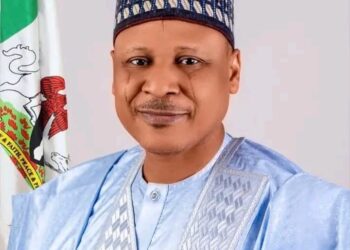
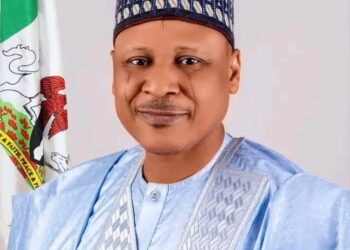
The minister of information and national orientation, Alhaji Mohammed Idris, has said the role of information officers is critical in combating misinformation.
Idris stated this in his remarks at a one day workshop organised by Nigeria Union of Journalists, Federal Information Chapel, in collaboration with Triple Peace Africa in Abuja on Tuesday.
The theme of the workshop is: “Crisis Management and Communication for Government’s Information and Public Relations Officers.”
Represented by his special assistant on media Rabiu Ibrahim, Idris said, “In today’s fast-paced information environment, where news travels instantly and misinformation can spread faster than facts, the role of communication professionals has become even more critical,” he said.
According to the minister, Information and Public Relations Officers are not merely disseminators of information; but custodians of public trust, interpreters of government policies, and strategic communicators during times of uncertainty and crisis, whether security-related, health emergencies, policy misunderstandings, or reputational challenges.
“The quality, speed, and credibility of our communication can significantly shape public perception, confidence, and national stability,” he said.
Idris said the workshop is both timely and necessary, noting that crisis management is no longer reactive; it must be proactive, strategic, and rooted in professionalism.
“Effective communication during crises requires preparedness, coordination, empathy, transparency, and accuracy. Government communicators must be equipped not only to respond quickly but also to communicate responsibly, ensuring that facts prevail over speculation and clarity over confusion, ” he said.
He said the Federal Ministry of Information and National Orientation recognises the strategic role of information officers in strengthening credible communication and deepening public engagement.
” As the bridge between government institutions and citizens, your responsibility is central to promoting understanding, reducing misinformation, and sustaining confidence in governance,” he said.
Earlier in her remarks, the permanent secretary of the ministry, Dr. Binyerem Ukaire, described the workshop timely and strategic.
She was represented by the Director Production and Publication of the ministry, Mr Ibidapo Okunnu.
”In an age defined by rapid digital transformation, instant information sharing, and the ever-present threat of misinformation, how government communicates during a crisis can either fortify public confidence or dismantle it in seconds.
“Therefore, this gathering of minds is not just timely; it is strategic,” she said.
She tasked information officers on transparency, empathy, speed, and accuracy as first responders in the in the art of communication.
“To our Information and Public Relations Officers in the room: you are the first responders on the frontline of governance. When a crisis hits; be it an economic challenge, a security concern, a policy misunderstanding, or a public health emergency, the nation looks to you for clarity, truth, and direction.
“Crisis communication is not about spin or masking reality; it is about transparency, empathy, speed, and accuracy.
”A single uncoordinated statement can exacerbate a national emergency, while a well-managed, proactive strategy can calm anxieties and rally the public toward a solution,” she said.
She said the workshop is an opportunity to sharpen skills, master digital communication tools, and learn modern frameworks for risk assessment and narrative management.
Earlier in his opening remarks, Chairman, NUJ federal information chapel, Comrade Raphael Towoju, described government information and public relations officers as the bridge between state policy and public perception.
“In an age dominated by instant digital reach, fragmented narratives, and deep systemic anxieties,
“We do not have the luxury of time. When a crisis hits, silence is not a strategy. Retrospection is not a shield,” he said.
He said the theme of the worship hits at the very core of national stability.
According to him, in moments of national security challenges, socio-economic tension, or administrative friction, the public looks to us for clarity.
“If we do not fill the information void quickly, accurately, and strategically, mischief-makers, panic, and misinformation will fill it for us,” he said.
He said the chapel recognises that traditional PR methods are no longer sufficient to navigate modern informational crises.
“We need advanced, proactive, and institutionalised communication frameworks; frameworks that don’t just react to a crisis, but mitigate it before it escalates,” he said.
He said the workshop was aimed at equipping participants with the strategic tools, psychological insights, and media-handling techniques required “to steady the ship when the waters get rough.”